THE ADVENTURE COLLECTIVE® · Independent discovery and booking for outdoor travel
Maboya Canyon delivers a full-day, intermediate canyoning experience from Ubud: rappels, natural slides, and pool swims through volcanic rock. This guide covers what to expect on the route, local context, and practical tips to prepare.
Maboya Canyon delivers a full-day, intermediate canyoning experience from Ubud: rappels, natural slides, and pool swims through volcanic rock. This guide covers what to expect on the route, local context, and practical tips to prepare.
The descent begins where jungle light thins and the river grabs the trail, urging travelers down into a narrow gorge. In Maboya Canyon the water has carved a steep corridor of volcanic rock; cold pools punctuate shaded abseils and natural slides. Participants find themselves alternating between controlled rappels, adrenaline-charged jumps, and slick rock scrambles as the canyon pushes forward.
Verified experiences and guided adventures in the surrounding area.
The descent begins where jungle light thins and the river grabs the trail, urging travelers down into a narrow gorge. In Maboya Canyon the water has carved a steep corridor of volcanic rock; cold pools punctuate shaded abseils and natural slides. Participants find themselves alternating between controlled rappels, adrenaline-charged jumps, and slick rock scrambles as the canyon pushes forward.
Geology here is recent and raw: basalt flows and river-worn andesite form short, steep drops and plunge pools. The valley sits in central Bali's volcanic watershed; terraced rice and small temples on ridge crests signal a long local relationship with water. Canyoning routes pass under small cascades and near hamlet farmlands—guides often explain local customs and the practical role of these streams for irrigation.
Expect roughly 3–4 km of canyon travel with cumulative vertical descent around 150–300 m, including 4–6 rappels and several natural slides; swims in calm pools are frequent. The difficulty sits at intermediate to challenging: exposed sections and cold pools demand steady footing and basic rope skills. Group sizes are commonly small and guided equipment is provided.
Practically, arrive with quick-drying clothing, low-profile water shoes, and a light daypack. Hydrate before arrival and lunch on a high-energy snack—the full outing can run most of the day with transfers to and from Ubud. Weather matters: heavy tropical rain makes the canyon hazardous, so check local conditions and book with operators who run safety briefings and maintain rescue protocols.
It is intermediate to challenging: expect several hours of hiking, rock scrambling, rappelling and multiple swims; basic fitness and no major joint issues are recommended.
No formal experience is required, but comfort with heights, water, and basic rope techniques helps; guides provide instruction and safety briefings.
Most operators supply helmets, harnesses, guide ropes, and life jackets; confirm gear and guide-to-guest ratio when booking.
Minimum ages vary by operator, but younger children are generally not recommended due to the physical and technical demands; check age and weight limits with the provider.
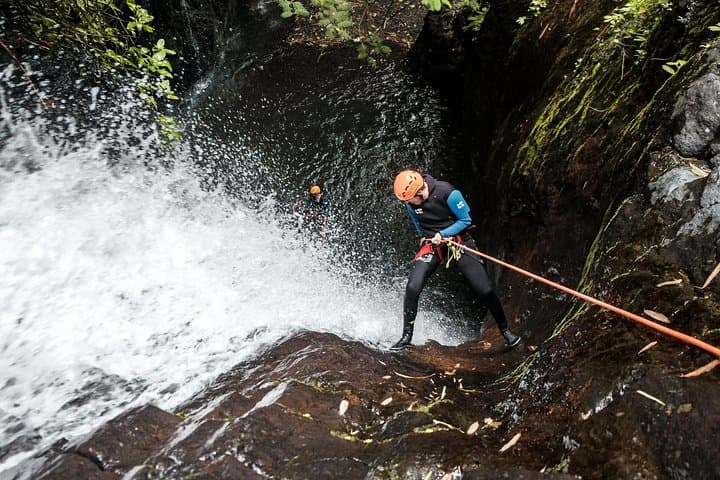
The descent begins where jungle light thins and the river grabs the trail, urging travelers down into a narrow gorge. In Maboya Canyon the water has carved a steep corridor of volcanic rock; cold pools punctuate shaded abseils and natural slides. Participants find themselves alternating between controlled rappels, adrenaline-charged jumps, and slick rock scrambles as the canyon pushes forward.
The descent begins where jungle light thins and the river grabs the trail, urging travelers down into a narrow gorge. In Maboya Canyon the water has carved a steep corridor of volcanic rock; cold pools punctuate shaded abseils and natural slides. Participants find themselves alternating between controlled rappels, adrenaline-charged jumps, and slick rock scrambles as the canyon pushes forward.
Geology here is recent and raw: basalt flows and river-worn andesite form short, steep drops and plunge pools. The valley sits in central Bali's volcanic watershed; terraced rice and small temples on ridge crests signal a long local relationship with water. Canyoning routes pass under small cascades and near hamlet farmlands—guides often explain local customs and the practical role of these streams for irrigation.
Expect roughly 3–4 km of canyon travel with cumulative vertical descent around 150–300 m, including 4–6 rappels and several natural slides; swims in calm pools are frequent. The difficulty sits at intermediate to challenging: exposed sections and cold pools demand steady footing and basic rope skills. Group sizes are commonly small and guided equipment is provided.
Practically, arrive with quick-drying clothing, low-profile water shoes, and a light daypack. Hydrate before arrival and lunch on a high-energy snack—the full outing can run most of the day with transfers to and from Ubud. Weather matters: heavy tropical rain makes the canyon hazardous, so check local conditions and book with operators who run safety briefings and maintain rescue protocols.
