THE ADVENTURE COLLECTIVE® · Independent discovery and booking for outdoor travel

Trade shoreline heat for highland pines on an eight-hour tour into Gran Canaria's volcanic interior. Visit calderas, panoramic viewpoints (including the island's highest lookout), traditional mountain villages and World Biosphere Reserve landscapes.
Trade shoreline heat for highland pines on an eight-hour tour into Gran Canaria's volcanic interior. Visit calderas, panoramic viewpoints (including the island's highest lookout), traditional mountain villages and World Biosphere Reserve landscapes.
A bus rounds a hairpin and the coast drops away — ocean blue becomes a memory as you climb into the island's volcanic spine. Pines lean into the wind, gullies cut sharp shadows, and peaks push clouds like slow freight. Over eight hours this full-day excursion moves from coastal towns into the high calderas and ridgelines that earned Gran Canaria its nickname, 'mini-continent.'
Verified experiences and guided adventures in the surrounding area.
Operated by entrées.es · Tejeda, Las Palmas
A bus rounds a hairpin and the coast drops away — ocean blue becomes a memory as you climb into the island's volcanic spine. Pines lean into the wind, gullies cut sharp shadows, and peaks push clouds like slow freight. Over eight hours this full-day excursion moves from coastal towns into the high calderas and ridgelines that earned Gran Canaria its nickname, 'mini-continent.'
Geology here is obvious: layered basalt and ignimbrite speak of ancient eruptions, and deep erosion has carved abrupt ravines and broad basins. Human history is compacted too — pre-Hispanic Canarian rock art, colonial-era stone villages, and the 17th-century La Cruz de Tejeda that marks the island's cultural center. You'll pass terraces of dry-stone agriculture, stands of Canary pine, and the contrasting palm valleys that open like oases.
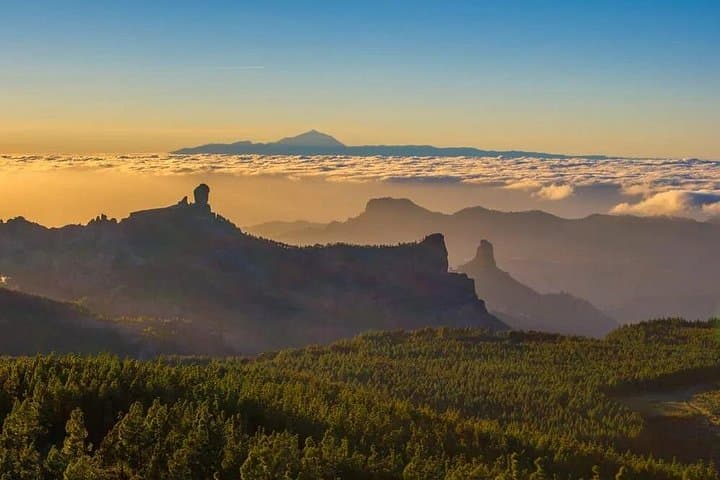
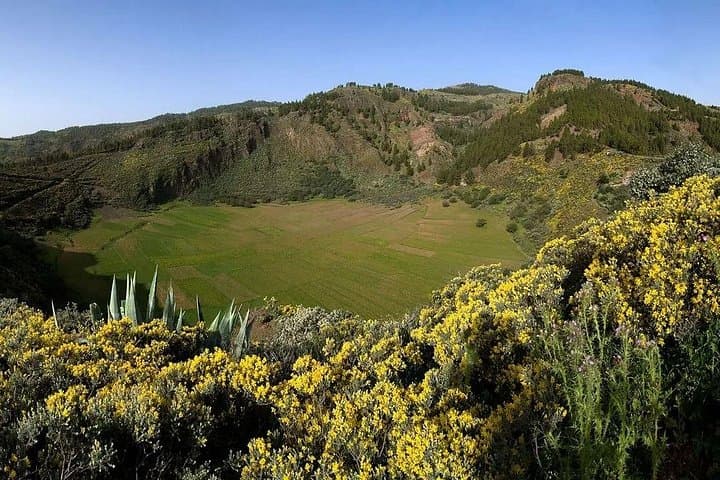
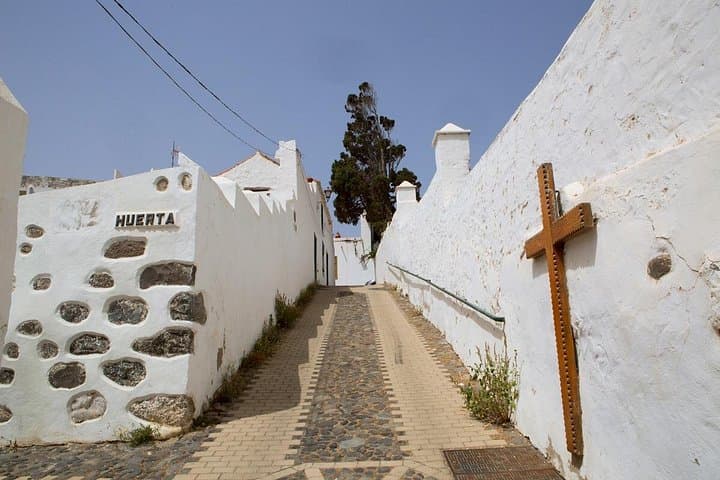
Expect several short stops: a visit to a volcanic caldera viewpoint near 1,530 m, the highest lookouts where Roque Nublo and Roque Bentayga dominate the skyline, the stone cross at Tejeda, and a traditional mountain village with palms and pine. Walks are short and accessible; the tour is vehicle-based with guided stops.
Practical guidance: bring layered clothing (mountain weather changes quickly), sun protection, and a reusable water bottle. Mornings can be clear or cloud-bound — choose a day with good visibility for views toward Tenerife's Teide. Mobility is generally easy but uneven paths and short stair sections appear at viewpoints; those with serious back problems should take care. Book with a morning departure to maximize light and visibility for photography.
The tour runs about 8 hours overall with multiple 45–90 minute stops; walking at viewpoints is generally short and leisurely.
The tour is vehicle-based and accessible in many areas, but some viewpoints have steps or uneven ground; check pickup details and notify the operator of mobility needs.
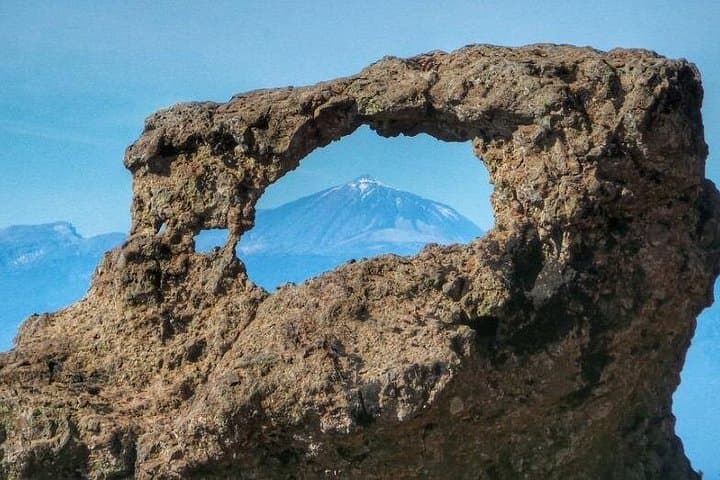
On clear days you can see Roque Nublo, Roque Bentayga and, across the sea, Tenerife's Teide; visibility depends on weather and haze.
The itinerary includes village stops where you can purchase local food, but bring snacks and water as full meals are not guaranteed by the tour.
entrées.es operates guided outdoor trips and adventures with an emphasis on safety, stewardship, and memorable experiences.
A bus rounds a hairpin and the coast drops away — ocean blue becomes a memory as you climb into the island's volcanic spine. Pines lean into the wind, gullies cut sharp shadows, and peaks push clouds like slow freight. Over eight hours this full-day excursion moves from coastal towns into the high calderas and ridgelines that earned Gran Canaria its nickname, 'mini-continent.'
A bus rounds a hairpin and the coast drops away — ocean blue becomes a memory as you climb into the island's volcanic spine. Pines lean into the wind, gullies cut sharp shadows, and peaks push clouds like slow freight. Over eight hours this full-day excursion moves from coastal towns into the high calderas and ridgelines that earned Gran Canaria its nickname, 'mini-continent.'
Geology here is obvious: layered basalt and ignimbrite speak of ancient eruptions, and deep erosion has carved abrupt ravines and broad basins. Human history is compacted too — pre-Hispanic Canarian rock art, colonial-era stone villages, and the 17th-century La Cruz de Tejeda that marks the island's cultural center. You'll pass terraces of dry-stone agriculture, stands of Canary pine, and the contrasting palm valleys that open like oases.
Expect several short stops: a visit to a volcanic caldera viewpoint near 1,530 m, the highest lookouts where Roque Nublo and Roque Bentayga dominate the skyline, the stone cross at Tejeda, and a traditional mountain village with palms and pine. Walks are short and accessible; the tour is vehicle-based with guided stops.
Practical guidance: bring layered clothing (mountain weather changes quickly), sun protection, and a reusable water bottle. Mornings can be clear or cloud-bound — choose a day with good visibility for views toward Tenerife's Teide. Mobility is generally easy but uneven paths and short stair sections appear at viewpoints; those with serious back problems should take care. Book with a morning departure to maximize light and visibility for photography.