THE ADVENTURE COLLECTIVE® · Independent discovery and booking for outdoor travel

Learn the fundamentals of outdoor rock climbing on beginner-friendly routes above the Susquehanna River. This full-day course teaches knots, belaying and movement with all gear provided.
Learn the fundamentals of outdoor rock climbing on beginner-friendly routes above the Susquehanna River. This full-day course teaches knots, belaying and movement with all gear provided.
You step off the road and into a wash of river-slick stone and sun-warmed cracks, ropes coiling like patient maps at your feet. In Mocanaqua, the exposed faces above the Susquehanna present compact, beginner-friendly routes where every hold feels earned and every top-rope belay is a small triumph.
Verified experiences and guided adventures in the surrounding area.
Operated by Stay Rad Climbing Guides · Mocanaqua, Pennsylvania
You step off the road and into a wash of river-slick stone and sun-warmed cracks, ropes coiling like patient maps at your feet. In Mocanaqua, the exposed faces above the Susquehanna present compact, beginner-friendly routes where every hold feels earned and every top-rope belay is a small triumph.
This region sits on folded sedimentary rock shaped by ancient rivers and Pleistocene ice, so routes tend to follow vertical seams and broken ledges rather than sheer granite walls. Local climbing grew from informal sessions by anglers and hikers into organized instruction as outdoor recreation expanded across the Pocono foothills. The community here is tight — expect friendly local beta, a few bolted sport routes and plenty of traditional anchors used with care.
Practically: the course runs about six hours and focuses on knots, belaying, basic movement and safe route selection. Instructors provide harnesses, helmets and climbing shoes; you’ll practice on top-rope climbs and learn how to manage the rope system that keeps things safe. Terrain is mixed: short approaches over gravel and shale, low-angle walls with pockets and edges. Weather matters — wet rock is slippery and cold hands reduce grip — so plan for layered clothing and sun/weather protection.
For planning, arrive hydrated, bring closed-toe shoes for the approach, and allow time afterward to swap notes with other climbers. This is an approachable introduction that arms beginners with skills they can build on at local crags and indoor gyms.
No — this is an introductory course designed for beginners and gym climbers transitioning outdoors. Instructors teach knots, belaying and movement.
Harnesses, helmets and climbing shoes are provided; bring comfortable clothing, snacks, water and approach shoes.
Participants should have at least a moderate fitness level and no serious spinal, heart, or pregnancy-related restrictions; check with the operator for age minimums.
The operator will cancel or reschedule the activity in unsafe weather; cancel at least 24 hours for a full refund per the booking policy.
Stay Rad Climbing Guides operates guided outdoor trips and adventures with an emphasis on safety, stewardship, and memorable experiences.
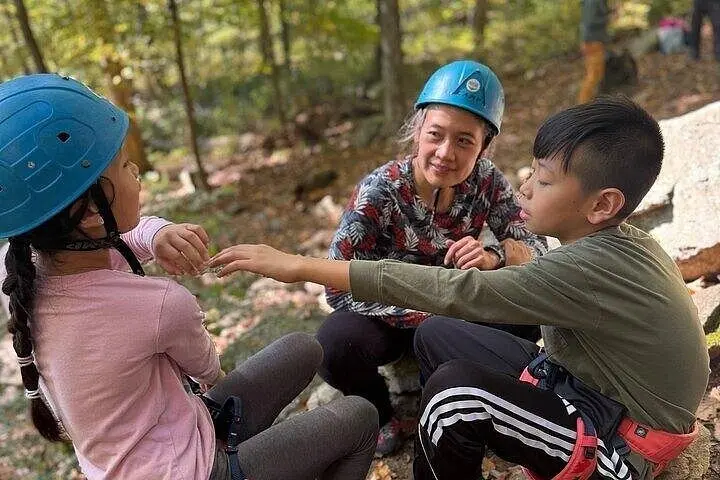
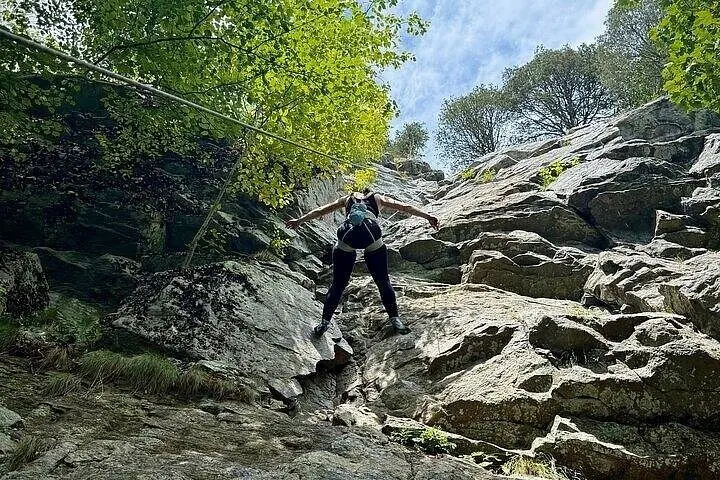
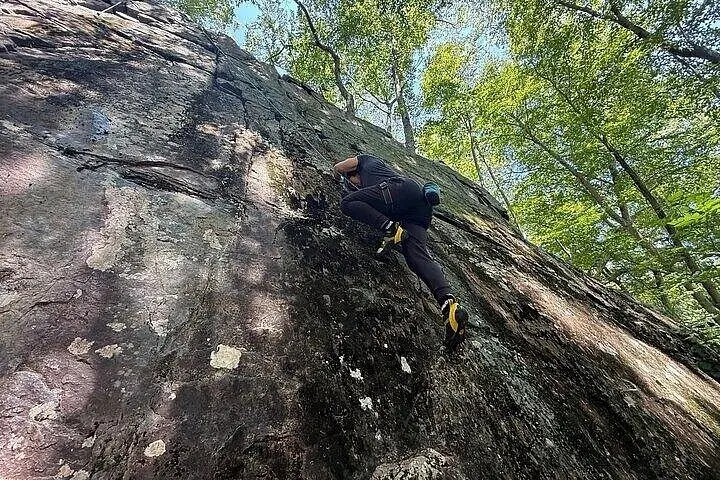
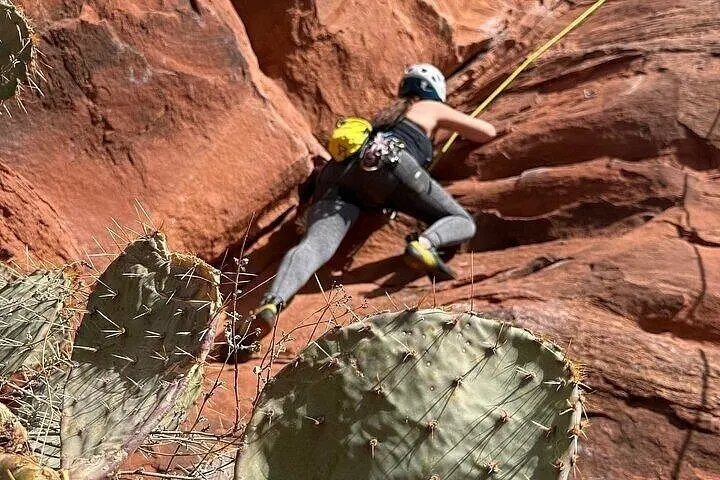
You step off the road and into a wash of river-slick stone and sun-warmed cracks, ropes coiling like patient maps at your feet. In Mocanaqua, the exposed faces above the Susquehanna present compact, beginner-friendly routes where every hold feels earned and every top-rope belay is a small triumph.
You step off the road and into a wash of river-slick stone and sun-warmed cracks, ropes coiling like patient maps at your feet. In Mocanaqua, the exposed faces above the Susquehanna present compact, beginner-friendly routes where every hold feels earned and every top-rope belay is a small triumph.
This region sits on folded sedimentary rock shaped by ancient rivers and Pleistocene ice, so routes tend to follow vertical seams and broken ledges rather than sheer granite walls. Local climbing grew from informal sessions by anglers and hikers into organized instruction as outdoor recreation expanded across the Pocono foothills. The community here is tight — expect friendly local beta, a few bolted sport routes and plenty of traditional anchors used with care.
Practically: the course runs about six hours and focuses on knots, belaying, basic movement and safe route selection. Instructors provide harnesses, helmets and climbing shoes; you’ll practice on top-rope climbs and learn how to manage the rope system that keeps things safe. Terrain is mixed: short approaches over gravel and shale, low-angle walls with pockets and edges. Weather matters — wet rock is slippery and cold hands reduce grip — so plan for layered clothing and sun/weather protection.
For planning, arrive hydrated, bring closed-toe shoes for the approach, and allow time afterward to swap notes with other climbers. This is an approachable introduction that arms beginners with skills they can build on at local crags and indoor gyms.