THE ADVENTURE COLLECTIVE® · Independent discovery and booking for outdoor travel

Stand on Costa Rica’s highest volcanic rim and watch the clouds part to reveal crater steam and distant coasts. This practical guide covers what to expect, how to prepare, and the best ways to experience Irazú Volcano National Park on a day visit.
Stand on Costa Rica’s highest volcanic rim and watch the clouds part to reveal crater steam and distant coasts. This practical guide covers what to expect, how to prepare, and the best ways to experience Irazú Volcano National Park on a day visit.
You step out of the car into air that feels like liquid steel — thin, clean, and shockingly cold. Fog grabs the rim of Irazú and rolls it like a curtain; when the wind parts the clouds the crater snaps into focus: a raw, steam-streaked bowl whose lip overlooks a landscape that can, on a rare clear day, stretch to both the Pacific and Atlantic coasts.
Verified experiences and guided adventures in the surrounding area.
Operated by Tico Paradise Costa Rica · Cartago, Cartago
You step out of the car into air that feels like liquid steel — thin, clean, and shockingly cold. Fog grabs the rim of Irazú and rolls it like a curtain; when the wind parts the clouds the crater snaps into focus: a raw, steam-streaked bowl whose lip overlooks a landscape that can, on a rare clear day, stretch to both the Pacific and Atlantic coasts.
Irazú is Costa Rica’s highest volcano at 3,432 meters. Long before it became a national park in 1963, its eruptions reshaped local agriculture and routed waterways; its slopes feed the Reventazón and Sarapiquí basins that irrigate the Central Valley. The park’s geology is straightforward and uncompromising — layered andesites and ash deposits from historic eruptions, a high-elevation crater plain, and patches of paramo-like vegetation that scavenge moisture from fog.
Culturally, Irazú sits above the coffee towns and colonial streets of Cartago; it was a landmark for Spanish settlers and later became a weather gauge for national planners. Today the park is a close refuge from the city, a place where the wind seems to have agency, pushing walkers along the rim and sculpting the clouds.
The experience on an admission ticket is pragmatic and immediate: short, well-maintained paths lead from the parking area to dramatic viewpoints, and the main routes take roughly 60–120 minutes round-trip depending on how long you linger at the crater edge and at the observation points. Trails are volcanic rock and compacted soil — slick when wet — with minimal elevation change on the rim but the high altitude makes every step feel heavier.
Practicalities matter here. You must present your passport and the provided access code at the gate; parking costs a small fee (around $6). The site is often fogged and cold — layers are not optional. Because of the elevation, visitors sensitive to altitude should acclimatize in Cartago before arriving. Facilities are basic; stick to the marked paths to protect fragile high-elevation plants and minimize erosion.
For photographers, the crater’s moods change fast: sunrise and late afternoon can produce dramatic light, while midday sometimes delivers the clearest distant views. Wildlife is subtle — highland birds and the occasional kestrel or trogon appear on the ridges.
This admission is an efficient way to experience Irazú’s raw geography and historical presence without a guide. Come prepared: warm layers, sun protection, and an awareness that the weather — like the volcano itself — often decides the itinerary.
No — the admission ticket covers park access and the main trails are waymarked. Guides are optional for deeper interpretive hikes.
Allow 60–120 minutes to walk the crater viewpoints and the main observation platforms; longer if you explore additional trails.
Yes. There is on-site parking and a small parking fee (around $6) payable at the entrance.
Yes. At 3,432 m, shortness of breath, headache, and fatigue are possible — acclimatize in Cartago and move slowly.
Layered clothing, a windproof jacket, sun protection, and waterproof gear for sudden fog or rain.
Some sections near the main viewpoints are accessible, but many trails have uneven volcanic terrain; check specific access routes before arrival.
Tico Paradise Costa Rica operates guided outdoor trips and adventures with an emphasis on safety, stewardship, and memorable experiences.
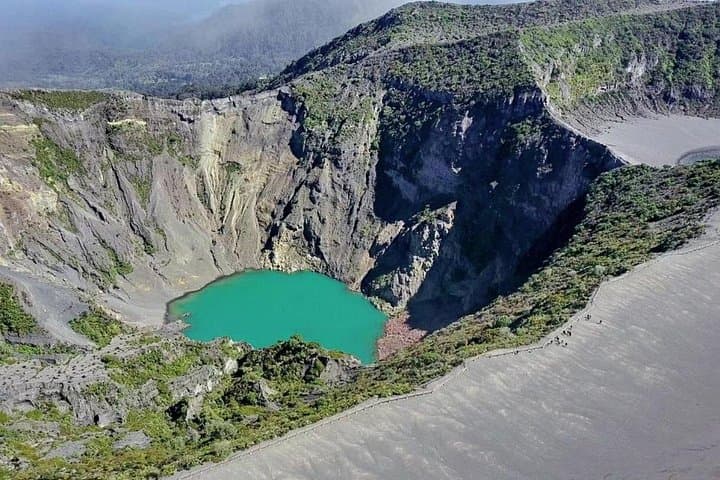
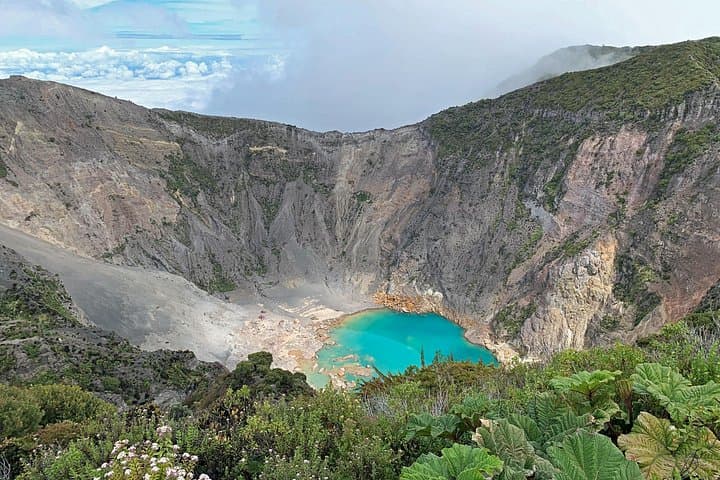
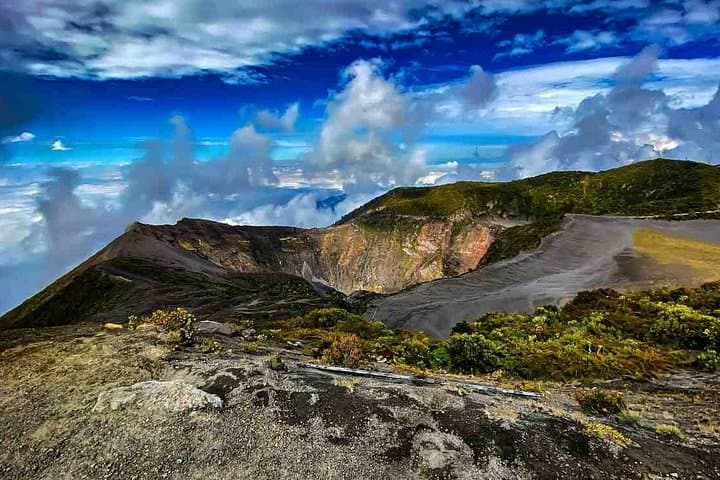
You step out of the car into air that feels like liquid steel — thin, clean, and shockingly cold. Fog grabs the rim of Irazú and rolls it like a curtain; when the wind parts the clouds the crater snaps into focus: a raw, steam-streaked bowl whose lip overlooks a landscape that can, on a rare clear day, stretch to both the Pacific and Atlantic coasts.
You step out of the car into air that feels like liquid steel — thin, clean, and shockingly cold. Fog grabs the rim of Irazú and rolls it like a curtain; when the wind parts the clouds the crater snaps into focus: a raw, steam-streaked bowl whose lip overlooks a landscape that can, on a rare clear day, stretch to both the Pacific and Atlantic coasts.
Irazú is Costa Rica’s highest volcano at 3,432 meters. Long before it became a national park in 1963, its eruptions reshaped local agriculture and routed waterways; its slopes feed the Reventazón and Sarapiquí basins that irrigate the Central Valley. The park’s geology is straightforward and uncompromising — layered andesites and ash deposits from historic eruptions, a high-elevation crater plain, and patches of paramo-like vegetation that scavenge moisture from fog.
Culturally, Irazú sits above the coffee towns and colonial streets of Cartago; it was a landmark for Spanish settlers and later became a weather gauge for national planners. Today the park is a close refuge from the city, a place where the wind seems to have agency, pushing walkers along the rim and sculpting the clouds.
The experience on an admission ticket is pragmatic and immediate: short, well-maintained paths lead from the parking area to dramatic viewpoints, and the main routes take roughly 60–120 minutes round-trip depending on how long you linger at the crater edge and at the observation points. Trails are volcanic rock and compacted soil — slick when wet — with minimal elevation change on the rim but the high altitude makes every step feel heavier.
Practicalities matter here. You must present your passport and the provided access code at the gate; parking costs a small fee (around $6). The site is often fogged and cold — layers are not optional. Because of the elevation, visitors sensitive to altitude should acclimatize in Cartago before arriving. Facilities are basic; stick to the marked paths to protect fragile high-elevation plants and minimize erosion.
For photographers, the crater’s moods change fast: sunrise and late afternoon can produce dramatic light, while midday sometimes delivers the clearest distant views. Wildlife is subtle — highland birds and the occasional kestrel or trogon appear on the ridges.
This admission is an efficient way to experience Irazú’s raw geography and historical presence without a guide. Come prepared: warm layers, sun protection, and an awareness that the weather — like the volcano itself — often decides the itinerary.