THE ADVENTURE COLLECTIVE® · Independent discovery and booking for outdoor travel

Stand at the rim of Costa Rica’s highest active volcano, trace colonial stonework in an emerald valley, and end the day among hundreds of orchid species at Lankester Gardens. This full-day loop from San José pairs high-elevation views with cultural landmarks and botanical immersion.
Stand at the rim of Costa Rica’s highest active volcano, trace colonial stonework in an emerald valley, and end the day among hundreds of orchid species at Lankester Gardens. This full-day loop from San José pairs high-elevation views with cultural landmarks and botanical immersion.
The bus climbs out of San José before dawn, headlights carving ribbons through coffee plantations while low clouds cling to the ridges. By the time the road pitches up toward Irazú, the air has thinned and grown noticeably colder; steam-scented pines and scrub replace the wet heat of the central valley. At the summit you step onto a lunar rim—wind pushing and reshaping the angle of view—and the crater sits like an ancient, breathing bowl, rimmed in rust and green.
Verified experiences and guided adventures in the surrounding area.
Operated by Expediciones Tropicales Day Tours · San José, San José Province
The bus climbs out of San José before dawn, headlights carving ribbons through coffee plantations while low clouds cling to the ridges. By the time the road pitches up toward Irazú, the air has thinned and grown noticeably colder; steam-scented pines and scrub replace the wet heat of the central valley. At the summit you step onto a lunar rim—wind pushing and reshaping the angle of view—and the crater sits like an ancient, breathing bowl, rimmed in rust and green.
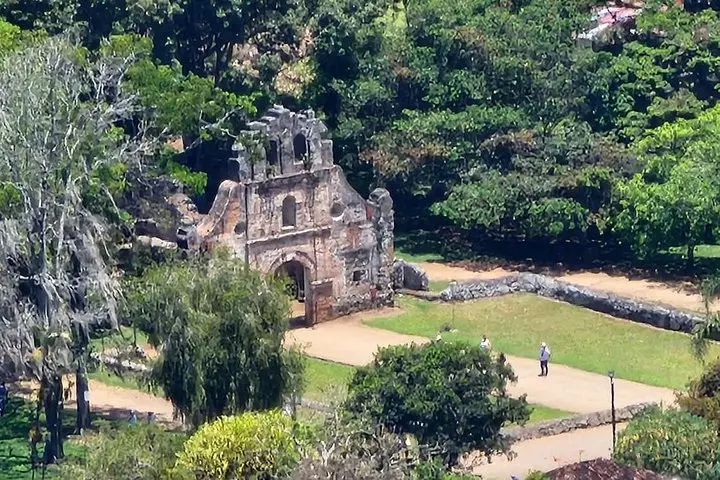
Irazú is Costa Rica’s highest active volcano at about 3,432 meters (11,260 feet). Its geology reads like a short, dramatic lesson in plate tectonics: successive eruptions have left layered craters and ochre deposits that frame sweeping vistas. On an unusually clear day the Pacific and Atlantic can both be seen from the rim, a reminder of the country’s tectonic smallness and visual generosity. The route down threads into the Orosi Valley, where colonial churches and terraced farms recall Spanish-era settlement and a long history of coffee cultivation. The Ujarrás ruins—moss-streaked stone arches from the 16th century—feel like a pause in the landscape, a human quiet after the volcano’s language of rock and ash.
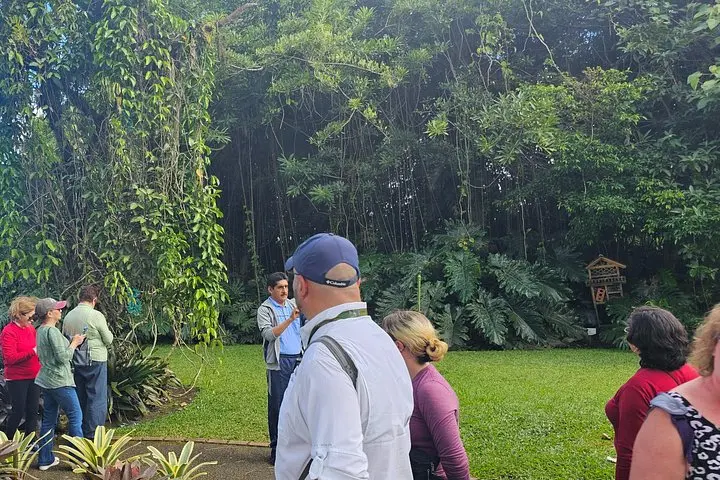
The day closes in the Lankester Botanical Garden, a University of Costa Rica research center that protects more than 800 orchid species and an extraordinary variety of bromeliads. Here the green hush shifts to the close-up sublime: intricate orchid blooms, pollinator activity, and the engineered microhabitats that make tropical epiphytes thrive.
Practicalities are simple but decisive. The tour is a full day (roughly 10 hours) with hotel pickup from San José; the itinerary includes summit time at Irazú, a drive through Orosi with stops at viewpoints and the Ujarrás ruins, and a guided walk through Lankester Gardens with admission. Temperatures drop at altitude—layers and a windproof outer shell are essential—and morning windows are often clearest for summit views. Altitude can trigger headaches for sensitive travelers; hydrate and move slowly at the crater rim.
Photography rewards brisk timing: fog and sun battle constantly, delivering dramatic skies if you’re there early. Lankester’s shaded paths require low ISO and steady hands to capture orchids without flash. Expect short walks rather than long hikes; surfaces range from paved viewpoints to uneven volcanic scree. The tour includes lunch and bilingual guiding, and it’s suitable for most fitness levels, though those with cardiovascular issues should consult a doctor. For travelers after a single day of concentrated Costa Rican geography, culture, and botany, this loop—volcano to valley to garden—packs an impressive cross-section into one well-paced outing.
The tour is approximately 10 hours with pickup from hotels in the San José area; exact pickup time depends on your location.
The main viewpoints have short paved sections but volcanic terrain can be uneven; travelers with mobility limitations should check specific accessibility needs with the operator before booking.
Seeing both the Pacific and Atlantic is possible on exceptionally clear days, typically in the morning; visibility is weather-dependent.
Lunch is included; you can indicate dietary requirements when booking so the operator can accommodate common restrictions.
Irazú’s summit is about 3,432 m—mild altitude effects like headaches are possible; hydrate, avoid alcohol before the trip, and tell the guide if you feel unwell.
The gardens are open to the public separately, but the tour includes guided access and interpretation that highlights the rare orchid collections.
Expediciones Tropicales Day Tours operates guided outdoor trips and adventures with an emphasis on safety, stewardship, and memorable experiences.
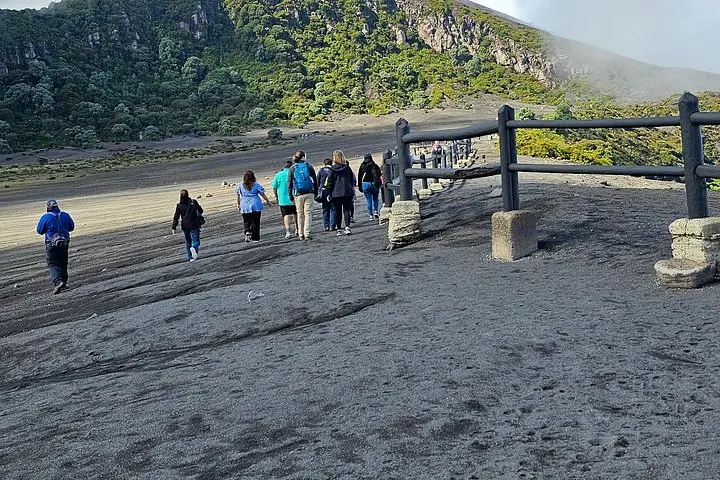
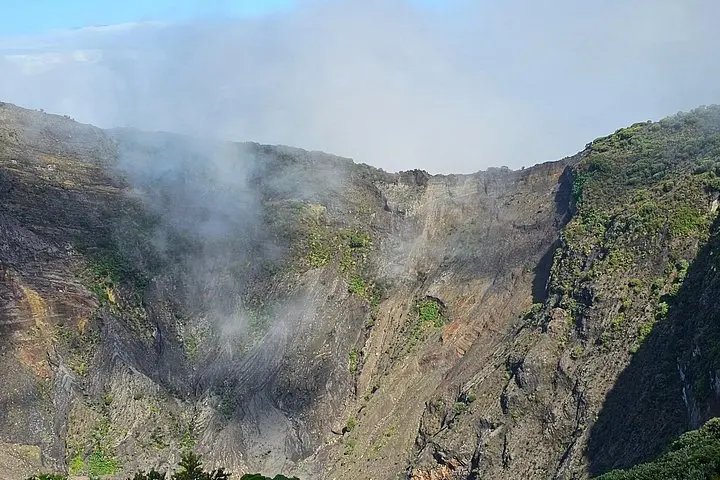
The bus climbs out of San José before dawn, headlights carving ribbons through coffee plantations while low clouds cling to the ridges. By the time the road pitches up toward Irazú, the air has thinned and grown noticeably colder; steam-scented pines and scrub replace the wet heat of the central valley. At the summit you step onto a lunar rim—wind pushing and reshaping the angle of view—and the crater sits like an ancient, breathing bowl, rimmed in rust and green.
The bus climbs out of San José before dawn, headlights carving ribbons through coffee plantations while low clouds cling to the ridges. By the time the road pitches up toward Irazú, the air has thinned and grown noticeably colder; steam-scented pines and scrub replace the wet heat of the central valley. At the summit you step onto a lunar rim—wind pushing and reshaping the angle of view—and the crater sits like an ancient, breathing bowl, rimmed in rust and green.
Irazú is Costa Rica’s highest active volcano at about 3,432 meters (11,260 feet). Its geology reads like a short, dramatic lesson in plate tectonics: successive eruptions have left layered craters and ochre deposits that frame sweeping vistas. On an unusually clear day the Pacific and Atlantic can both be seen from the rim, a reminder of the country’s tectonic smallness and visual generosity. The route down threads into the Orosi Valley, where colonial churches and terraced farms recall Spanish-era settlement and a long history of coffee cultivation. The Ujarrás ruins—moss-streaked stone arches from the 16th century—feel like a pause in the landscape, a human quiet after the volcano’s language of rock and ash.
The day closes in the Lankester Botanical Garden, a University of Costa Rica research center that protects more than 800 orchid species and an extraordinary variety of bromeliads. Here the green hush shifts to the close-up sublime: intricate orchid blooms, pollinator activity, and the engineered microhabitats that make tropical epiphytes thrive.
Practicalities are simple but decisive. The tour is a full day (roughly 10 hours) with hotel pickup from San José; the itinerary includes summit time at Irazú, a drive through Orosi with stops at viewpoints and the Ujarrás ruins, and a guided walk through Lankester Gardens with admission. Temperatures drop at altitude—layers and a windproof outer shell are essential—and morning windows are often clearest for summit views. Altitude can trigger headaches for sensitive travelers; hydrate and move slowly at the crater rim.
Photography rewards brisk timing: fog and sun battle constantly, delivering dramatic skies if you’re there early. Lankester’s shaded paths require low ISO and steady hands to capture orchids without flash. Expect short walks rather than long hikes; surfaces range from paved viewpoints to uneven volcanic scree. The tour includes lunch and bilingual guiding, and it’s suitable for most fitness levels, though those with cardiovascular issues should consult a doctor. For travelers after a single day of concentrated Costa Rican geography, culture, and botany, this loop—volcano to valley to garden—packs an impressive cross-section into one well-paced outing.