THE ADVENTURE COLLECTIVE® · Independent discovery and booking for outdoor travel

Trace the key actions of the 1879 Anglo–Zulu War on a 14-hour day trip from Durban. Visit museums and the real ground at Isandlwana and Rorke's Drift with specialist guides and a midday lunch at the drift.
Trace the key actions of the 1879 Anglo–Zulu War on a 14-hour day trip from Durban. Visit museums and the real ground at Isandlwana and Rorke's Drift with specialist guides and a midday lunch at the drift.
You step off the air-conditioned vehicle into a wide, wind-swept grassland where low koppies puncture the horizon and the buffalo river's channel guides the eye toward distant ridgelines.
Verified experiences and guided adventures in the surrounding area.
Operated by Sbrm Tours · Durban, KwaZulu-Natal
You step off the air-conditioned vehicle into a wide, wind-swept grassland where low koppies puncture the horizon and the buffalo river's channel guides the eye toward distant ridgelines.
This is the ground where the Anglo–Zulu War of 1879 unfolded: Isandlwana, where Zulu forces overwhelmed a British column, and nearby Rorke's Drift, where a small garrison held a defensive action that has entered popular history. The landscape—rolling grassy plains, sandstone outcrops and river flats—still reads like a map of tactical lines: ridges, approaches and lines of sight that determined both movement and moment.
Guides frame the day with military sequence and cultural context, explaining Zulu command structures, British supply lines and how both societies saw honor and loss. The on-site museums at each location collect artifacts, maps and contemporary accounts that clarify what the terrain alone cannot.
Practically: expect light walking on uneven, unshaded tracks—short interpretive walks total less than 2 km at each site, with intermittent inclines around the koppies. The tour departs Durban early and returns the same day (roughly 14 hours total); lunch is provided at Rorke's Drift and bottled water is supplied. Wear sturdy shoes, sun protection and a wind layer—the high veld can be cool in the morning and gusty in the afternoon.
Photography is straightforward but respectful—these are sites of significant loss for both sides. Listen to the Battlefield specialist at each stop; their readings of landscape and eyewitness reports bring the events into sharper relief, making history both immediate and physically felt.
This is a 14‑hour round trip that starts and ends in Durban with pickup in an air‑conditioned vehicle.
No—walking is light to moderate with short uneven sections; most visitors manage without specialist equipment.
The itinerary includes a museum visit for context, but confirm with the operator whether any admission fees are charged on the day.
Yes—it's rated physically easy, but not recommended for guests with serious back, heart conditions or for pregnant travelers due to the long day and vehicle time.
Sbrm Tours operates guided outdoor trips and adventures with an emphasis on safety, stewardship, and memorable experiences.
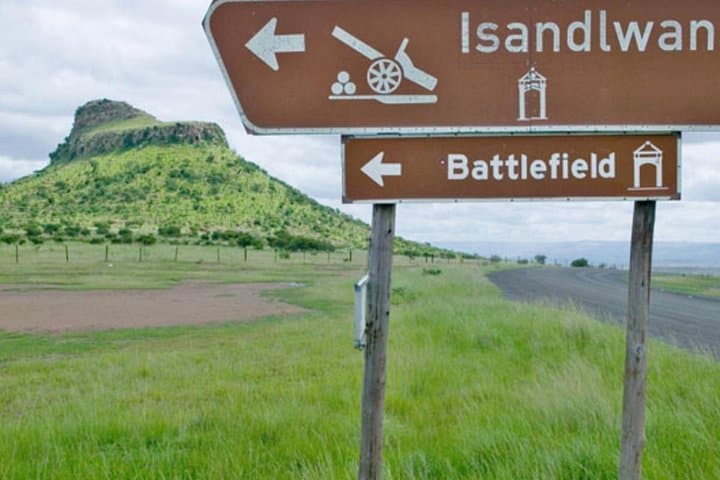


You step off the air-conditioned vehicle into a wide, wind-swept grassland where low koppies puncture the horizon and the buffalo river's channel guides the eye toward distant ridgelines.
You step off the air-conditioned vehicle into a wide, wind-swept grassland where low koppies puncture the horizon and the buffalo river's channel guides the eye toward distant ridgelines.
This is the ground where the Anglo–Zulu War of 1879 unfolded: Isandlwana, where Zulu forces overwhelmed a British column, and nearby Rorke's Drift, where a small garrison held a defensive action that has entered popular history. The landscape—rolling grassy plains, sandstone outcrops and river flats—still reads like a map of tactical lines: ridges, approaches and lines of sight that determined both movement and moment.
Guides frame the day with military sequence and cultural context, explaining Zulu command structures, British supply lines and how both societies saw honor and loss. The on-site museums at each location collect artifacts, maps and contemporary accounts that clarify what the terrain alone cannot.
Practically: expect light walking on uneven, unshaded tracks—short interpretive walks total less than 2 km at each site, with intermittent inclines around the koppies. The tour departs Durban early and returns the same day (roughly 14 hours total); lunch is provided at Rorke's Drift and bottled water is supplied. Wear sturdy shoes, sun protection and a wind layer—the high veld can be cool in the morning and gusty in the afternoon.
Photography is straightforward but respectful—these are sites of significant loss for both sides. Listen to the Battlefield specialist at each stop; their readings of landscape and eyewitness reports bring the events into sharper relief, making history both immediate and physically felt.