THE ADVENTURE COLLECTIVE® · Independent discovery and booking for outdoor travel

Cross Lake Titicaca to Isla del Sol on a long, revealing day trip from Puno. Navigate high-altitude waters, climb Inca stairways at Yumani, and visit the Pillco Kaina shrine before returning by evening bus.
Cross Lake Titicaca to Isla del Sol on a long, revealing day trip from Puno. Navigate high-altitude waters, climb Inca stairways at Yumani, and visit the Pillco Kaina shrine before returning by evening bus.
Morning light cuts across Lake Titicaca and the boat’s bow parts glassy water that seems to push you toward the island itself. By noon the air is thin and bright; eucalyptus-scented breezes comb rocky slopes and the stepped houses of Yumani sit like a cluster of lanterns on a hillside.
Verified experiences and guided adventures in the surrounding area.
Operated by Machupicchu USA · Copacabana, La Paz
Morning light cuts across Lake Titicaca and the boat’s bow parts glassy water that seems to push you toward the island itself. By noon the air is thin and bright; eucalyptus-scented breezes comb rocky slopes and the stepped houses of Yumani sit like a cluster of lanterns on a hillside.
Isla del Sol (Island of the Sun) sits in the southern basin of Lake Titicaca, the highest navigable lake in the world. The island’s sharp ridges are volcanic and glacial in origin, folded and scoured into terraces that local families still farm. Culture here is living history: communities of Aymara and Quechua descendants tend fields and maintain Inca stairways and shrines such as the Pillco Kaina, where rituals to the sun were once performed.
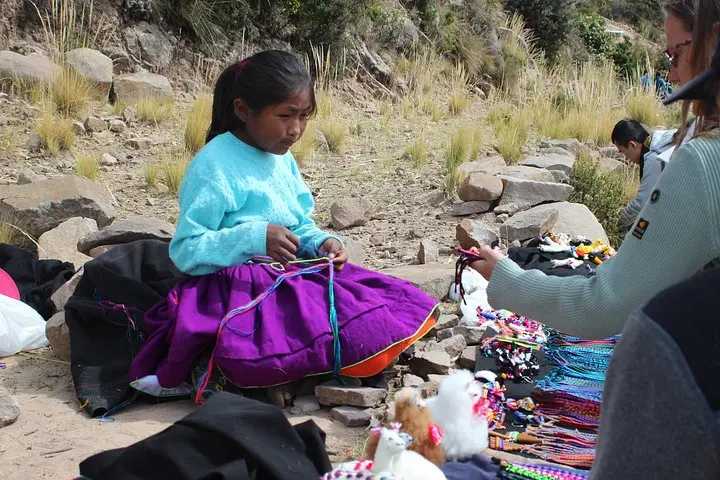
You’ll travel by tourist bus from Puno (about 3.5 hours) to Copacabana, then take a roughly 1.5-hour boat crossing to the island. Expect a brief but steep climb from the Yumani landing to the Fountain of Youth viewpoint — short, sweaty, and worth the panorama. Time on the island is limited: the itinerary focuses on the main archaeological sites, local handicrafts, and a snapshot of village life before returning to Copacabana and onward to Puno in the evening.
Practical notes: acclimatize before the trip, carry layered clothing for strong sun and sharp wind, bring cash for small purchases, and conserve water. The landscape invites quiet respect — stick to paths, leave no trace, and support local vendors when possible.
Yes — a valid passport is required for border crossing into Bolivia; guides typically check documents before departure.
Yes — Lake Titicaca sits above 3,800 m. Allow time to acclimatize, hydrate, and avoid heavy exertion if you feel unwell.
Lunch is usually not included in the basic itinerary — expect a stop in Copacabana where you can buy food before the boat leg.
No — swimming is not recommended due to cold water and currents; the tour visits main sites only and does not include extensive trekking.
Machupicchu USA operates guided outdoor trips and adventures with an emphasis on safety, stewardship, and memorable experiences.
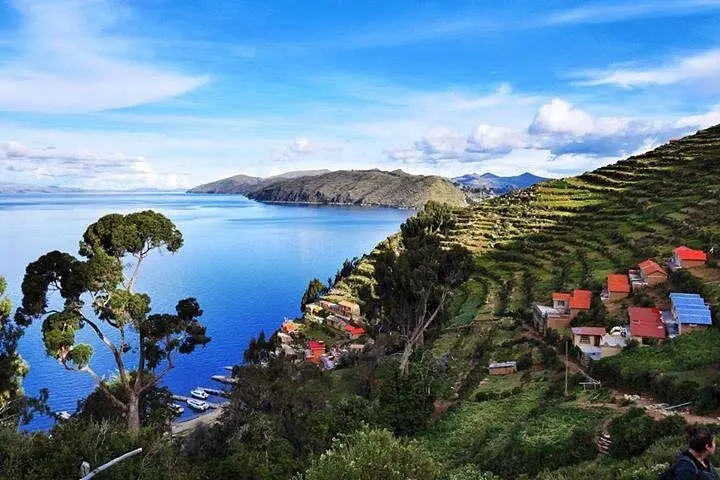
Morning light cuts across Lake Titicaca and the boat’s bow parts glassy water that seems to push you toward the island itself. By noon the air is thin and bright; eucalyptus-scented breezes comb rocky slopes and the stepped houses of Yumani sit like a cluster of lanterns on a hillside.
Morning light cuts across Lake Titicaca and the boat’s bow parts glassy water that seems to push you toward the island itself. By noon the air is thin and bright; eucalyptus-scented breezes comb rocky slopes and the stepped houses of Yumani sit like a cluster of lanterns on a hillside.
Isla del Sol (Island of the Sun) sits in the southern basin of Lake Titicaca, the highest navigable lake in the world. The island’s sharp ridges are volcanic and glacial in origin, folded and scoured into terraces that local families still farm. Culture here is living history: communities of Aymara and Quechua descendants tend fields and maintain Inca stairways and shrines such as the Pillco Kaina, where rituals to the sun were once performed.
You’ll travel by tourist bus from Puno (about 3.5 hours) to Copacabana, then take a roughly 1.5-hour boat crossing to the island. Expect a brief but steep climb from the Yumani landing to the Fountain of Youth viewpoint — short, sweaty, and worth the panorama. Time on the island is limited: the itinerary focuses on the main archaeological sites, local handicrafts, and a snapshot of village life before returning to Copacabana and onward to Puno in the evening.
Practical notes: acclimatize before the trip, carry layered clothing for strong sun and sharp wind, bring cash for small purchases, and conserve water. The landscape invites quiet respect — stick to paths, leave no trace, and support local vendors when possible.