THE ADVENTURE COLLECTIVE® · Independent discovery and booking for outdoor travel

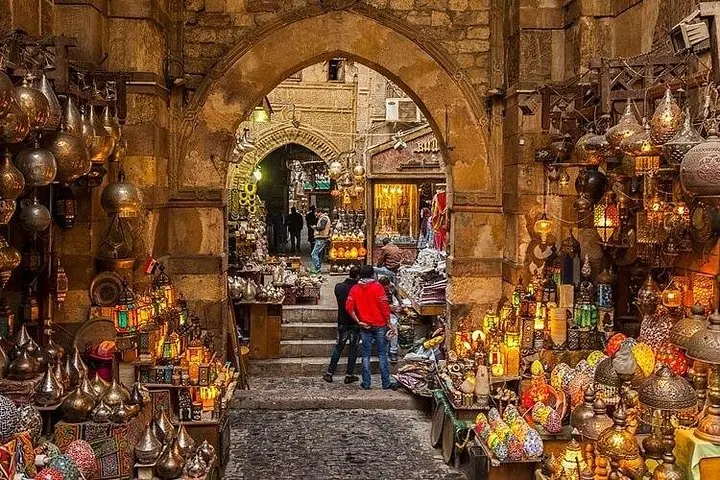
Explore Islamic Cairo in a full-day guided tour that visits the Citadel, Muhammad Ali Mosque, Sultan Hasan and Al-Rifa'i, then winds down Al-Moeiz Street into Khan el-Khalili. Private transport, entrance fees, lunch and bottled water are included.
Explore Islamic Cairo in a full-day guided tour that visits the Citadel, Muhammad Ali Mosque, Sultan Hasan and Al-Rifa'i, then winds down Al-Moeiz Street into Khan el-Khalili. Private transport, entrance fees, lunch and bottled water are included.
The morning light arrives thin and clear over the Citadel as visitors step from shaded streets into a courtyard dominated by domes and minarets. The air smells faintly of dust and baking bread; the city hums below. This is Islamic Cairo: a compact sprawl of medieval stone, narrow alleys and public squares where call to prayer punctuates the day.
Verified experiences and guided adventures in the surrounding area.
Operated by Innovation Tours Inc · Cairo, Cairo Governorate
The morning light arrives thin and clear over the Citadel as visitors step from shaded streets into a courtyard dominated by domes and minarets. The air smells faintly of dust and baking bread; the city hums below. This is Islamic Cairo: a compact sprawl of medieval stone, narrow alleys and public squares where call to prayer punctuates the day.
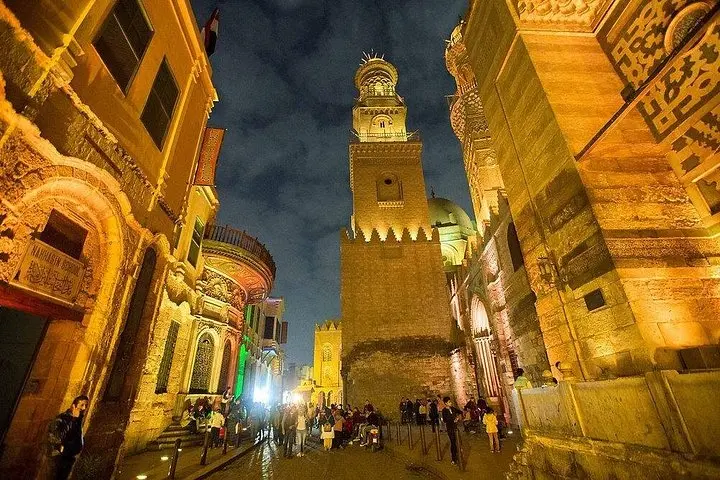
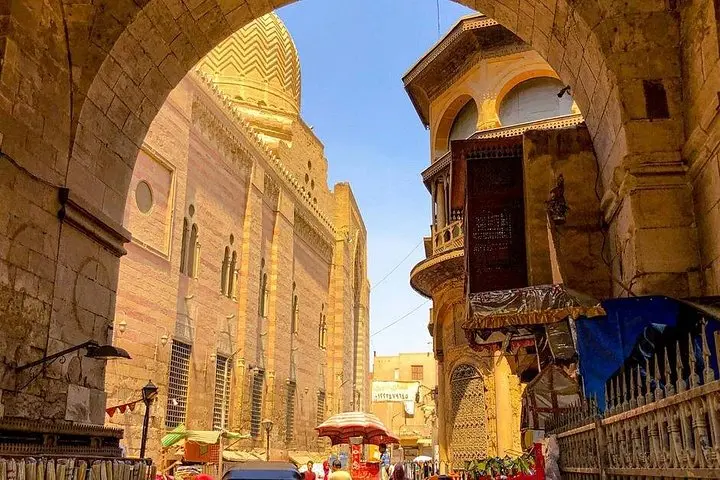
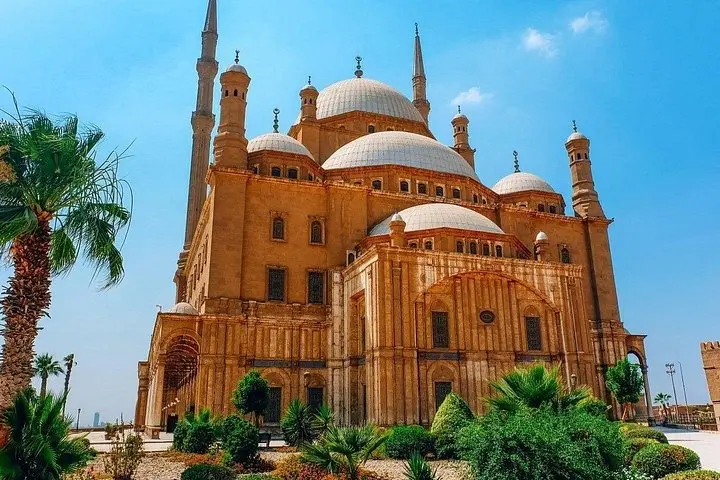
The tour begins at the Cairo Citadel and the Alabaster Mosque of Muhammad Ali, an Ottoman-era complex that offers panoramic views and a glimpse of 19th-century imperial ambitions. From there, the Mamluk masterpieces—Sultan Hasan and Al-Rifa'i—introduce the scale and geometry of medieval Islamic architecture: soaring iwans, carved stone portals, and intricately tiled interiors. A walk down Shari'a Al-Mu'izz li-Din Allah follows, revealing Fatimid and Mamluk urban fabric—madrassas, sabils and the stone facades of the Qalawun Complex.
History is everywhere: royal tombs, Ottoman additions, and streets that served merchants for centuries. Geologically, the city sits on the Nile's alluvial plain, which made Cairo a trade and administrative focal point but offers little in elevation; instead, the drama is architectural and cultural.
Practicalities: expect 6–9 hours with private transportation and guided entrances included, plus lunch and bottled water. Wear modest, breathable clothing; shoes that slip off easily at mosque entrances help. Midday can be hot—plan for sun protection and hydrate regularly. The route is largely accessible by vehicle and suitable for most fitness levels, but some walking on uneven medieval stone is required. Allow extra time for browsing Khan el-Khalili at the end of the day.
Yes—admission fees for listed monuments (Citadel, Sultan Hasan, Al-Rifa'i, and others) are included in the tour price.
The tour notes wheelchair accessibility for transport and many areas, but some historic sites have steps or uneven courtyards—check specifics with the operator.
Some mosques require shoe removal or provide areas to leave shoes; wear socks or bring a small bag for footwear storage.
Lunch is included; inform the operator in advance about dietary restrictions so they can arrange suitable options.
Innovation Tours Inc operates guided outdoor trips and adventures with an emphasis on safety, stewardship, and memorable experiences.
The morning light arrives thin and clear over the Citadel as visitors step from shaded streets into a courtyard dominated by domes and minarets. The air smells faintly of dust and baking bread; the city hums below. This is Islamic Cairo: a compact sprawl of medieval stone, narrow alleys and public squares where call to prayer punctuates the day.
The morning light arrives thin and clear over the Citadel as visitors step from shaded streets into a courtyard dominated by domes and minarets. The air smells faintly of dust and baking bread; the city hums below. This is Islamic Cairo: a compact sprawl of medieval stone, narrow alleys and public squares where call to prayer punctuates the day.
The tour begins at the Cairo Citadel and the Alabaster Mosque of Muhammad Ali, an Ottoman-era complex that offers panoramic views and a glimpse of 19th-century imperial ambitions. From there, the Mamluk masterpieces—Sultan Hasan and Al-Rifa'i—introduce the scale and geometry of medieval Islamic architecture: soaring iwans, carved stone portals, and intricately tiled interiors. A walk down Shari'a Al-Mu'izz li-Din Allah follows, revealing Fatimid and Mamluk urban fabric—madrassas, sabils and the stone facades of the Qalawun Complex.
History is everywhere: royal tombs, Ottoman additions, and streets that served merchants for centuries. Geologically, the city sits on the Nile's alluvial plain, which made Cairo a trade and administrative focal point but offers little in elevation; instead, the drama is architectural and cultural.
Practicalities: expect 6–9 hours with private transportation and guided entrances included, plus lunch and bottled water. Wear modest, breathable clothing; shoes that slip off easily at mosque entrances help. Midday can be hot—plan for sun protection and hydrate regularly. The route is largely accessible by vehicle and suitable for most fitness levels, but some walking on uneven medieval stone is required. Allow extra time for browsing Khan el-Khalili at the end of the day.