THE ADVENTURE COLLECTIVE® · Independent discovery and booking for outdoor travel

Walk the medieval spine of Cairo on a private half-day tour of Islamic Cairo and Khan El-Khalili. Explore Al-Muizz Street’s mosques and gates, shop the bazaar, and learn the stories behind centuries-old monuments.
Walk the medieval spine of Cairo on a private half-day tour of Islamic Cairo and Khan El-Khalili. Explore Al-Muizz Street’s mosques and gates, shop the bazaar, and learn the stories behind centuries-old monuments.
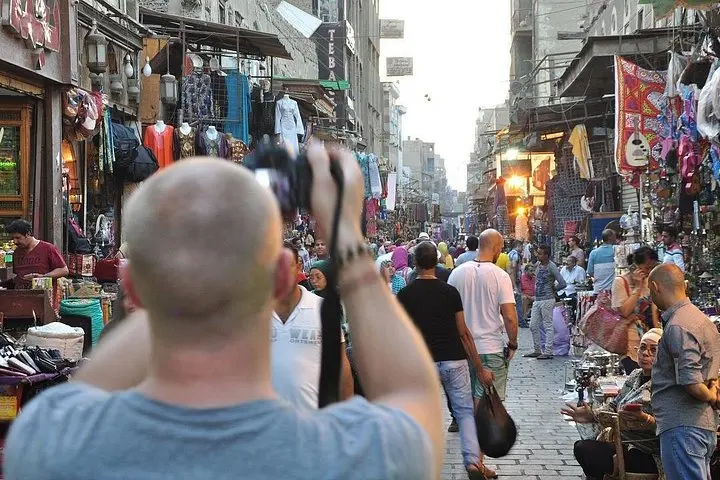
Sunlight slants between carved wooden mashrabiya and the tall minarets of Al-Muizz Street as you step from a shaded alley into the pulse of Islamic Cairo. Vendors tune their displays, pigeons circle the fountains, and the city’s layered history presses close — stone on stone, dome on dome.
Verified experiences and guided adventures in the surrounding area.
Operated by Egypt Tours World · Cairo, Cairo Governorate
Sunlight slants between carved wooden mashrabiya and the tall minarets of Al-Muizz Street as you step from a shaded alley into the pulse of Islamic Cairo. Vendors tune their displays, pigeons circle the fountains, and the city’s layered history presses close — stone on stone, dome on dome.
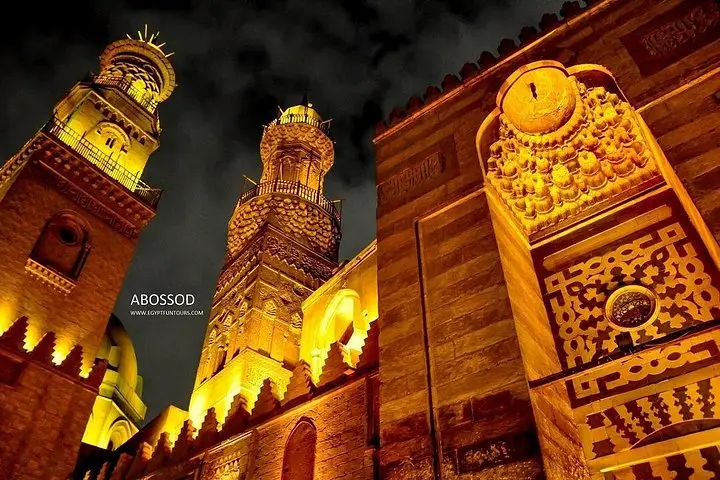
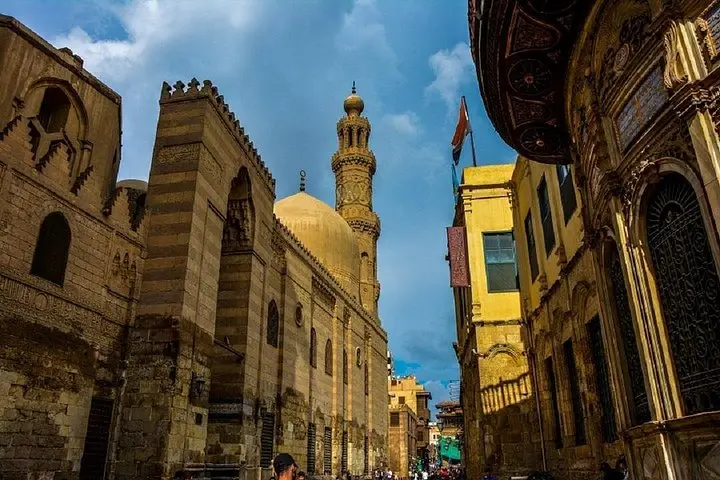
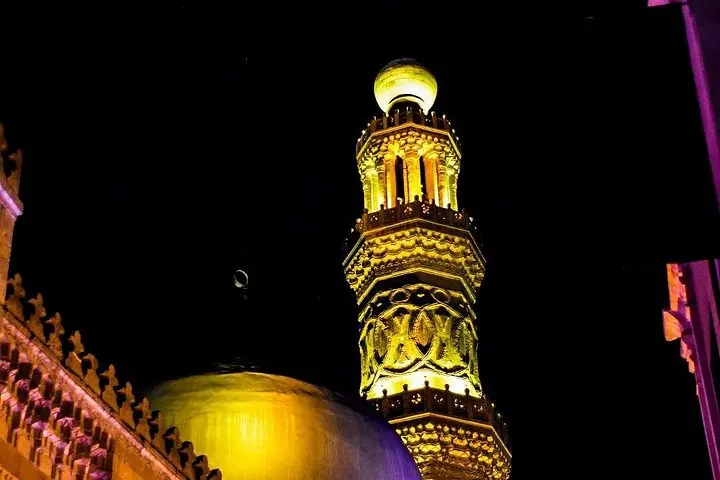
This half-day walking tour threads through the medieval core of Cairo: the Qalawun complex, Al-Aqmar’s ornate façade, Bab al-Futuh and Bab Zuweila, and the crowded alleys of Khan El-Khalili bazaar. The route follows the Fatimid spine of the city established in the 10th century; many buildings were rebuilt or restored in the Mamluk and Ottoman periods, giving the area a mix of marble sabils, carved stucco, and monumental minarets.
You’ll pass Sultan Qalawun’s mausoleum and the Sultan Al-Ghuri complex, architectural chapters that reveal shifts in patrons, styles, and urban function. Local culture concentrates around coffeehouses like Al-Fishawi, where centuries of conversation continue over mint tea.
Practicalities: the tour lasts roughly 4–6 hours and is primarily flat but involves extended walking on uneven pavement and pedestrianized streets. Bring a reusable water bottle, wear closed-toe comfortable shoes, and dress modestly to respect mosque etiquette. Mornings are cooler and less crowded; afternoons offer stronger light for photography but higher temperatures and busier bazaars.
Expect close crowds, rich photographic detail, and a guide who can point out architectural motifs and explain restoration efforts that keep this living museum intact.
The operator lists wheelchair accessibility; however, some historic streets have uneven paving—confirm in advance for specific mobility needs.
The itinerary notes admission is included to listed sites; double-check with your booking confirmation for any optional extras.
Professional licensed Egyptology guides typically speak English; check at booking for other language options.
Tipping is customary in Egypt; consider EGP-equivalent small tips for guides and drivers based on service and group size.
Egypt Tours World operates guided outdoor trips and adventures with an emphasis on safety, stewardship, and memorable experiences.
Sunlight slants between carved wooden mashrabiya and the tall minarets of Al-Muizz Street as you step from a shaded alley into the pulse of Islamic Cairo. Vendors tune their displays, pigeons circle the fountains, and the city’s layered history presses close — stone on stone, dome on dome.
Sunlight slants between carved wooden mashrabiya and the tall minarets of Al-Muizz Street as you step from a shaded alley into the pulse of Islamic Cairo. Vendors tune their displays, pigeons circle the fountains, and the city’s layered history presses close — stone on stone, dome on dome.
This half-day walking tour threads through the medieval core of Cairo: the Qalawun complex, Al-Aqmar’s ornate façade, Bab al-Futuh and Bab Zuweila, and the crowded alleys of Khan El-Khalili bazaar. The route follows the Fatimid spine of the city established in the 10th century; many buildings were rebuilt or restored in the Mamluk and Ottoman periods, giving the area a mix of marble sabils, carved stucco, and monumental minarets.
You’ll pass Sultan Qalawun’s mausoleum and the Sultan Al-Ghuri complex, architectural chapters that reveal shifts in patrons, styles, and urban function. Local culture concentrates around coffeehouses like Al-Fishawi, where centuries of conversation continue over mint tea.
Practicalities: the tour lasts roughly 4–6 hours and is primarily flat but involves extended walking on uneven pavement and pedestrianized streets. Bring a reusable water bottle, wear closed-toe comfortable shoes, and dress modestly to respect mosque etiquette. Mornings are cooler and less crowded; afternoons offer stronger light for photography but higher temperatures and busier bazaars.
Expect close crowds, rich photographic detail, and a guide who can point out architectural motifs and explain restoration efforts that keep this living museum intact.