THE ADVENTURE COLLECTIVE® · Independent discovery and booking for outdoor travel

Float past tangled mangrove roots and curious iguanas on a two-hour stand-up paddleboard lesson through a 9.3-acre Island City nature preserve. Guides combine beginner coaching with close-up wildlife viewing in Fort Lauderdale's sheltered canals.
Float past tangled mangrove roots and curious iguanas on a two-hour stand-up paddleboard lesson through a 9.3-acre Island City nature preserve. Guides combine beginner coaching with close-up wildlife viewing in Fort Lauderdale's sheltered canals.
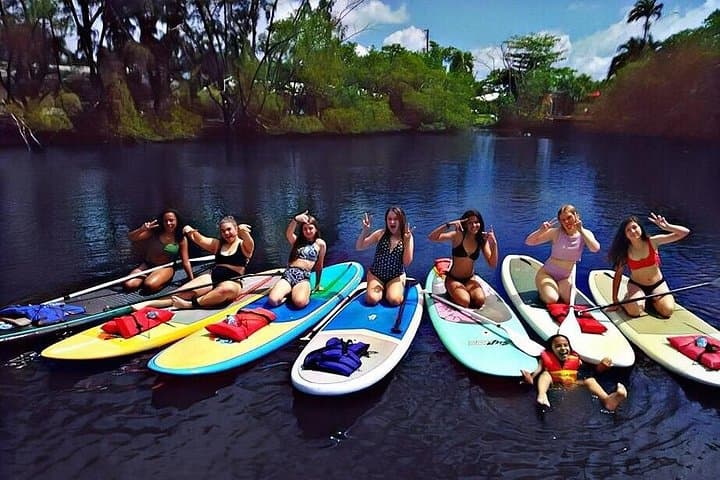
You push off from a low wooden dock and the city noise blurs into a hush. The board answers underfoot, a patient animal that tolerates wobbles and shifting weight, and the guide nudges you down a narrow channel where mangrove roots knot like the fingers of an old sailor. Pelicans loaf on weathered pilings; an iguana freezes on a sun-warmed branch, inspecting your progress with slow detachment. The lagoon opens to a wide, green-belted preserve — 9.3 acres of mangrove forest and calm water that feel private even within reach of Fort Lauderdale's grid.
Verified experiences and guided adventures in the surrounding area.
Operated by Sunrise Paddleboards LLC. · Fort Lauderdale, Florida
You push off from a low wooden dock and the city noise blurs into a hush. The board answers underfoot, a patient animal that tolerates wobbles and shifting weight, and the guide nudges you down a narrow channel where mangrove roots knot like the fingers of an old sailor. Pelicans loaf on weathered pilings; an iguana freezes on a sun-warmed branch, inspecting your progress with slow detachment. The lagoon opens to a wide, green-belted preserve — 9.3 acres of mangrove forest and calm water that feel private even within reach of Fort Lauderdale's grid.
The waterways running through Island City are part of South Florida's living coastline, where limestone, ancient seashell beds, and the slow accumulation of organic matter created shallow lagoons and mangrove islands. These tidal mangroves sustain shrimp, juvenile fish, and the birds that hunt them; culturally they were fishing grounds and navigational landmarks for indigenous Tequesta people and later for settlers who used the inlets to move goods and boats. Today these narrow channels provide a rare close-up look at the ecology that keeps the Atlantic shoreline healthy.
Your guide mixes local natural history with hands-on coaching. Beginners start with a concise lesson on stance, paddle stroke, and safety for roughly 20–30 minutes, then move through sheltered canals where currents are gentle and sightlines narrow: perfect for practicing turns and brief kneel-to-stand transitions. The preserve itself is a calm classroom—an opportunity to try basic SUP maneuvers while eyes track herons stalking edges and small rays skimming sandbars.
Practicalities matter here: the experience runs about two hours, all equipment provided, and vehicles can park free at the shop. It's low-impact but not risk-free — bring sun protection, water, and reef-safe sunscreen; expect balance work and short swims if you take a spill. Guides will brief you on tides and currents, and they'll show a few trade tricks to make paddling more efficient and safer in narrow, root-choked channels.
Timing your paddle for early morning gives cooler air and better wildlife activity; late afternoon light softens the mangrove bark and improves photos. If you're coming from Fort Lauderdale Beach or an overnight port, the meeting point is accessible by bus, ride-share, or local shuttle, and local cafes nearby offer smoothies and salads post-paddle.
For travelers who want an easy, ecology-first introduction to South Florida's waterways, this lesson-and-tour strings together coaching, quiet wildlife viewing, and a tactile sense of what keeps the coast resilient. It’s the kind of outing that refines a new skill and leaves you with a clearer understanding of the tidal systems threading through a busy seaside city.
No; the tour includes a beginner-friendly lesson and coaches basic balance, strokes, and safety before setting out.
Quick-dry clothing or a swimsuit, water shoes or sandals with straps, and a hat; bring layers if you're boating early morning.
Yes—it's listed as accessible for a wide range of ages and fitness levels, but mobility limitations should be discussed with the operator ahead of time.
Yes—life jackets and all standard safety equipment are included as part of the tour.
You can, but use a waterproof case or dry bag; the operator recommends securing devices to prevent loss.
Tours may run in overcast or light rain; for safety or high winds the operator will reschedule or advise cancellation per their policy.
Sunrise Paddleboards LLC. operates guided outdoor trips and adventures with an emphasis on safety, stewardship, and memorable experiences.



You push off from a low wooden dock and the city noise blurs into a hush. The board answers underfoot, a patient animal that tolerates wobbles and shifting weight, and the guide nudges you down a narrow channel where mangrove roots knot like the fingers of an old sailor. Pelicans loaf on weathered pilings; an iguana freezes on a sun-warmed branch, inspecting your progress with slow detachment. The lagoon opens to a wide, green-belted preserve — 9.3 acres of mangrove forest and calm water that feel private even within reach of Fort Lauderdale's grid.
You push off from a low wooden dock and the city noise blurs into a hush. The board answers underfoot, a patient animal that tolerates wobbles and shifting weight, and the guide nudges you down a narrow channel where mangrove roots knot like the fingers of an old sailor. Pelicans loaf on weathered pilings; an iguana freezes on a sun-warmed branch, inspecting your progress with slow detachment. The lagoon opens to a wide, green-belted preserve — 9.3 acres of mangrove forest and calm water that feel private even within reach of Fort Lauderdale's grid.
The waterways running through Island City are part of South Florida's living coastline, where limestone, ancient seashell beds, and the slow accumulation of organic matter created shallow lagoons and mangrove islands. These tidal mangroves sustain shrimp, juvenile fish, and the birds that hunt them; culturally they were fishing grounds and navigational landmarks for indigenous Tequesta people and later for settlers who used the inlets to move goods and boats. Today these narrow channels provide a rare close-up look at the ecology that keeps the Atlantic shoreline healthy.
Your guide mixes local natural history with hands-on coaching. Beginners start with a concise lesson on stance, paddle stroke, and safety for roughly 20–30 minutes, then move through sheltered canals where currents are gentle and sightlines narrow: perfect for practicing turns and brief kneel-to-stand transitions. The preserve itself is a calm classroom—an opportunity to try basic SUP maneuvers while eyes track herons stalking edges and small rays skimming sandbars.
Practicalities matter here: the experience runs about two hours, all equipment provided, and vehicles can park free at the shop. It's low-impact but not risk-free — bring sun protection, water, and reef-safe sunscreen; expect balance work and short swims if you take a spill. Guides will brief you on tides and currents, and they'll show a few trade tricks to make paddling more efficient and safer in narrow, root-choked channels.
Timing your paddle for early morning gives cooler air and better wildlife activity; late afternoon light softens the mangrove bark and improves photos. If you're coming from Fort Lauderdale Beach or an overnight port, the meeting point is accessible by bus, ride-share, or local shuttle, and local cafes nearby offer smoothies and salads post-paddle.
For travelers who want an easy, ecology-first introduction to South Florida's waterways, this lesson-and-tour strings together coaching, quiet wildlife viewing, and a tactile sense of what keeps the coast resilient. It’s the kind of outing that refines a new skill and leaves you with a clearer understanding of the tidal systems threading through a busy seaside city.