THE ADVENTURE COLLECTIVE® · Independent discovery and booking for outdoor travel

Spend a day among Isparta’s fragrant rose plantations and the otherworldly white shores of Lake Salda. This combined cultural-and-nature trip pairs hands-on rose processing with time to walk and swim along Turkey’s striking magnesite beaches.
Spend a day among Isparta’s fragrant rose plantations and the otherworldly white shores of Lake Salda. This combined cultural-and-nature trip pairs hands-on rose processing with time to walk and swim along Turkey’s striking magnesite beaches.
You step from the air-conditioned minivan into a sea of roses that seems to expand to the foothills — petals brushing the summer breeze and scent pressing gently against your mask of city air. The village of Güneykent, near Isparta, is all rows and rows of cultivated roses; bees hum like small engines and the farmers move with practiced, economical gestures. Later the valley opens toward Salda, where a pale shoreline made of magnesite meets water so clear it feels like a glass bowl turned up to the sky.
Verified experiences and guided adventures in the surrounding area.
Operated by TURONTIME · Yeşilova, Burdur Province
You step from the air-conditioned minivan into a sea of roses that seems to expand to the foothills — petals brushing the summer breeze and scent pressing gently against your mask of city air. The village of Güneykent, near Isparta, is all rows and rows of cultivated roses; bees hum like small engines and the farmers move with practiced, economical gestures. Later the valley opens toward Salda, where a pale shoreline made of magnesite meets water so clear it feels like a glass bowl turned up to the sky.
This day trip combines agricultural culture and striking geology. Isparta’s rose industry has been part of local life for centuries; distillation techniques for rose oil and soap remain small-scale trades in family-run factories. Salda is a tectonic lake in Burdur province, noted for its deep basin (one of Turkey’s deepest) and mineral-rich shores; scientists have pointed to its white carbonate sands and microbial structures as Earth analogues for Martian deposits. Cultural exchange here includes learning to handle rose petals and buying locally produced oil and soaps.
Practical details: plan for a 9-hour day with roughly 2–3 hours at the rose fields and 1–2 hours at Salda’s shore; transit fills the rest. Wear sturdy shoes for sandy, sometimes slick magnesite beaches, bring swimwear and quick-dry layers, and carry water and sun protection — shade is limited along the lake’s shore. Follow your guide when collecting water from springs, respect private fields and factory rules, and leave no trace: the lake’s clarity is fragile. The route is beginner-friendly but long; timing your return before dusk avoids colder winds across the basin.
Yes — Salda is popular for swimming in warm months; water is clear and mineral-rich but can be cool, so bring a towel and change of clothes.
Yes — most tours include a visit to a local processing facility where you can see distillation, buy oils, soaps, and sachets, and ask about production methods.
The itinerary notes stroller accessibility for infants and small children, but expect walking through fields and on sandy shorelines which may be uneven.
Not recommended for pregnant travelers per operator guidance; follow your guide for spring water collection and avoid ingesting lake water unadvisedly.
TURONTIME operates guided outdoor trips and adventures with an emphasis on safety, stewardship, and memorable experiences.
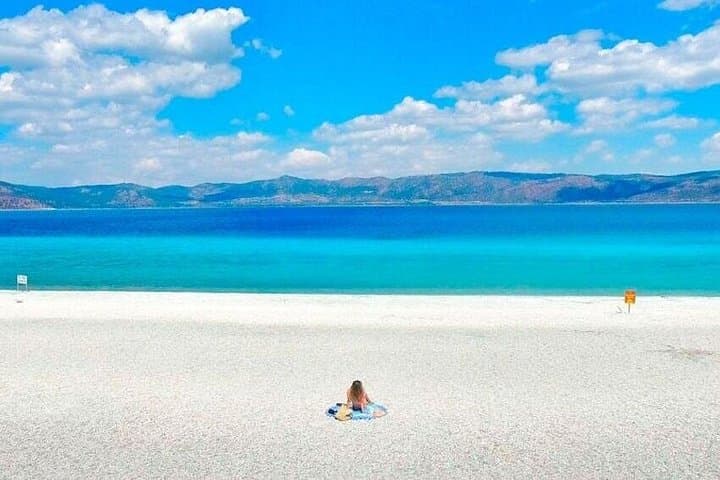
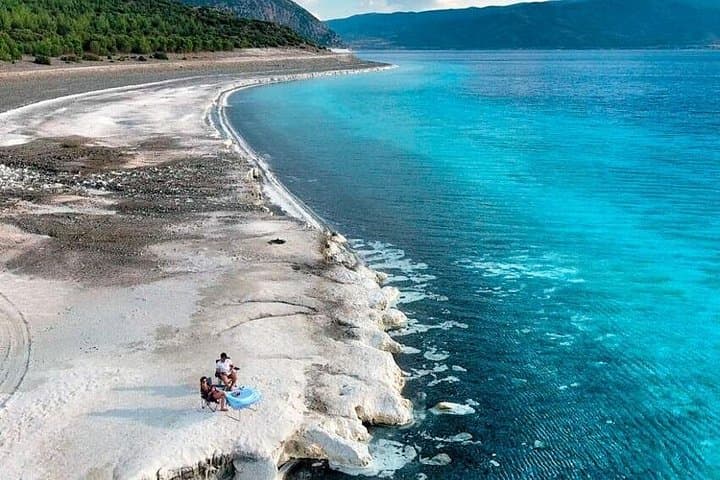
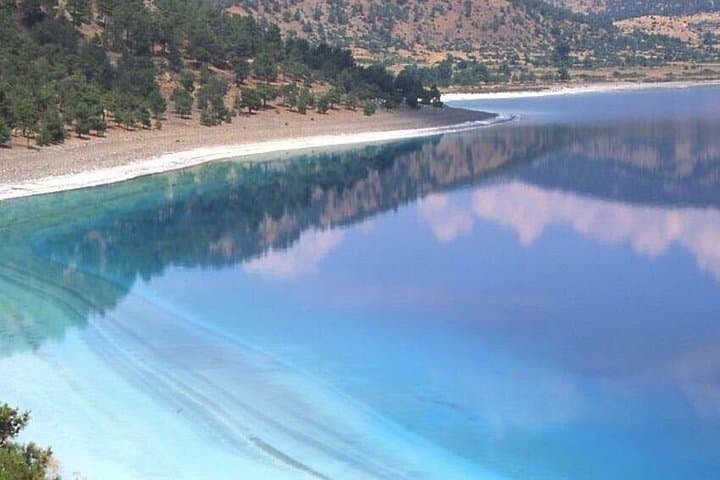
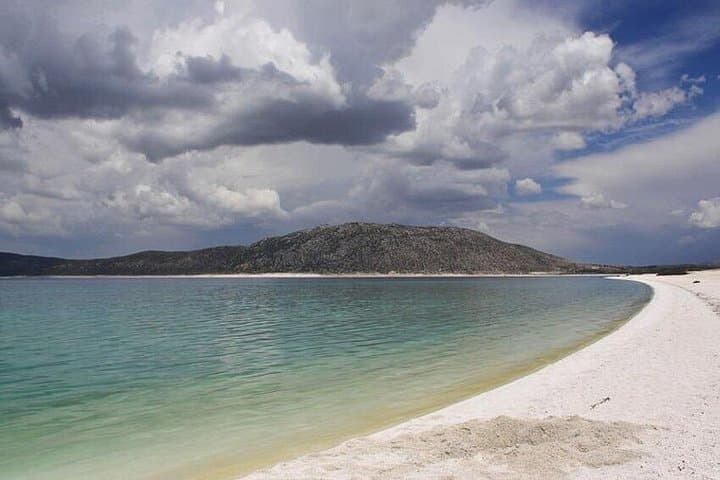
You step from the air-conditioned minivan into a sea of roses that seems to expand to the foothills — petals brushing the summer breeze and scent pressing gently against your mask of city air. The village of Güneykent, near Isparta, is all rows and rows of cultivated roses; bees hum like small engines and the farmers move with practiced, economical gestures. Later the valley opens toward Salda, where a pale shoreline made of magnesite meets water so clear it feels like a glass bowl turned up to the sky.
You step from the air-conditioned minivan into a sea of roses that seems to expand to the foothills — petals brushing the summer breeze and scent pressing gently against your mask of city air. The village of Güneykent, near Isparta, is all rows and rows of cultivated roses; bees hum like small engines and the farmers move with practiced, economical gestures. Later the valley opens toward Salda, where a pale shoreline made of magnesite meets water so clear it feels like a glass bowl turned up to the sky.
This day trip combines agricultural culture and striking geology. Isparta’s rose industry has been part of local life for centuries; distillation techniques for rose oil and soap remain small-scale trades in family-run factories. Salda is a tectonic lake in Burdur province, noted for its deep basin (one of Turkey’s deepest) and mineral-rich shores; scientists have pointed to its white carbonate sands and microbial structures as Earth analogues for Martian deposits. Cultural exchange here includes learning to handle rose petals and buying locally produced oil and soaps.
Practical details: plan for a 9-hour day with roughly 2–3 hours at the rose fields and 1–2 hours at Salda’s shore; transit fills the rest. Wear sturdy shoes for sandy, sometimes slick magnesite beaches, bring swimwear and quick-dry layers, and carry water and sun protection — shade is limited along the lake’s shore. Follow your guide when collecting water from springs, respect private fields and factory rules, and leave no trace: the lake’s clarity is fragile. The route is beginner-friendly but long; timing your return before dusk avoids colder winds across the basin.