THE ADVENTURE COLLECTIVE® · Independent discovery and booking for outdoor travel

Float over Cappadocia at sunrise, walk barefoot on Pamukkale’s white travertines, and step into Ephesus’s imperial past—all in a four‑day loop from Istanbul. This compact itinerary pairs geology and history with hands‑on cultural experiences and included domestic flights.
Float over Cappadocia at sunrise, walk barefoot on Pamukkale’s white travertines, and step into Ephesus’s imperial past—all in a four‑day loop from Istanbul. This compact itinerary pairs geology and history with hands‑on cultural experiences and included domestic flights.
The balloon lifts off before dawn, a slow cathedral of color rising above a moonscape of chimneys and valleys. You feel the basket shift as the pilot eases the flame; below, Cappadocia exhales—valleys folding into one another, tuff spires casting long, precise shadows. Later that same day your boots will press cool travertine at Pamukkale, the terraces so bright they make the sky look dim by comparison. This is a four-day loop through Turkey’s dramatic geology, stitched together with antique streets and village craft.
Verified experiences and guided adventures in the surrounding area.
Operated by Turkey Experiences · Göreme, Nevşehir
The balloon lifts off before dawn, a slow cathedral of color rising above a moonscape of chimneys and valleys. You feel the basket shift as the pilot eases the flame; below, Cappadocia exhales—valleys folding into one another, tuff spires casting long, precise shadows. Later that same day your boots will press cool travertine at Pamukkale, the terraces so bright they make the sky look dim by comparison. This is a four-day loop through Turkey’s dramatic geology, stitched together with antique streets and village craft.
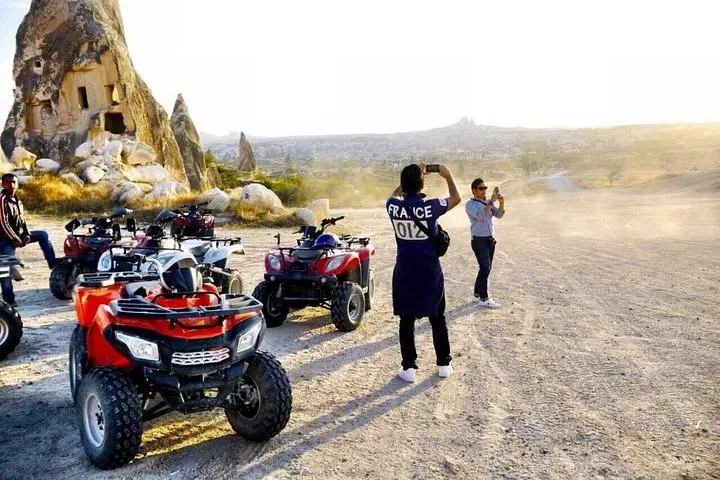
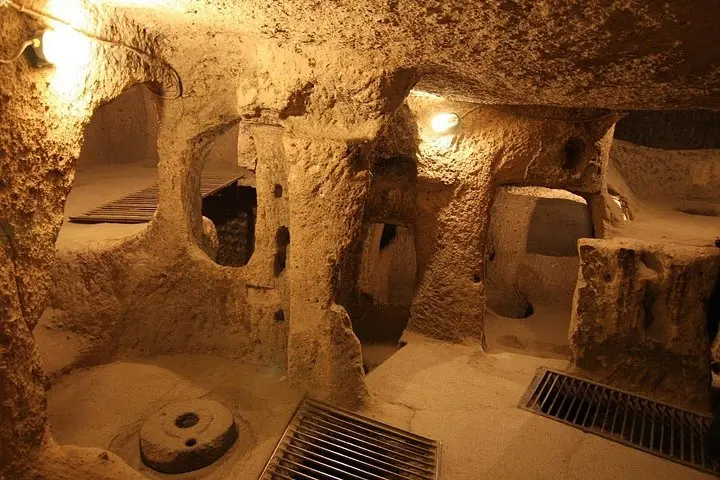
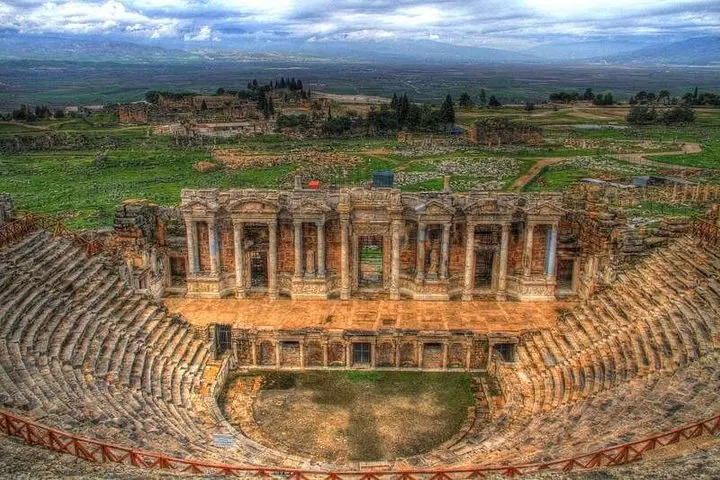
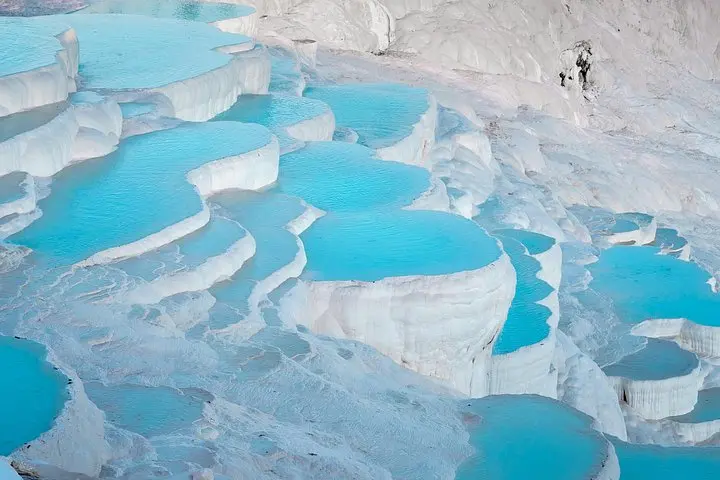
Geology and history sit side-by-side here. Cappadocia’s fairy chimneys are volcanic tuff sculpted over millennia by wind and rain; Göreme sits at roughly 1,000–1,300 meters, where erosion carved homes and churches into soft rock. Pamukkale’s white steps are calcium carbonate deposited by hot springs, a thermal process that gave rise to the spa city of Hierapolis in Roman times. Between them you’ll pass Ephesus, once a Mediterranean powerhouse and later a major Christian center—its Celsus Library still a lesson in imperial scale.
Culturally, the rhythm of the trip balances public sites with intimate encounters: a pottery stop in Avanos, a carpet co‑op demonstration, and a local lunch where testi kebab is cracked open at the table. Guides licensed by Turkey’s Ministry of Culture ease you through the logistics—museum entrances, domestic flights, and the small courtesies of travel in towns where tea is offered as readily as directions.
Practical snapshot: the program includes three nights’ accommodation, domestic flights (Istanbul→Denizli, Izmir→Cappadocia, Cappadocia→Istanbul), a roughly one‑hour balloon flight at sunrise, a one‑hour camel ride through Red and Rose Valleys, and guided day tours of Pamukkale, Ephesus and Cappadocia. Expect moderate walking on uneven rock, steps, and short trails—many sites require shoes off for travertine access. Temperatures swing: mornings in Cappadocia can be cool at altitude; Pamukkale is warmer and reflective.
Pack for contrast: layered clothing, sturdy shoes for cobbles and soft tuff, swimwear for thermal pools, sun protection, and a small daypack. Balloon flights are weather dependent—have flexible plans and allow time buffers for domestic connections. Note airline luggage limits (standard domestic allowance around 15 kg plus an 8 kg carry‑on) and that this tour is not available for travelers under 18.
For travelers who want a compact, high‑impact introduction to Turkey’s natural oddities and classical ruins, this route delivers panoramic moments and hands‑on cultural stops. The landscape pushes and welcomes you in turn: a place where hot air lifts you above cliffs and ancient stone invites you to slow down, take off your shoes, and listen to the world beneath your feet.
No—the flight is weather dependent and the Civil Aviation Authority can cancel for safety; if cancelled you’ll receive a partial refund or rebooking per operator policy.
This particular package is not available for travelers 17 years and under—check operator alternatives for family options.
Typical allowance is 15 kg checked plus an 8 kg carry‑on; notify the operator in advance if you need extra capacity.
Yes—walking on the travertine pools is only permitted barefoot to protect the calcium formations.
Breakfast and three lunches are included; the itinerary lists hotel breakfasts and local restaurant lunches on touring days.
Tipping is customary for guides and drivers—small amounts are appreciated and can be pooled for semi‑private groups.
Turkey Experiences operates guided outdoor trips and adventures with an emphasis on safety, stewardship, and memorable experiences.
The balloon lifts off before dawn, a slow cathedral of color rising above a moonscape of chimneys and valleys. You feel the basket shift as the pilot eases the flame; below, Cappadocia exhales—valleys folding into one another, tuff spires casting long, precise shadows. Later that same day your boots will press cool travertine at Pamukkale, the terraces so bright they make the sky look dim by comparison. This is a four-day loop through Turkey’s dramatic geology, stitched together with antique streets and village craft.
The balloon lifts off before dawn, a slow cathedral of color rising above a moonscape of chimneys and valleys. You feel the basket shift as the pilot eases the flame; below, Cappadocia exhales—valleys folding into one another, tuff spires casting long, precise shadows. Later that same day your boots will press cool travertine at Pamukkale, the terraces so bright they make the sky look dim by comparison. This is a four-day loop through Turkey’s dramatic geology, stitched together with antique streets and village craft.
Geology and history sit side-by-side here. Cappadocia’s fairy chimneys are volcanic tuff sculpted over millennia by wind and rain; Göreme sits at roughly 1,000–1,300 meters, where erosion carved homes and churches into soft rock. Pamukkale’s white steps are calcium carbonate deposited by hot springs, a thermal process that gave rise to the spa city of Hierapolis in Roman times. Between them you’ll pass Ephesus, once a Mediterranean powerhouse and later a major Christian center—its Celsus Library still a lesson in imperial scale.
Culturally, the rhythm of the trip balances public sites with intimate encounters: a pottery stop in Avanos, a carpet co‑op demonstration, and a local lunch where testi kebab is cracked open at the table. Guides licensed by Turkey’s Ministry of Culture ease you through the logistics—museum entrances, domestic flights, and the small courtesies of travel in towns where tea is offered as readily as directions.
Practical snapshot: the program includes three nights’ accommodation, domestic flights (Istanbul→Denizli, Izmir→Cappadocia, Cappadocia→Istanbul), a roughly one‑hour balloon flight at sunrise, a one‑hour camel ride through Red and Rose Valleys, and guided day tours of Pamukkale, Ephesus and Cappadocia. Expect moderate walking on uneven rock, steps, and short trails—many sites require shoes off for travertine access. Temperatures swing: mornings in Cappadocia can be cool at altitude; Pamukkale is warmer and reflective.
Pack for contrast: layered clothing, sturdy shoes for cobbles and soft tuff, swimwear for thermal pools, sun protection, and a small daypack. Balloon flights are weather dependent—have flexible plans and allow time buffers for domestic connections. Note airline luggage limits (standard domestic allowance around 15 kg plus an 8 kg carry‑on) and that this tour is not available for travelers under 18.
For travelers who want a compact, high‑impact introduction to Turkey’s natural oddities and classical ruins, this route delivers panoramic moments and hands‑on cultural stops. The landscape pushes and welcomes you in turn: a place where hot air lifts you above cliffs and ancient stone invites you to slow down, take off your shoes, and listen to the world beneath your feet.