THE ADVENTURE COLLECTIVE® · Independent discovery and booking for outdoor travel

A single-day loop from Zagreb that packs Pula’s Roman Arena, Rovinj’s Venetian lanes, Hum’s micro-town charm and Poreč’s UNESCO basilica—ideal for travelers who want coast, history and Istrian flavor without an overnight.
A single-day loop from Zagreb that packs Pula’s Roman Arena, Rovinj’s Venetian lanes, Hum’s micro-town charm and Poreč’s UNESCO basilica—ideal for travelers who want coast, history and Istrian flavor without an overnight.
An early morning highway unfurls beneath the coach as Zagreb shrinks behind you and the Adriatic light grows sharper. By midmorning the Arena of Pula rises out of stone and salt air—an amphitheater that still keeps the gestures of Roman crowds—while the coastline dares you to look past the harbor to the limestone spine of Istria.
Verified experiences and guided adventures in the surrounding area.
Operated by VIATICA TRAVEL d.o.o. · Pula, Istria
An early morning highway unfurls beneath the coach as Zagreb shrinks behind you and the Adriatic light grows sharper. By midmorning the Arena of Pula rises out of stone and salt air—an amphitheater that still keeps the gestures of Roman crowds—while the coastline dares you to look past the harbor to the limestone spine of Istria.
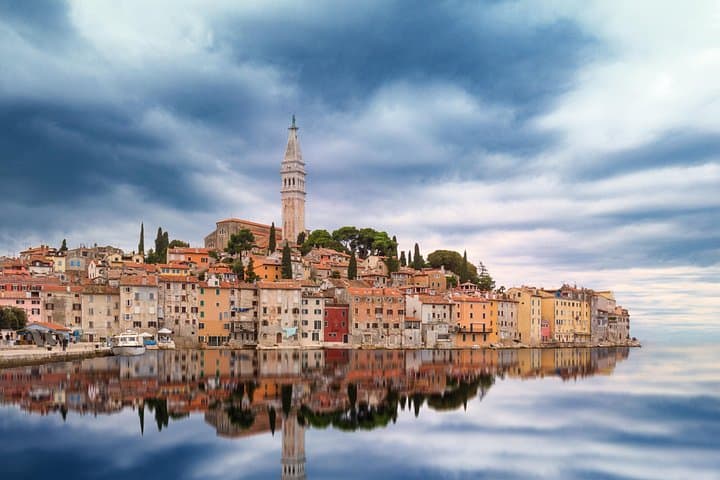
This full-day loop threads three classic Istrian experiences: Pula’s Roman architecture and gates (Arena, Arch of the Sergii, Temple of Augustus), Rovinj’s narrow, weathered lanes and Venetian-influenced facades, and Poreč’s UNESCO-listed Euphrasian Basilica. Between towns you pass karst limestone ridges and olive-sculpted fields; the peninsula’s geology explains the dry stone walls, hidden coves and truffle-rich woods inland. Hum—often billed as the world’s smallest town—offers a quick cultural pause: medieval walls, a single main street and local lore about Istrian identity and Venetian rule.
Expect short guided walks, layered history at every turn, and coastal views that sharpen late in the day. Practically: this is a long but low-impact day—mostly seated travel with periodic cobbled streets and short stair climbs. Bring sturdy shoes, sun protection, and a refillable bottle; start early to make the most of Pula and to avoid afternoon crowds in Rovinj. If you have time, sample Istrian olive oil and local truffle dishes—culinary details that echo the landscape you’ve spent the day crossing.
The tour lasts about 10–12 hours (approximately 600–720 minutes); operators commonly begin early morning with a return to Zagreb in the evening.
Admission is not always included—review your booking details and be prepared to pay on-site for optional entries; the tour does advertise skipping long lines where applicable.
Yes, hotel pickup and drop-off in Zagreb are included; confirm your pickup point at booking and allow a short window for collection.
The tour is family-friendly and labeled 'physically easy,' but expect cobblestone streets and some stairs; those with limited mobility should check specifics with the operator in advance.
VIATICA TRAVEL d.o.o. operates guided outdoor trips and adventures with an emphasis on safety, stewardship, and memorable experiences.


An early morning highway unfurls beneath the coach as Zagreb shrinks behind you and the Adriatic light grows sharper. By midmorning the Arena of Pula rises out of stone and salt air—an amphitheater that still keeps the gestures of Roman crowds—while the coastline dares you to look past the harbor to the limestone spine of Istria.
An early morning highway unfurls beneath the coach as Zagreb shrinks behind you and the Adriatic light grows sharper. By midmorning the Arena of Pula rises out of stone and salt air—an amphitheater that still keeps the gestures of Roman crowds—while the coastline dares you to look past the harbor to the limestone spine of Istria.
This full-day loop threads three classic Istrian experiences: Pula’s Roman architecture and gates (Arena, Arch of the Sergii, Temple of Augustus), Rovinj’s narrow, weathered lanes and Venetian-influenced facades, and Poreč’s UNESCO-listed Euphrasian Basilica. Between towns you pass karst limestone ridges and olive-sculpted fields; the peninsula’s geology explains the dry stone walls, hidden coves and truffle-rich woods inland. Hum—often billed as the world’s smallest town—offers a quick cultural pause: medieval walls, a single main street and local lore about Istrian identity and Venetian rule.
Expect short guided walks, layered history at every turn, and coastal views that sharpen late in the day. Practically: this is a long but low-impact day—mostly seated travel with periodic cobbled streets and short stair climbs. Bring sturdy shoes, sun protection, and a refillable bottle; start early to make the most of Pula and to avoid afternoon crowds in Rovinj. If you have time, sample Istrian olive oil and local truffle dishes—culinary details that echo the landscape you’ve spent the day crossing.