THE ADVENTURE COLLECTIVE® · Independent discovery and booking for outdoor travel

Track a trained dog through oak woods, uncover hidden truffles, and learn to cook fuži topped with freshly shaved truffle and a glass of Malvasia. This compact three-hour experience mixes fieldwork, food history, and a hands-on tasting under a pergola.
Track a trained dog through oak woods, uncover hidden truffles, and learn to cook fuži topped with freshly shaved truffle and a glass of Malvasia. This compact three-hour experience mixes fieldwork, food history, and a hands-on tasting under a pergola.
A low sun filters through oak and hazelnut branches as a handler, a keen-nosed dog, and a small group step off a dirt track into the Istrian hinterland. The forest floor is cool and damp; the dog noses, circles, and signals — a buried pearl waiting to be coaxed from limestone soil. Under a simple pergola later, steam rises from a pot of fuži while slices of fresh truffle are shaved over pasta and conversation turns to recipes and the season’s fortunes.
Verified experiences and guided adventures in the surrounding area.
Operated by IstraTerra, experiences in Istria · Koper, Slovenian Istria
A low sun filters through oak and hazelnut branches as a handler, a keen-nosed dog, and a small group step off a dirt track into the Istrian hinterland. The forest floor is cool and damp; the dog noses, circles, and signals — a buried pearl waiting to be coaxed from limestone soil. Under a simple pergola later, steam rises from a pot of fuži while slices of fresh truffle are shaved over pasta and conversation turns to recipes and the season’s fortunes.
Istria’s truffle story is tied to karst geology and centuries of local cuisine. The peninsula’s limestone and thin soils give truffles their strong aroma; historically truffle hunting was regulated and sometimes forbidden, heightening the regional reverence for these fungi. Food culture here prizes simplicity — fresh fuži, a drizzle of oil, and a glass of Istrian Malvasia to cut through earthy richness.
Practical guidance: tours run about three hours with light walking (typically 1–3 km, minimal elevation gain). Groups are small (max eight), and the experience balances fieldwork with a hands-on cooking demo and tasting. Expect rustic conditions: uneven ground, insects in warm months, and active dogs at work. Wear comfortable walking shoes and weather-appropriate layers, leave strong perfumes at home, and advise organizers of dietary restrictions.
What you’ll take away is equal parts education and flavor: how dogs are trained, how to spot fresh truffle versus imitation, and a simple recipe that turns a forest find into a memorable Istrian meal. It’s an accessible outdoor food adventure that blends natural history, local tradition, and practical cooking skills.
Children are welcome; the operator notes children under 7 are free but may not be included in the meal portion — check at booking and supervise them around dogs and cooking areas.
Yes, service animals and dogs are allowed but must not disturb the truffle-hunting dog; inform the host when booking so handlers can manage introductions.
Peak seasons are typically autumn and winter for the most prized varieties; some hunts and educational demonstrations operate year-round but availability of fresh finds depends on nature.
No — truffle presence depends on nature; the tour emphasizes education, a hunting demonstration led by a professional, and a cooking/tasting regardless of harvest size.
IstraTerra, experiences in Istria operates guided outdoor trips and adventures with an emphasis on safety, stewardship, and memorable experiences.
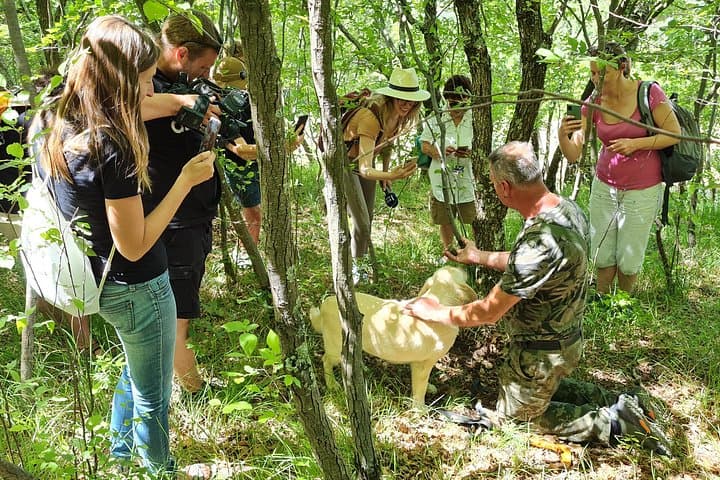


A low sun filters through oak and hazelnut branches as a handler, a keen-nosed dog, and a small group step off a dirt track into the Istrian hinterland. The forest floor is cool and damp; the dog noses, circles, and signals — a buried pearl waiting to be coaxed from limestone soil. Under a simple pergola later, steam rises from a pot of fuži while slices of fresh truffle are shaved over pasta and conversation turns to recipes and the season’s fortunes.
A low sun filters through oak and hazelnut branches as a handler, a keen-nosed dog, and a small group step off a dirt track into the Istrian hinterland. The forest floor is cool and damp; the dog noses, circles, and signals — a buried pearl waiting to be coaxed from limestone soil. Under a simple pergola later, steam rises from a pot of fuži while slices of fresh truffle are shaved over pasta and conversation turns to recipes and the season’s fortunes.
Istria’s truffle story is tied to karst geology and centuries of local cuisine. The peninsula’s limestone and thin soils give truffles their strong aroma; historically truffle hunting was regulated and sometimes forbidden, heightening the regional reverence for these fungi. Food culture here prizes simplicity — fresh fuži, a drizzle of oil, and a glass of Istrian Malvasia to cut through earthy richness.
Practical guidance: tours run about three hours with light walking (typically 1–3 km, minimal elevation gain). Groups are small (max eight), and the experience balances fieldwork with a hands-on cooking demo and tasting. Expect rustic conditions: uneven ground, insects in warm months, and active dogs at work. Wear comfortable walking shoes and weather-appropriate layers, leave strong perfumes at home, and advise organizers of dietary restrictions.
What you’ll take away is equal parts education and flavor: how dogs are trained, how to spot fresh truffle versus imitation, and a simple recipe that turns a forest find into a memorable Istrian meal. It’s an accessible outdoor food adventure that blends natural history, local tradition, and practical cooking skills.