THE ADVENTURE COLLECTIVE® · Independent discovery and booking for outdoor travel

Walk the Roman streets where emperors were born and explore a fortified monastery from the 14th century on this half‑day tour from Seville. Archaeology, mosaics and medieval art packed into a single, accessible outing.
Walk the Roman streets where emperors were born and explore a fortified monastery from the 14th century on this half‑day tour from Seville. Archaeology, mosaics and medieval art packed into a single, accessible outing.
The morning air off the Guadalquivir carries the echo of marching legions as you step from an air‑conditioned van into the scrub around Itálica. Low stone walls and sun‑bleached mosaics open like pages from a city plan: thermal baths, colonnaded streets and an amphitheater carved for 25,000 spectators that still holds a cavernous silence.
Verified experiences and guided adventures in the surrounding area.
Operated by Sevilla Moving · Santiponce, Andalusia
The morning air off the Guadalquivir carries the echo of marching legions as you step from an air‑conditioned van into the scrub around Itálica. Low stone walls and sun‑bleached mosaics open like pages from a city plan: thermal baths, colonnaded streets and an amphitheater carved for 25,000 spectators that still holds a cavernous silence.
Itálica was one of the first Roman cities in Hispania and the birthplace of emperors Trajan and Hadrian. Archaeology here exposes layered history — Roman urbanism superimposed on later agricultural uses — while nearby the Monastery of San Isidoro del Campo presents a 14th‑century shift to Gothic‑Mudejar and Renaissance forms, its cloisters preserving fresco fragments and carved stone. The geology is gentle: low rolling plains of clay and limestone that yielded building stone and seated foundations for public architecture.
Culturally the route connects imperial Rome to medieval Castile; local guides narrate civic rituals, gladiatorial spectacle and monastic life with equal clarity. Expect dry, open terrain between sites, low walking impact but uneven ancient paving underfoot.
Practical guidance: tours run about five hours with guided entry to both sites, minimal elevation gain, and on‑site walking of mixed firm earth and mosaic paving. Bring sun protection, a refillable water bottle, and sturdy shoes; mornings are cooler and afternoons can spike in summer. Photography is permitted but respect protective barriers. The itinerary is suitable for most fitness levels and makes a compact, historically rich half‑day away from Seville.
The tour runs about five hours door‑to‑door with roughly three hours at the two sites combined.
Yes — admissions to both Itálica and the Monastery of San Isidoro del Campo are included in the itinerary.
Itálica has uneven ancient paving and some steps; full accessibility is limited — contact the operator for specifics and assistance options.
Basic restroom facilities are available near the visitor areas; bring snacks or plan to eat in Seville before or after the tour.
Sevilla Moving operates guided outdoor trips and adventures with an emphasis on safety, stewardship, and memorable experiences.
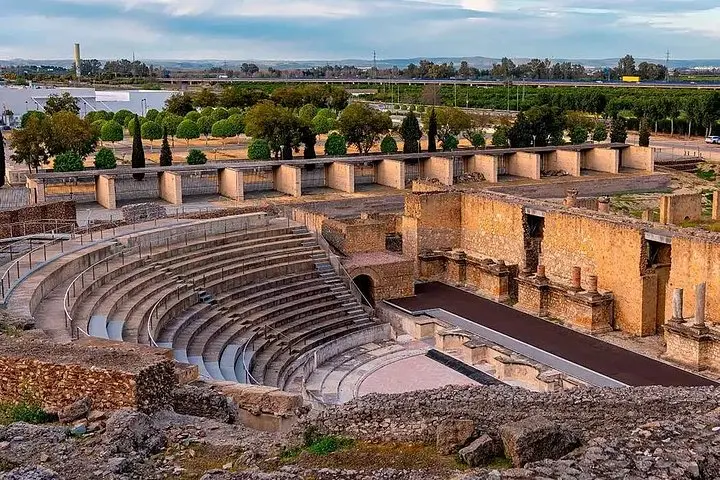
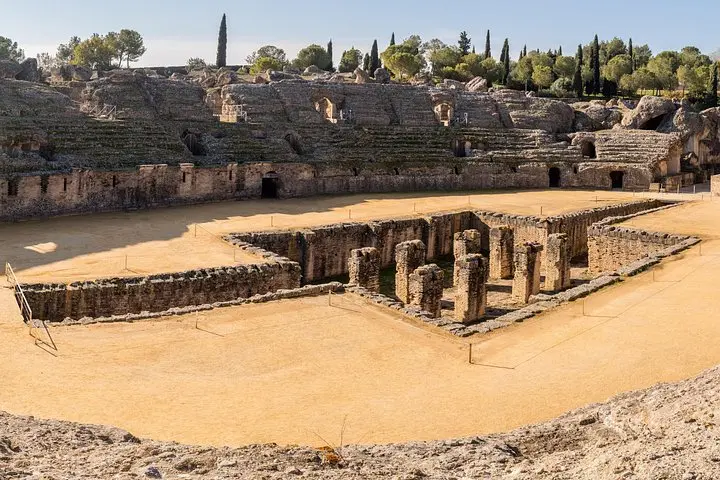
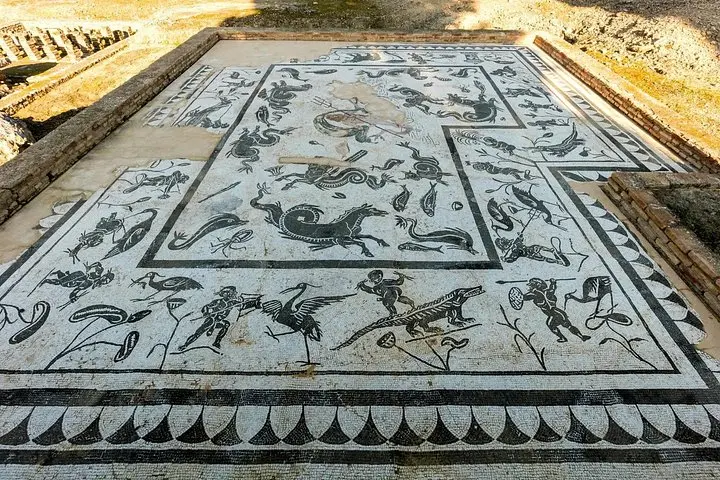
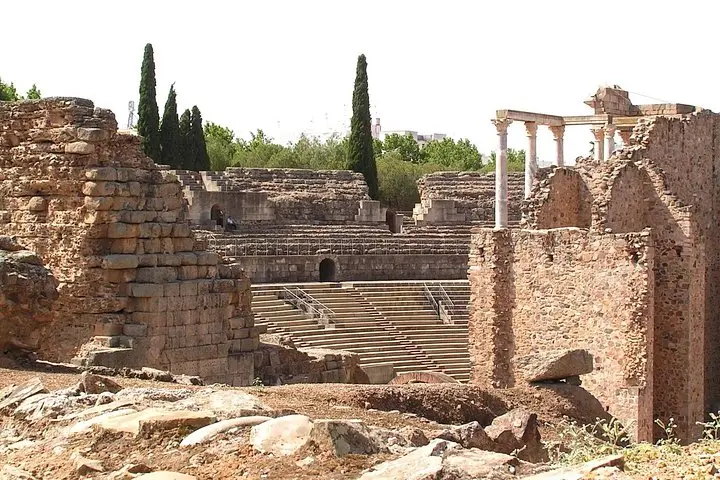
The morning air off the Guadalquivir carries the echo of marching legions as you step from an air‑conditioned van into the scrub around Itálica. Low stone walls and sun‑bleached mosaics open like pages from a city plan: thermal baths, colonnaded streets and an amphitheater carved for 25,000 spectators that still holds a cavernous silence.
The morning air off the Guadalquivir carries the echo of marching legions as you step from an air‑conditioned van into the scrub around Itálica. Low stone walls and sun‑bleached mosaics open like pages from a city plan: thermal baths, colonnaded streets and an amphitheater carved for 25,000 spectators that still holds a cavernous silence.
Itálica was one of the first Roman cities in Hispania and the birthplace of emperors Trajan and Hadrian. Archaeology here exposes layered history — Roman urbanism superimposed on later agricultural uses — while nearby the Monastery of San Isidoro del Campo presents a 14th‑century shift to Gothic‑Mudejar and Renaissance forms, its cloisters preserving fresco fragments and carved stone. The geology is gentle: low rolling plains of clay and limestone that yielded building stone and seated foundations for public architecture.
Culturally the route connects imperial Rome to medieval Castile; local guides narrate civic rituals, gladiatorial spectacle and monastic life with equal clarity. Expect dry, open terrain between sites, low walking impact but uneven ancient paving underfoot.
Practical guidance: tours run about five hours with guided entry to both sites, minimal elevation gain, and on‑site walking of mixed firm earth and mosaic paving. Bring sun protection, a refillable water bottle, and sturdy shoes; mornings are cooler and afternoons can spike in summer. Photography is permitted but respect protective barriers. The itinerary is suitable for most fitness levels and makes a compact, historically rich half‑day away from Seville.