THE ADVENTURE COLLECTIVE® · Independent discovery and booking for outdoor travel

Walk the streets of a Roman city where emperors were born and gladiators once fought. This two-hour guided tour of Itálica blends archaeology, geology and practical visiting tips to help you get the most from the ancient site.
Walk the streets of a Roman city where emperors were born and gladiators once fought. This two-hour guided tour of Itálica blends archaeology, geology and practical visiting tips to help you get the most from the ancient site.
You step out from the shade of plane trees and the amphitheatre opens like a fossilized crowd: tiers of stone ring the arena, sunlight cutting across ancient seats where the roar of gladiators once folded into the air.
Verified experiences and guided adventures in the surrounding area.
Operated by Naturanda Turismo Ambiental · Santiponce, Andalusia
You step out from the shade of plane trees and the amphitheatre opens like a fossilized crowd: tiers of stone ring the arena, sunlight cutting across ancient seats where the roar of gladiators once folded into the air.
Itálica sits on gently rolling limestone just north of Seville, founded in 206 B.C. by Roman veterans. The city's grid, house mosaics and monumental amphitheatre reflect two clear chapters — a military colony that matured into an imperial birthplace, producing emperors Trajan and Hadrian. Geology and human labor combined here: local limestone and river-transported gravels made durable foundations for public baths, streets and ornate domus. Today the site reads as both urban plan and open-air museum; mosaics peek from shaded rooms, olive groves edge the ruins, and the amphitheatre’s scale still orders the landscape.
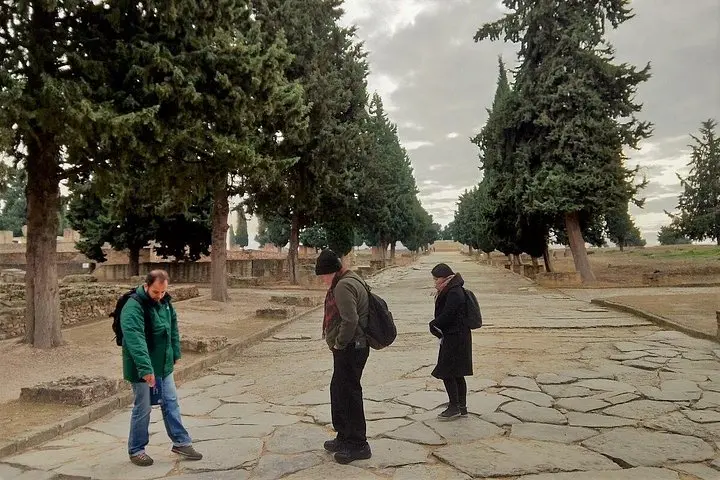
Expect a guided, two-hour walk that moves from an introduction at Av. Extremadura to the amphitheatre, mosaicked houses, and the small on-site museum. The guide will point out Roman engineering — water channels, drainage, and the city’s export economy based on grain and olive oil — and relate how Itálica appears in modern film and research.
Practical guidance: bring sun protection and a refillable water bottle, wear sturdy walking shoes for uneven stone and short slopes, and aim for morning or late afternoon to avoid peak heat. The tour is wheelchair-friendly in parts and includes skip-the-line entry; confirm language and minimum-group requirements when you book.
The guide meets visitors at Av. Extremadura, 2, 41970 Santiponce, outside the main entrance to the Itálica archaeological site.
Parts of the site and the meeting/transport options are wheelchair accessible, but some ancient surfaces are uneven — check specifics with the operator if you require full access.
Yes — the tour includes admission and skip-the-line entry to the archaeological site as part of the booking.
A minimum of three people of the same language is required; tours can be canceled if the minimum isn’t met, with alternatives or full refund offered.
Naturanda Turismo Ambiental operates guided outdoor trips and adventures with an emphasis on safety, stewardship, and memorable experiences.
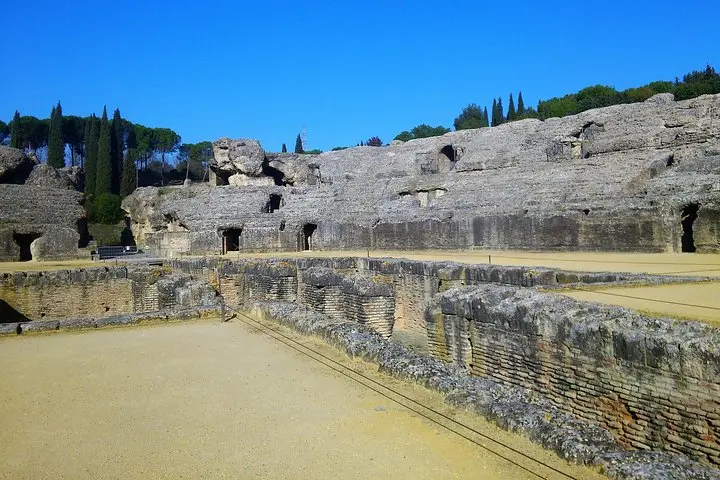
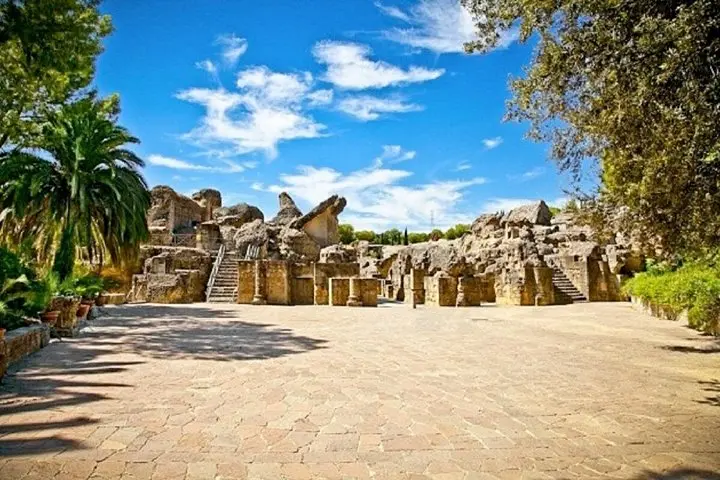
You step out from the shade of plane trees and the amphitheatre opens like a fossilized crowd: tiers of stone ring the arena, sunlight cutting across ancient seats where the roar of gladiators once folded into the air.
You step out from the shade of plane trees and the amphitheatre opens like a fossilized crowd: tiers of stone ring the arena, sunlight cutting across ancient seats where the roar of gladiators once folded into the air.
Itálica sits on gently rolling limestone just north of Seville, founded in 206 B.C. by Roman veterans. The city's grid, house mosaics and monumental amphitheatre reflect two clear chapters — a military colony that matured into an imperial birthplace, producing emperors Trajan and Hadrian. Geology and human labor combined here: local limestone and river-transported gravels made durable foundations for public baths, streets and ornate domus. Today the site reads as both urban plan and open-air museum; mosaics peek from shaded rooms, olive groves edge the ruins, and the amphitheatre’s scale still orders the landscape.
Expect a guided, two-hour walk that moves from an introduction at Av. Extremadura to the amphitheatre, mosaicked houses, and the small on-site museum. The guide will point out Roman engineering — water channels, drainage, and the city’s export economy based on grain and olive oil — and relate how Itálica appears in modern film and research.
Practical guidance: bring sun protection and a refillable water bottle, wear sturdy walking shoes for uneven stone and short slopes, and aim for morning or late afternoon to avoid peak heat. The tour is wheelchair-friendly in parts and includes skip-the-line entry; confirm language and minimum-group requirements when you book.