THE ADVENTURE COLLECTIVE® · Independent discovery and booking for outdoor travel

Launch off platforms above dry tropical forest and coastlines on a two-hour zipline course near Ixtapa. With 11 ziplines, hanging bridges and hotel pickup, this half-day adventure pairs big-air thrills with local insight and easy logistics.
Launch off platforms above dry tropical forest and coastlines on a two-hour zipline course near Ixtapa. With 11 ziplines, hanging bridges and hotel pickup, this half-day adventure pairs big-air thrills with local insight and easy logistics.
The harness clicks into place, the guide signals, and for a breath you float—wind pushing at your face, the Pacific-dipped air smelling of seaweed and dust. Below, the canopy of dry tropical forest stretches toward the bay, trees shifting like an audience as you cross from platform to platform. Eleven ziplines and a string of hanging bridges make up the course, a compact ribbon of adrenaline less than an hour from the hotels of Ixtapa and Zihuatanejo.
Verified experiences and guided adventures in the surrounding area.
Operated by Ixtapa Pacific Tours · Ixtapa, Guerrero
The harness clicks into place, the guide signals, and for a breath you float—wind pushing at your face, the Pacific-dipped air smelling of seaweed and dust. Below, the canopy of dry tropical forest stretches toward the bay, trees shifting like an audience as you cross from platform to platform. Eleven ziplines and a string of hanging bridges make up the course, a compact ribbon of adrenaline less than an hour from the hotels of Ixtapa and Zihuatanejo.
The coastline here was once a handful of fishing villages and coconut groves; in the 1970s developers carved Ixtapa out of farmland as a planned resort to pair with the older port of Zihuatanejo. Geologically, the region sits on coastal terraces formed by volcanic and sedimentary deposits—rocky promontories press into the sea while sandy coves catch warm Pacific swells. The canopy you fly over is adapted to long dry seasons, with thorny shrubs, cactus pockets and drought-hardy trees that sway with surprising personality when a gust moves through.
Local guides often pepper their briefings with stories: a shrimping boat that became an accidental landmark, or a mangrove where fishermen once tracked mullet runs. The operation supports small local crews—guides, riggers and drivers who know the trails and tides. Conservation is pragmatic: routes are designed to avoid nesting areas and installed with minimal ground disturbance, but visitors can help by sticking to the guides’ paths and avoiding single-use plastics.
Practically speaking, the whole experience is efficient. Pickup is offered from hotels and the port area; transfers take roughly 15 minutes. Expect about two hours total including transport, safety briefing, equipment fitting, and the run itself. Weight and medical restrictions apply—ziplining exerts short bursts of strain and isn't recommended for those with heart or spinal issues. Guides provide helmets, harnesses and bottled water, and teams usually run groups of up to 15.
For first-timers, the sequence of platforms feels like a natural cadence: a short line warms you up, a hanging bridge slows your rhythm and gives a view, and a long swoop lets you lean in and measure speed. Timing matters—early morning offers cooler temperatures and crisper light; late afternoon can be sultry, and tropical rains may force cancellations. Wear secure shoes, a light long-sleeve for sun and brush, and bring a small dry bag for a phone if you intend to shoot.
This zipline is less about record-breaking drops and more about connection—between back-of-house crews, the coastal forest, and the open horizon. It’s an accessible way to feel the coastline’s energy without a long hike or boat ride, and with hotel pickup, it slots neatly into a half-day of exploration in Ixtapa-Zihuatanejo.
Age and weight restrictions vary by operator; typically children must meet a minimum height and weigh between roughly 40–120 kg (88–265 lb). Confirm exact limits when booking.
Pickup is provided from most Ixtapa and Zihuatanejo hotels—give your exact hotel name and be ready about 30 minutes before departure time.
Operators cancel for safety during heavy rain or high winds and offer refunds if canceled at least 24 hours before departure; same-day cancellations for weather typically result in rescheduling or refund.
Yes—professional guides lead the course and provide helmets, harnesses, lanyards and bottled water; always inspect gear during the safety briefing.
Most guests use a small dry pouch or chest-mounted case; larger cameras aren’t practical on ziplines and may be restricted for safety.
No—this activity involves sudden forces and moderate exertion and is not recommended for people with spinal, heart or pregnancy-related restrictions.
Ixtapa Pacific Tours operates guided outdoor trips and adventures with an emphasis on safety, stewardship, and memorable experiences.
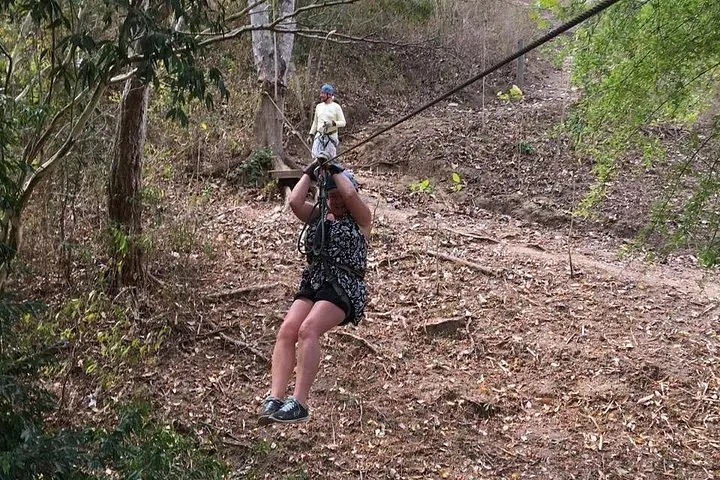
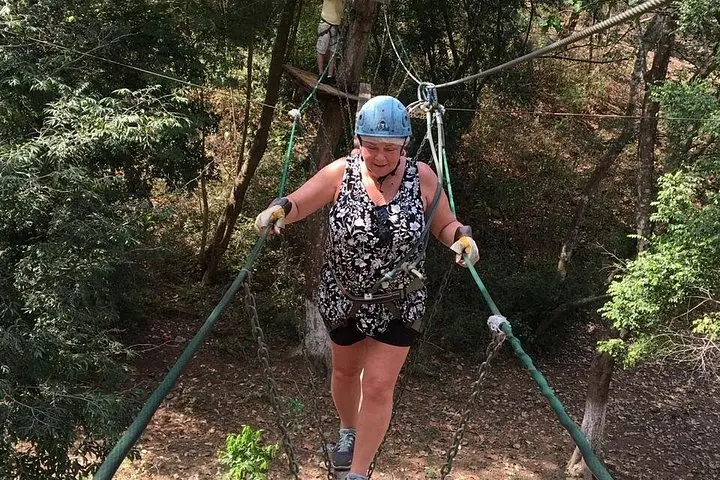
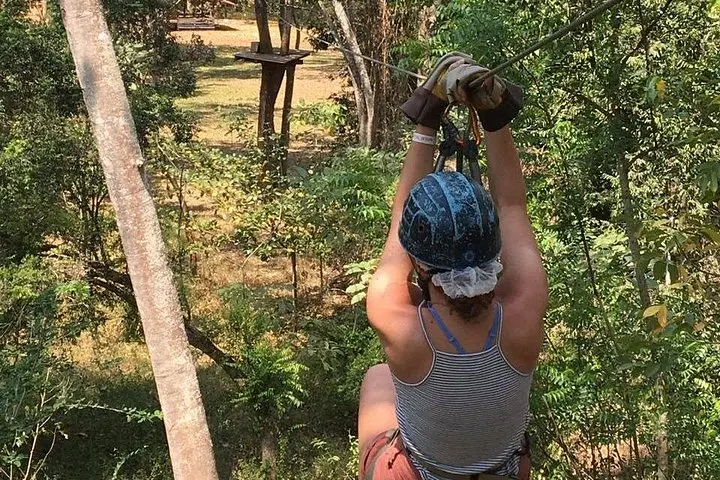
The harness clicks into place, the guide signals, and for a breath you float—wind pushing at your face, the Pacific-dipped air smelling of seaweed and dust. Below, the canopy of dry tropical forest stretches toward the bay, trees shifting like an audience as you cross from platform to platform. Eleven ziplines and a string of hanging bridges make up the course, a compact ribbon of adrenaline less than an hour from the hotels of Ixtapa and Zihuatanejo.
The harness clicks into place, the guide signals, and for a breath you float—wind pushing at your face, the Pacific-dipped air smelling of seaweed and dust. Below, the canopy of dry tropical forest stretches toward the bay, trees shifting like an audience as you cross from platform to platform. Eleven ziplines and a string of hanging bridges make up the course, a compact ribbon of adrenaline less than an hour from the hotels of Ixtapa and Zihuatanejo.
The coastline here was once a handful of fishing villages and coconut groves; in the 1970s developers carved Ixtapa out of farmland as a planned resort to pair with the older port of Zihuatanejo. Geologically, the region sits on coastal terraces formed by volcanic and sedimentary deposits—rocky promontories press into the sea while sandy coves catch warm Pacific swells. The canopy you fly over is adapted to long dry seasons, with thorny shrubs, cactus pockets and drought-hardy trees that sway with surprising personality when a gust moves through.
Local guides often pepper their briefings with stories: a shrimping boat that became an accidental landmark, or a mangrove where fishermen once tracked mullet runs. The operation supports small local crews—guides, riggers and drivers who know the trails and tides. Conservation is pragmatic: routes are designed to avoid nesting areas and installed with minimal ground disturbance, but visitors can help by sticking to the guides’ paths and avoiding single-use plastics.
Practically speaking, the whole experience is efficient. Pickup is offered from hotels and the port area; transfers take roughly 15 minutes. Expect about two hours total including transport, safety briefing, equipment fitting, and the run itself. Weight and medical restrictions apply—ziplining exerts short bursts of strain and isn't recommended for those with heart or spinal issues. Guides provide helmets, harnesses and bottled water, and teams usually run groups of up to 15.
For first-timers, the sequence of platforms feels like a natural cadence: a short line warms you up, a hanging bridge slows your rhythm and gives a view, and a long swoop lets you lean in and measure speed. Timing matters—early morning offers cooler temperatures and crisper light; late afternoon can be sultry, and tropical rains may force cancellations. Wear secure shoes, a light long-sleeve for sun and brush, and bring a small dry bag for a phone if you intend to shoot.
This zipline is less about record-breaking drops and more about connection—between back-of-house crews, the coastal forest, and the open horizon. It’s an accessible way to feel the coastline’s energy without a long hike or boat ride, and with hotel pickup, it slots neatly into a half-day of exploration in Ixtapa-Zihuatanejo.