THE ADVENTURE COLLECTIVE® · Independent discovery and booking for outdoor travel

Step into Izamal’s sunlit streets to climb Kinich Kakmó, explore a convent built atop Mayan foundations, and visit a master artisan’s workshop. This guided day tour combines archaeology, colonial history, and living craft traditions for an immersive cultural outing.
Step into Izamal’s sunlit streets to climb Kinich Kakmó, explore a convent built atop Mayan foundations, and visit a master artisan’s workshop. This guided day tour combines archaeology, colonial history, and living craft traditions for an immersive cultural outing.
You arrive from Mérida as sunlight flattens the low horizon and the town’s painted facades throw a warm yellow glow across the cobbles. Streets open into the vast plazuela of the Convent of San Antonio de Padua; stone walls and colonial arches sit on top of older stones that seem to watch you approach. Henequen fields unfurl outside town, the plant’s fibrous spines like the countryside’s quiet labor.
Verified experiences and guided adventures in the surrounding area.
Operated by TRAVELEZZA · Izamal, Yucatán
You arrive from Mérida as sunlight flattens the low horizon and the town’s painted facades throw a warm yellow glow across the cobbles. Streets open into the vast plazuela of the Convent of San Antonio de Padua; stone walls and colonial arches sit on top of older stones that seem to watch you approach. Henequen fields unfurl outside town, the plant’s fibrous spines like the countryside’s quiet labor.
Izamal is a place of layers: Pre‑Hispanic platforms and the Kinich Kakmó pyramid—one of the largest bases in the Yucatán—rise beneath a 16th‑century convent whose atrium is the second largest in the Americas. Geologically, the flat limestone peninsula yields broad, low mounds rather than jagged peaks; Mayan builders took advantage of these platforms to elevate civic and ritual spaces. Culture here is tactile—textiles, cocoyol seed jewelry, and henequen crafts continue living traditions you can see in the Cultural Center Museum and in the home workshop of Don Esteban.
Practical guidance: this is a mostly flat, walkable day trip of roughly 6–7 hours with short climbs on the pyramids’ terraces. Wear sturdy walking shoes, pack sun protection and a refillable water bottle, and budget time for a leisurely lunch of cochinita pibil or panuchos. Respect signs at archaeological sites: some areas are fragile and may be off limits. Bring small cash for artisan purchases if you want to take a piece of local craft back home.
Yes—private transportation is included and the drive is roughly one hour each way from Mérida.
Admission is included for the Convent and the artisan workshop according to the itinerary; confirm any museum fees with the operator.
The tour is listed as physically easy and allows strollers for short distances, but pyramid climbs involve steep stone steps not suitable for strollers.
Yes—Don Esteban sells handcrafted pieces in his workshop; small cash and local payment methods are commonly accepted.
TRAVELEZZA operates guided outdoor trips and adventures with an emphasis on safety, stewardship, and memorable experiences.

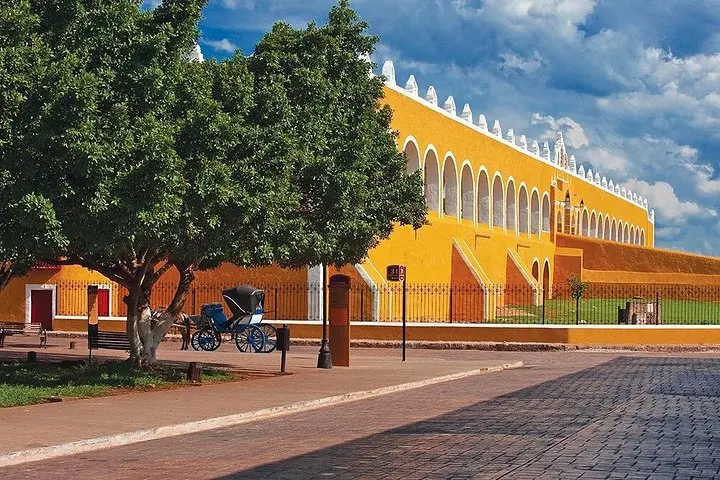
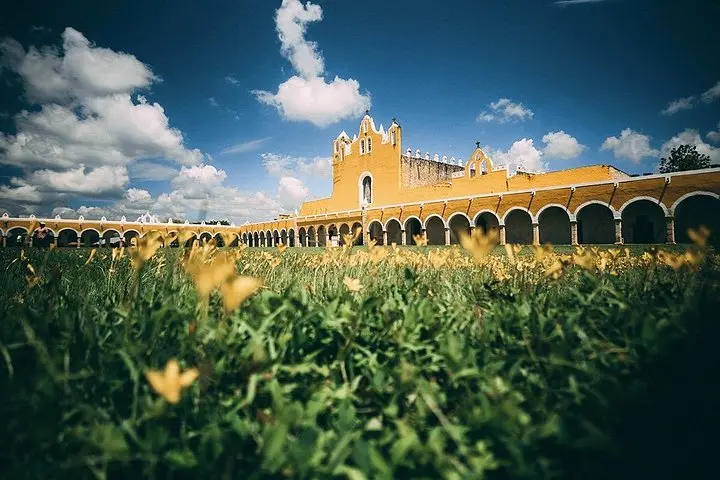
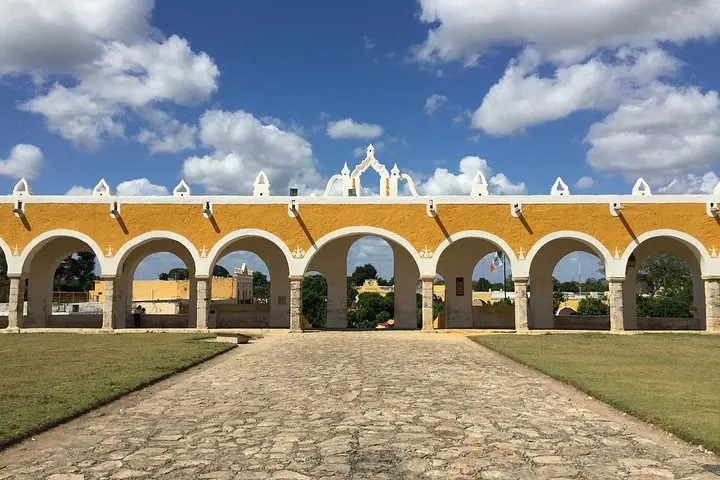
You arrive from Mérida as sunlight flattens the low horizon and the town’s painted facades throw a warm yellow glow across the cobbles. Streets open into the vast plazuela of the Convent of San Antonio de Padua; stone walls and colonial arches sit on top of older stones that seem to watch you approach. Henequen fields unfurl outside town, the plant’s fibrous spines like the countryside’s quiet labor.
You arrive from Mérida as sunlight flattens the low horizon and the town’s painted facades throw a warm yellow glow across the cobbles. Streets open into the vast plazuela of the Convent of San Antonio de Padua; stone walls and colonial arches sit on top of older stones that seem to watch you approach. Henequen fields unfurl outside town, the plant’s fibrous spines like the countryside’s quiet labor.
Izamal is a place of layers: Pre‑Hispanic platforms and the Kinich Kakmó pyramid—one of the largest bases in the Yucatán—rise beneath a 16th‑century convent whose atrium is the second largest in the Americas. Geologically, the flat limestone peninsula yields broad, low mounds rather than jagged peaks; Mayan builders took advantage of these platforms to elevate civic and ritual spaces. Culture here is tactile—textiles, cocoyol seed jewelry, and henequen crafts continue living traditions you can see in the Cultural Center Museum and in the home workshop of Don Esteban.
Practical guidance: this is a mostly flat, walkable day trip of roughly 6–7 hours with short climbs on the pyramids’ terraces. Wear sturdy walking shoes, pack sun protection and a refillable water bottle, and budget time for a leisurely lunch of cochinita pibil or panuchos. Respect signs at archaeological sites: some areas are fragile and may be off limits. Bring small cash for artisan purchases if you want to take a piece of local craft back home.