THE ADVENTURE COLLECTIVE® · Independent discovery and booking for outdoor travel

Step away from the city and into the high-altitude world of Iztaccíhuatl. This full-day tour from Mexico City delivers volcanic sand tracks, pine-scented ridgelines, and sweeping views of both Iztaccíhuatl and Popocatépetl—along with practical guidance for hiking above 3,600 meters.
Step away from the city and into the high-altitude world of Iztaccíhuatl. This full-day tour from Mexico City delivers volcanic sand tracks, pine-scented ridgelines, and sweeping views of both Iztaccíhuatl and Popocatépetl—along with practical guidance for hiking above 3,600 meters.
Morning on the high plain feels like walking into a different clock. City noise thins as the van climbs out of the basin; by the time the pine scent takes over, Iztaccíhuatl’s ridgeline has already carved a silhouette against a cobalt sky. Guides call the trailhead La Joya, and from there the volcano doesn’t just loom — it tests your lungs. At 3,600 meters the air is thinner, the pines shorter, and each step takes deliberate patience.
Verified experiences and guided adventures in the surrounding area.
Operated by Qué Loco! Tours · Amecameca, Estado de México
Morning on the high plain feels like walking into a different clock. City noise thins as the van climbs out of the basin; by the time the pine scent takes over, Iztaccíhuatl’s ridgeline has already carved a silhouette against a cobalt sky. Guides call the trailhead La Joya, and from there the volcano doesn’t just loom — it tests your lungs. At 3,600 meters the air is thinner, the pines shorter, and each step takes deliberate patience.
Iztaccíhuatl and nearby Popocatépetl share an old rivalry: one sleeps in snow and legend, the other awakens with steam and warning lights. Geologically they’re members of the Trans-Mexican Volcanic Belt, born from the Cocos Plate sliding beneath the North American Plate. Culturally the peaks are woven into Nahua myth — lovers turned to stone — and local villages still measure seasons by the glaciers’ moods and the rains that come down their slopes.
The park is a study in contrasts: open volcanic sand that seems to roll under your boot, stubborn bedrock, ribboning streams that dare you to follow them downstream, and pockets of pine forest where the smell of resin sharpens. The tour offers three routes: a Level 1 loop from 3,600 to about 3,980 meters (8–9 km, mostly moderate uphill), a Level 2 traverse (13–14 km, waterfalls and streams), and Level 3 — a compact but high-altitude scramble up to roughly 4,500 meters on sandy and stony ground.
On any route the guide becomes essential — not only for navigation but to interpret the ecology: hardy alpine plants, lichens that cling to pumice, and the small mammals that live where tourists rarely linger.
Practicalities matter here. The operator includes round-trip transport from Mexico City and can pick up in Puebla/Cholula; expect an 11-hour day on their itinerary to allow for travel, acclimatization, and returns. Weather shifts fast at altitude: sun can be intense and the afternoon can bring wind or sleet even in summer. Hydration and pacing are your first defenses against altitude strain.
Footwear with grip, layered clothing, sun protection, and snacks with electrolytes will change the character of the day. Respect park rules, leave no trace, and keep distance from Popocatépetl — the active neighbor is monitored and access can close without notice.
For travelers wanting a single, memorable day outside the urban sprawl, Iztaccíhuatl offers a compact mountain experience: raw geology, clear air, and a view of one of Mexico’s most dramatic volcano duos. Hike deliberately, breathe slowly, and let the peaks set the pace.
The operator lists a full-day itinerary (about 11 hours including transport); inclusions typically cover round-trip transport, certified guide, park entrance, and basic safety equipment.
Level 1 is best for beginners: roughly 8–9 km, max elevation ~3,980 m with moderate uphill sections and marked sandy trail.
Yes — altitude starts at 3,600 m; mild symptoms are common. Rest, hydrate, and tell your guide if you feel unwell.
No—Popocatépetl is active and access is restricted for safety; the tour offers views from safe distances only.
The supplier notes English is spoken; confirm language preference when booking for clarity.
Tours can be canceled for safety (operator may cancel in bad weather); check cancellation policy and rescheduling options before booking.
Qué Loco! Tours operates guided outdoor trips and adventures with an emphasis on safety, stewardship, and memorable experiences.
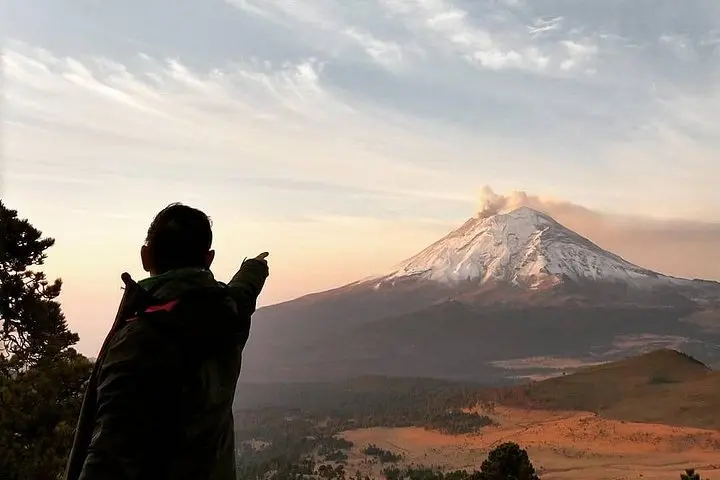
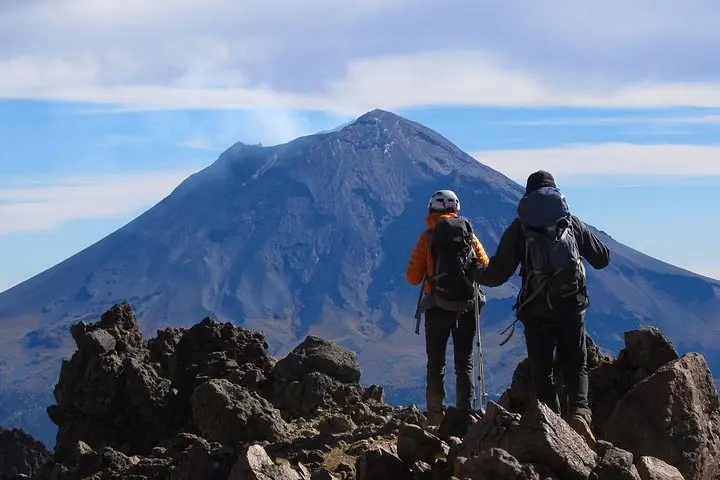
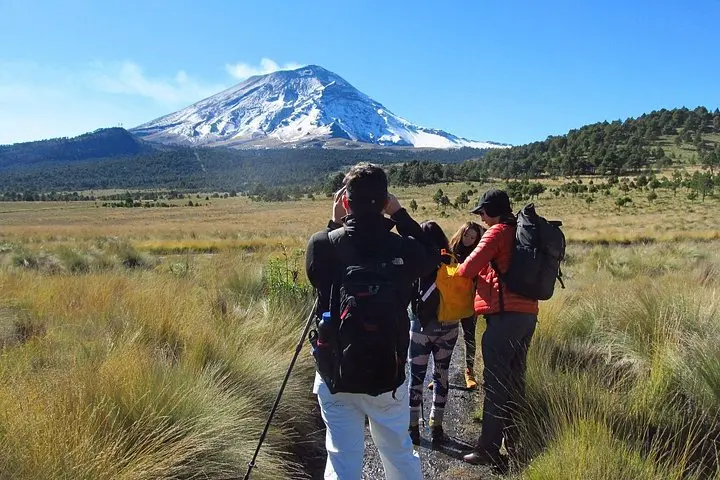
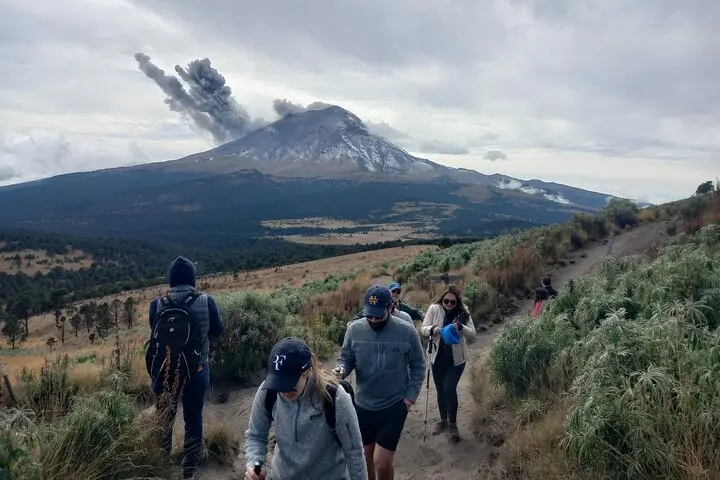
Morning on the high plain feels like walking into a different clock. City noise thins as the van climbs out of the basin; by the time the pine scent takes over, Iztaccíhuatl’s ridgeline has already carved a silhouette against a cobalt sky. Guides call the trailhead La Joya, and from there the volcano doesn’t just loom — it tests your lungs. At 3,600 meters the air is thinner, the pines shorter, and each step takes deliberate patience.
Morning on the high plain feels like walking into a different clock. City noise thins as the van climbs out of the basin; by the time the pine scent takes over, Iztaccíhuatl’s ridgeline has already carved a silhouette against a cobalt sky. Guides call the trailhead La Joya, and from there the volcano doesn’t just loom — it tests your lungs. At 3,600 meters the air is thinner, the pines shorter, and each step takes deliberate patience.
Iztaccíhuatl and nearby Popocatépetl share an old rivalry: one sleeps in snow and legend, the other awakens with steam and warning lights. Geologically they’re members of the Trans-Mexican Volcanic Belt, born from the Cocos Plate sliding beneath the North American Plate. Culturally the peaks are woven into Nahua myth — lovers turned to stone — and local villages still measure seasons by the glaciers’ moods and the rains that come down their slopes.
The park is a study in contrasts: open volcanic sand that seems to roll under your boot, stubborn bedrock, ribboning streams that dare you to follow them downstream, and pockets of pine forest where the smell of resin sharpens. The tour offers three routes: a Level 1 loop from 3,600 to about 3,980 meters (8–9 km, mostly moderate uphill), a Level 2 traverse (13–14 km, waterfalls and streams), and Level 3 — a compact but high-altitude scramble up to roughly 4,500 meters on sandy and stony ground.
On any route the guide becomes essential — not only for navigation but to interpret the ecology: hardy alpine plants, lichens that cling to pumice, and the small mammals that live where tourists rarely linger.
Practicalities matter here. The operator includes round-trip transport from Mexico City and can pick up in Puebla/Cholula; expect an 11-hour day on their itinerary to allow for travel, acclimatization, and returns. Weather shifts fast at altitude: sun can be intense and the afternoon can bring wind or sleet even in summer. Hydration and pacing are your first defenses against altitude strain.
Footwear with grip, layered clothing, sun protection, and snacks with electrolytes will change the character of the day. Respect park rules, leave no trace, and keep distance from Popocatépetl — the active neighbor is monitored and access can close without notice.
For travelers wanting a single, memorable day outside the urban sprawl, Iztaccíhuatl offers a compact mountain experience: raw geology, clear air, and a view of one of Mexico’s most dramatic volcano duos. Hike deliberately, breathe slowly, and let the peaks set the pace.