THE ADVENTURE COLLECTIVE® · Independent discovery and booking for outdoor travel

Drive into the high Hajar on a shared 4WD day trip that pairs rim-top views of Wadi Ghul with cultural stops in Al Hamra and Nizwa. Expect short walks, historic forts, mountain villages and big, dry canyons—an efficient, immersive introduction to Oman’s inland high country.
Drive into the high Hajar on a shared 4WD day trip that pairs rim-top views of Wadi Ghul with cultural stops in Al Hamra and Nizwa. Expect short walks, historic forts, mountain villages and big, dry canyons—an efficient, immersive introduction to Oman’s inland high country.
The sun is still low when the 4x4 grinds up from Al Hamra, the valley shrinking away and the Hajar ridgeline rising like a tectonic bruise. By the time the convoy pulls up to the edge of Wadi Ghul, often called the 'Grand Canyon of Arabia,' the light has already begun to carve the cliffs into long, bronze ledges. Wind tugs at your jacket; the canyon answers by breathing out a dry, mineral aroma that seems to age everything it passes.
Verified experiences and guided adventures in the surrounding area.
Operated by Explore Nizwa & Al Hamra with Ahmed · Al Hamra, Ad Dakhiliyah Governorate
The sun is still low when the 4x4 grinds up from Al Hamra, the valley shrinking away and the Hajar ridgeline rising like a tectonic bruise. By the time the convoy pulls up to the edge of Wadi Ghul, often called the 'Grand Canyon of Arabia,' the light has already begun to carve the cliffs into long, bronze ledges. Wind tugs at your jacket; the canyon answers by breathing out a dry, mineral aroma that seems to age everything it passes.
This shared 7–8 hour tour combines a rugged mountain drive with short walks, historical stops and a chance to move between layers of Oman’s past. Nizwa Fort—built in the 17th century—dominates the lowlands with its circular tower and was once a strategic center of trade and learning. Higher up, the mud-brick villages of Al Hamra and nearby Misfat al Abriyeen preserve traditional irrigation terraces and stone-craft techniques that feel stubbornly resistant to time.
Geologically the Hajar Mountains are young and sharp: uplifted by the Arabian plate’s slow collision with the Eurasian plate, they expose jagged limestone and deep canyons where winter rains can gouge new channels overnight. Culturally, the route has been a corridor between mountain farmers and desert traders for centuries; local guides often point out ancient terracing, falaj irrigation channels and small shrines where pilgrims once paused.
The day is practical as much as picturesque. Drives over unimproved switchbacks demand a competent 4WD; short rim walks are usually 1–3 km with modest ups and downs, but footing can be loose. The guide will pause for photos at the Wadi Ghul rim and for a stroll through Al Hamra’s old quarter—expect pottery stalls, coffee served strong, and handshake greetings. Optional stops like Bahla Fort carry separate admission fees purchased on site.
Plan for temperature swings: mornings at the rim can be cool at altitude (Jabal Shams tops out near 3,000 m / ~9,800 ft), while valleys bake by midday. Hydration, sun protection and layered clothing are non-negotiable. Wear sturdy shoes for gravel and uneven village lanes and bring cash for market purchases and any entrance tickets.
Logistics are straightforward: pickup from Nizwa or Al Hamra, a small shared group size for local attention and a guide who doubles as cultural interpreter. The payoff is straightforward too—raw panoramas, living mountain villages and a day that folds together nature and history without fuss.
The tour runs about 7–8 hours; most departures are early morning to reach the rim with favorable light and cooler temperatures.
No — optional attractions such as Bahla Fort require tickets purchased on site, so bring cash.
Short rim walks are typically 1–3 km with uneven footing; you don’t need technical hiking skills but should be steady on your feet.
Small children can join but must sit on laps when required; the tour is shared and involves some vehicle movement and short walks—ask the operator about mobility needs.
Jabal Shams reaches roughly 3,000 m; most visitors experience only mild effects. Take it easy on steep walks and hydrate.
Local guides commonly speak English and Arabic; pickups are offered from Nizwa, Al Hamra and nearby hotels—confirm your exact pickup point when booking.
Explore Nizwa & Al Hamra with Ahmed operates guided outdoor trips and adventures with an emphasis on safety, stewardship, and memorable experiences.
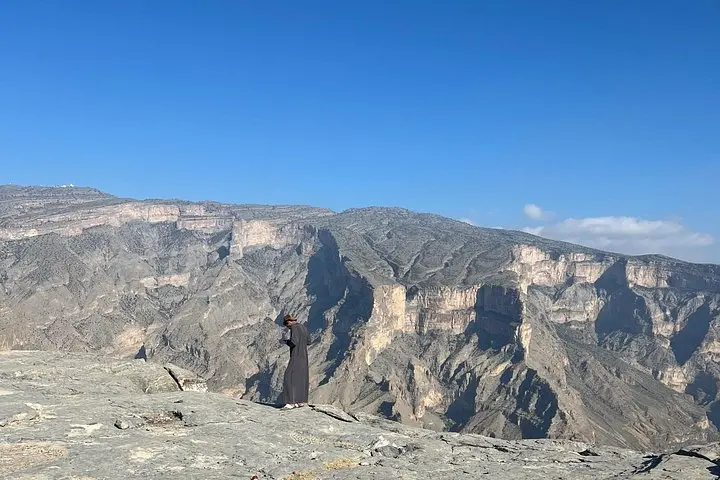
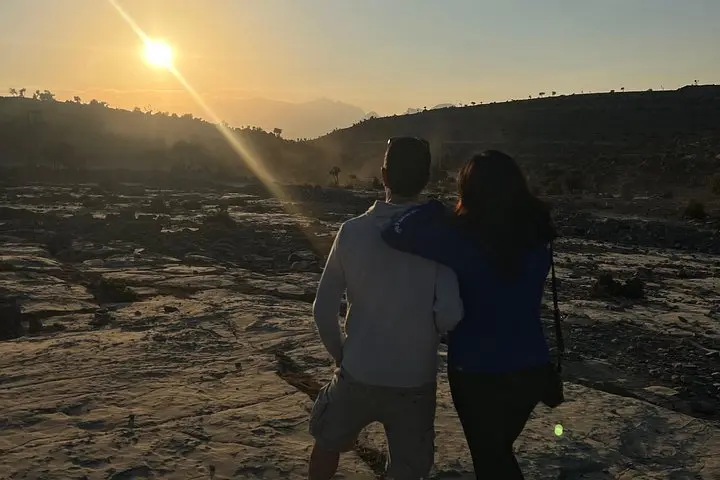
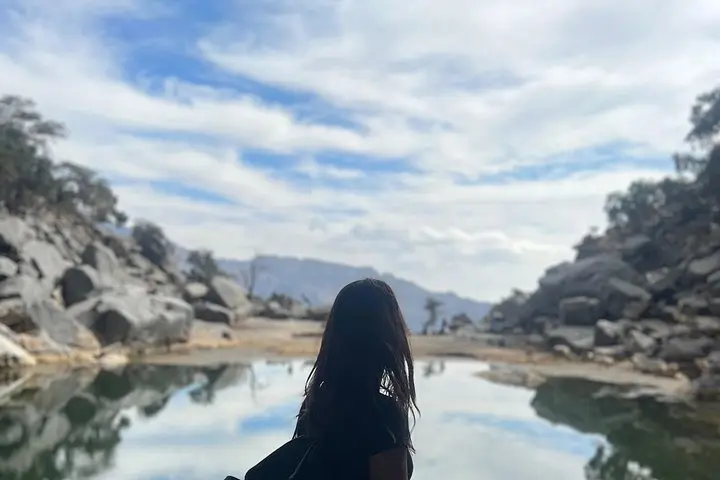
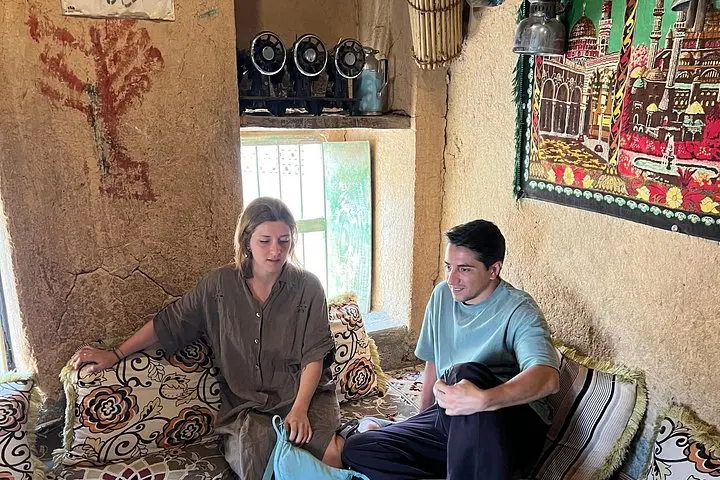
The sun is still low when the 4x4 grinds up from Al Hamra, the valley shrinking away and the Hajar ridgeline rising like a tectonic bruise. By the time the convoy pulls up to the edge of Wadi Ghul, often called the 'Grand Canyon of Arabia,' the light has already begun to carve the cliffs into long, bronze ledges. Wind tugs at your jacket; the canyon answers by breathing out a dry, mineral aroma that seems to age everything it passes.
The sun is still low when the 4x4 grinds up from Al Hamra, the valley shrinking away and the Hajar ridgeline rising like a tectonic bruise. By the time the convoy pulls up to the edge of Wadi Ghul, often called the 'Grand Canyon of Arabia,' the light has already begun to carve the cliffs into long, bronze ledges. Wind tugs at your jacket; the canyon answers by breathing out a dry, mineral aroma that seems to age everything it passes.
This shared 7–8 hour tour combines a rugged mountain drive with short walks, historical stops and a chance to move between layers of Oman’s past. Nizwa Fort—built in the 17th century—dominates the lowlands with its circular tower and was once a strategic center of trade and learning. Higher up, the mud-brick villages of Al Hamra and nearby Misfat al Abriyeen preserve traditional irrigation terraces and stone-craft techniques that feel stubbornly resistant to time.
Geologically the Hajar Mountains are young and sharp: uplifted by the Arabian plate’s slow collision with the Eurasian plate, they expose jagged limestone and deep canyons where winter rains can gouge new channels overnight. Culturally, the route has been a corridor between mountain farmers and desert traders for centuries; local guides often point out ancient terracing, falaj irrigation channels and small shrines where pilgrims once paused.
The day is practical as much as picturesque. Drives over unimproved switchbacks demand a competent 4WD; short rim walks are usually 1–3 km with modest ups and downs, but footing can be loose. The guide will pause for photos at the Wadi Ghul rim and for a stroll through Al Hamra’s old quarter—expect pottery stalls, coffee served strong, and handshake greetings. Optional stops like Bahla Fort carry separate admission fees purchased on site.
Plan for temperature swings: mornings at the rim can be cool at altitude (Jabal Shams tops out near 3,000 m / ~9,800 ft), while valleys bake by midday. Hydration, sun protection and layered clothing are non-negotiable. Wear sturdy shoes for gravel and uneven village lanes and bring cash for market purchases and any entrance tickets.
Logistics are straightforward: pickup from Nizwa or Al Hamra, a small shared group size for local attention and a guide who doubles as cultural interpreter. The payoff is straightforward too—raw panoramas, living mountain villages and a day that folds together nature and history without fuss.