THE ADVENTURE COLLECTIVE® · Independent discovery and booking for outdoor travel

Trace the grim footsteps of 1888 through Whitechapel on a focused two-hour walking tour. Visit ten sites tied to the Jack the Ripper investigations while a knowledgeable guide separates documented fact from myth.
Trace the grim footsteps of 1888 through Whitechapel on a focused two-hour walking tour. Visit ten sites tied to the Jack the Ripper investigations while a knowledgeable guide separates documented fact from myth.
Walk into Whitechapel as the light thins and the city’s brick and cobble begin to cool under a London sky. The lane stubs and back alleys here keep the kind of echoes that make a two-hour walking tour feel immediate: gaslight-stamped facades, narrow courts, and the Thames—always close enough to carry a dampness that clings to collars.
Verified experiences and guided adventures in the surrounding area.
Operated by Compleat Walks · London, England
Walk into Whitechapel as the light thins and the city’s brick and cobble begin to cool under a London sky. The lane stubs and back alleys here keep the kind of echoes that make a two-hour walking tour feel immediate: gaslight-stamped facades, narrow courts, and the Thames—always close enough to carry a dampness that clings to collars.
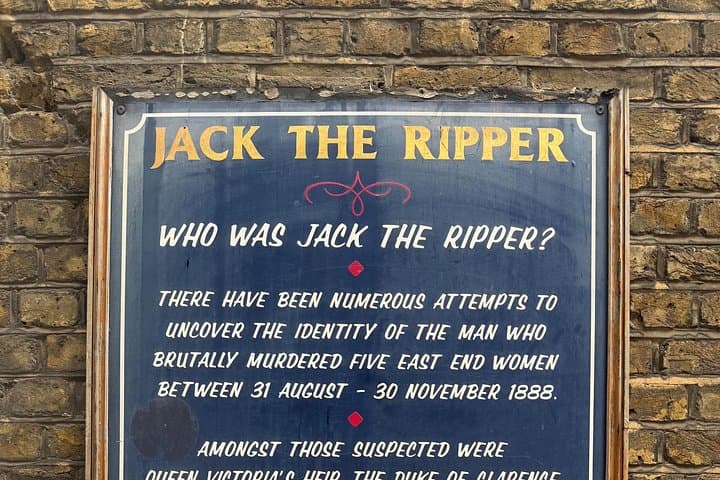
In 1888 this district was the locus of a series of brutal murders that shocked Victorian Britain. The tour moves through ten sites linked to the Whitechapel murders, laying out the known facts, the period policing methods, and the social conditions—overcrowding, poverty, and a shifting immigrant population—that framed the investigation. Geologically, East London sits on reclaimed marshlands and brickearth, which shaped settlement patterns and the maze-like alleys where many of the crimes occurred.
Culturally the area has always been gritty and alive: pubs such as the nearby Ten Bells became part of the story, while markets and narrow yards recall working-class rhythms. Guides balance grim detail with context, explaining how evidence handling then differs from modern forensics and why many suspects remain disputed.
Practical notes: the walk covers roughly 1.5–2 miles on uneven cobbles and short flights of steps, so wear sturdy shoes and bring a rain layer. Public transport access is frequent—Aldgate East/Whitechapel stations—and the tour is suitable for most adults; families should consider the subject matter. Keep curiosity tempered with respect for victims and local residents; the past is tangible here and the streets demand quiet attention.
The tour lasts about 2 hours and covers roughly 1.5–2 miles with several stops at street-level sites.
The subject matter is grisly and may not be appropriate for young children; discretion is advised for families.
Meetings are typically near Whitechapel/Aldgate East stations—both are a short walk and well-served by the London Underground and buses.
Yes, photography is allowed on public streets, but please avoid disturbing residents or crowding narrow passages when stopping for pictures.
Compleat Walks operates guided outdoor trips and adventures with an emphasis on safety, stewardship, and memorable experiences.
Walk into Whitechapel as the light thins and the city’s brick and cobble begin to cool under a London sky. The lane stubs and back alleys here keep the kind of echoes that make a two-hour walking tour feel immediate: gaslight-stamped facades, narrow courts, and the Thames—always close enough to carry a dampness that clings to collars.
Walk into Whitechapel as the light thins and the city’s brick and cobble begin to cool under a London sky. The lane stubs and back alleys here keep the kind of echoes that make a two-hour walking tour feel immediate: gaslight-stamped facades, narrow courts, and the Thames—always close enough to carry a dampness that clings to collars.
In 1888 this district was the locus of a series of brutal murders that shocked Victorian Britain. The tour moves through ten sites linked to the Whitechapel murders, laying out the known facts, the period policing methods, and the social conditions—overcrowding, poverty, and a shifting immigrant population—that framed the investigation. Geologically, East London sits on reclaimed marshlands and brickearth, which shaped settlement patterns and the maze-like alleys where many of the crimes occurred.
Culturally the area has always been gritty and alive: pubs such as the nearby Ten Bells became part of the story, while markets and narrow yards recall working-class rhythms. Guides balance grim detail with context, explaining how evidence handling then differs from modern forensics and why many suspects remain disputed.
Practical notes: the walk covers roughly 1.5–2 miles on uneven cobbles and short flights of steps, so wear sturdy shoes and bring a rain layer. Public transport access is frequent—Aldgate East/Whitechapel stations—and the tour is suitable for most adults; families should consider the subject matter. Keep curiosity tempered with respect for victims and local residents; the past is tangible here and the streets demand quiet attention.