THE ADVENTURE COLLECTIVE® · Independent discovery and booking for outdoor travel

Explore a short, wildlife-focused hike through Tortuguero National Park where guides use binoculars and a telescope to reveal sloths, monkeys and tropical birds. This easy, two-hour trail is a concentrated wildlife viewing experience best at dawn or dusk.
Explore a short, wildlife-focused hike through Tortuguero National Park where guides use binoculars and a telescope to reveal sloths, monkeys and tropical birds. This easy, two-hour trail is a concentrated wildlife viewing experience best at dawn or dusk.
Dawn on the Jaguar Trail arrives like a curtain lifting over wet forest: air heavy with humidity, leaves flicking as toucans and tanagers hop through the canopy, and the canal-side mud sighs under the boots of a small group. The trail threads old-growth tropical forest and secondary growth close to the park’s waterways, where guides point out sloths, howler monkeys and secretive mammals through binoculars and a field telescope.
Verified experiences and guided adventures in the surrounding area.
Operated by Tico Tour · Tortuguero, Limón Province
Dawn on the Jaguar Trail arrives like a curtain lifting over wet forest: air heavy with humidity, leaves flicking as toucans and tanagers hop through the canopy, and the canal-side mud sighs under the boots of a small group. The trail threads old-growth tropical forest and secondary growth close to the park’s waterways, where guides point out sloths, howler monkeys and secretive mammals through binoculars and a field telescope.
Tortuguero’s low-lying terrain was shaped by river deposits and Caribbean tides; soils are peaty and flat, so the trail stays relatively level and accessible. The park’s history is rooted in indigenous communities and later conservation efforts to protect sea turtle nesting beaches and inland wildlife corridors. Local guides often share cultural notes about the Afro-Caribbean and indigenous traditions that still influence food, music and place names in the region.
On the trail expect close-up birding, slow-moving mammals and late-morning sloth sightings; the channel and forest edges act like a magnet, drawing animals to predictable feeding spots. Guides use optics and quiet pacing to transform a short hike into a concentrated wildlife-watching window.
Practical guidance: the route is easy-grade but muddy after rain—wear closed, grippy shoes; bring a lightweight rain jacket, insect repellent and a dry bag for electronics. Plan for early starts when wildlife is most active, and keep conversations low; the trail is narrow and the habitat sensitive. Cameras with zoom lenses capture more than wide-angle snapshots.
The Jaguar Trail is short in distance but rich in encounters—a compact, low-effort wildlife immersion inside one of Costa Rica’s most biodiverse coastal parks.
The guided experience lasts about two hours on mostly level ground—designed as a short wildlife walk rather than a long trek.
No—jaguars are extremely rare to observe here; the trail focuses on birds, sloths, monkeys and other more commonly seen mammals.
The activity is rated physically easy and generally suitable for children, but it’s not recommended for pregnant travelers due to remote terrain and potential for bumps or wet conditions.
Guides provide binoculars and a telescope, but bringing personal binoculars can speed up your viewing and photo opportunities.
Tico Tour operates guided outdoor trips and adventures with an emphasis on safety, stewardship, and memorable experiences.
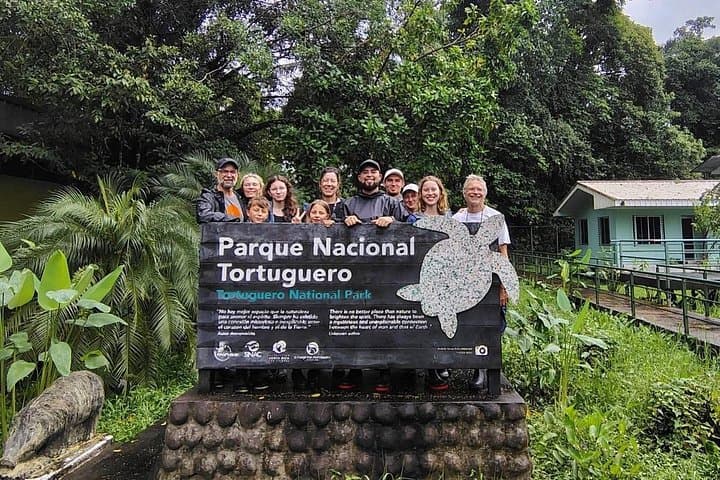


Dawn on the Jaguar Trail arrives like a curtain lifting over wet forest: air heavy with humidity, leaves flicking as toucans and tanagers hop through the canopy, and the canal-side mud sighs under the boots of a small group. The trail threads old-growth tropical forest and secondary growth close to the park’s waterways, where guides point out sloths, howler monkeys and secretive mammals through binoculars and a field telescope.
Dawn on the Jaguar Trail arrives like a curtain lifting over wet forest: air heavy with humidity, leaves flicking as toucans and tanagers hop through the canopy, and the canal-side mud sighs under the boots of a small group. The trail threads old-growth tropical forest and secondary growth close to the park’s waterways, where guides point out sloths, howler monkeys and secretive mammals through binoculars and a field telescope.
Tortuguero’s low-lying terrain was shaped by river deposits and Caribbean tides; soils are peaty and flat, so the trail stays relatively level and accessible. The park’s history is rooted in indigenous communities and later conservation efforts to protect sea turtle nesting beaches and inland wildlife corridors. Local guides often share cultural notes about the Afro-Caribbean and indigenous traditions that still influence food, music and place names in the region.
On the trail expect close-up birding, slow-moving mammals and late-morning sloth sightings; the channel and forest edges act like a magnet, drawing animals to predictable feeding spots. Guides use optics and quiet pacing to transform a short hike into a concentrated wildlife-watching window.
Practical guidance: the route is easy-grade but muddy after rain—wear closed, grippy shoes; bring a lightweight rain jacket, insect repellent and a dry bag for electronics. Plan for early starts when wildlife is most active, and keep conversations low; the trail is narrow and the habitat sensitive. Cameras with zoom lenses capture more than wide-angle snapshots.
The Jaguar Trail is short in distance but rich in encounters—a compact, low-effort wildlife immersion inside one of Costa Rica’s most biodiverse coastal parks.