THE ADVENTURE COLLECTIVE® · Independent discovery and booking for outdoor travel

Take an open jeep through Jaipur as the city shifts from gold to electric lights: sunset at Amber Fort, quick photo stops at Hawa Mahal and Jal Mahal, plus a home-cooked Rajasthani dinner. This compact evening tour mixes history, views and local hospitality in 3–4 hours.
Take an open jeep through Jaipur as the city shifts from gold to electric lights: sunset at Amber Fort, quick photo stops at Hawa Mahal and Jal Mahal, plus a home-cooked Rajasthani dinner. This compact evening tour mixes history, views and local hospitality in 3–4 hours.
The jeep’s engine hums as the sun slopes low behind the Aravalli ridgeline, and warm light washes over the honey-colored stone of Amber Fort. In an open jeep you move through Jaipur’s evening: a brief stop for the sunset viewpoint, headlights cutting across narrow streets, and the city’s ornate facades sliding past as the guide outlines their stories.
Verified experiences and guided adventures in the surrounding area.
Operated by Pink City Guide · Jaipur, Rajasthan
The jeep’s engine hums as the sun slopes low behind the Aravalli ridgeline, and warm light washes over the honey-colored stone of Amber Fort. In an open jeep you move through Jaipur’s evening: a brief stop for the sunset viewpoint, headlights cutting across narrow streets, and the city’s ornate facades sliding past as the guide outlines their stories.
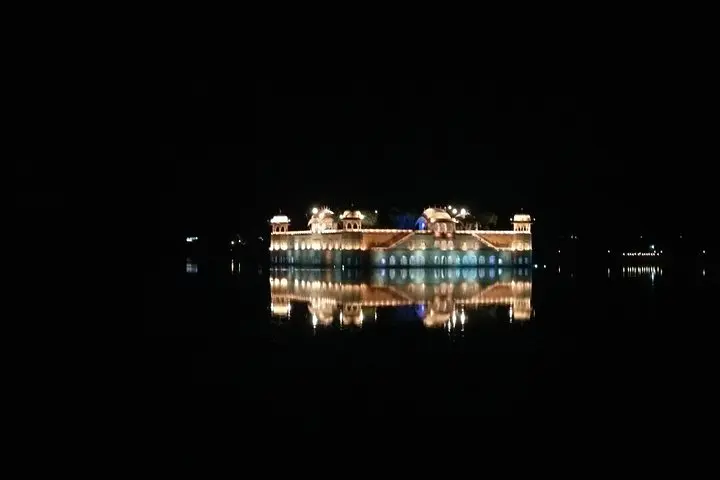
Jaipur was founded in 1727 by Maharaja Jai Singh II and its streets still reflect the Maharaja-era grid and Mughal-Rajput architecture. Amber Fort is a defensive palace of sandstone and marble; Hawa Mahal is a shallow, latticed face designed for royal women to watch street life; Jal Mahal floats in Man Sagar Lake when monsoon-fed water rises. Geologically, the Aravallis are one of the world’s oldest ranges, their worn hills framing the city and catching desert breezes that cool the evening.
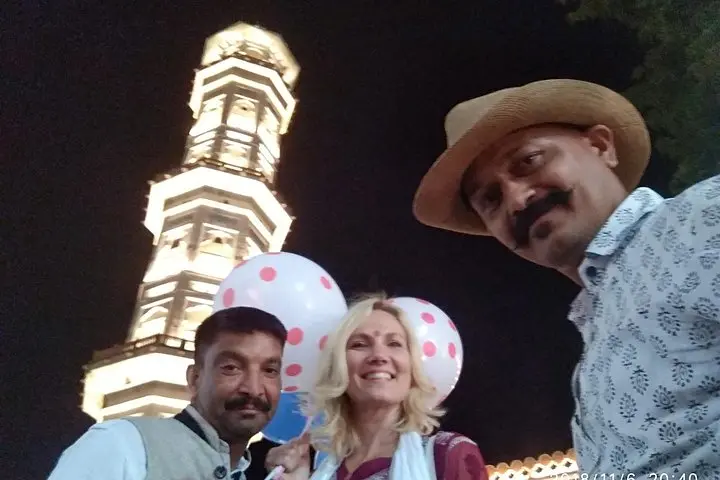
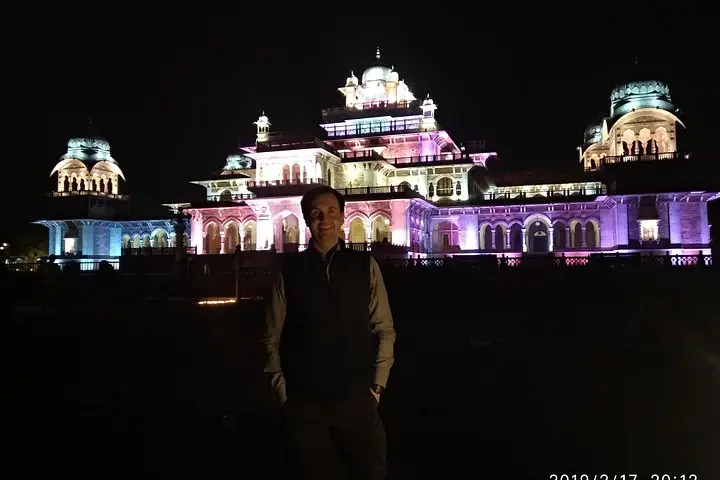
Culturally, expect a blend of formal light-and-sound narration at Amber and informal interaction during a home-style dinner with a local family — a chance to taste Rajasthani dishes and ask about everyday life. Photographers will want the short Hawa Mahal and Jal Mahal stops for color and reflections.
Practical guidance: pickup time shifts with sunset, so confirm local timing. Wear closed shoes for short walks on uneven stone, bring a light layer for cooler nights, and carry water. The tour is short (3–4 hours) and suitable for most travelers, but those with limited mobility should check vehicle access and step heights. Keep camera batteries charged — Jaipur’s night light rewards patience and steady framing.
Pickup time varies with sunset and will be confirmed for the specific date; expect a start around 5:30–6:00 PM depending on season.
Yes—it's family-friendly and low-impact, though those with mobility limitations should check vehicle step height and request assistance if needed.
The standard itinerary includes narration and external viewpoints; check the booking for whether light-and-sound show tickets or interior fort entry are included.
Dinner is included as described; notify the operator ahead of time about dietary restrictions so they can accommodate preferences where possible.
Pink City Guide operates guided outdoor trips and adventures with an emphasis on safety, stewardship, and memorable experiences.
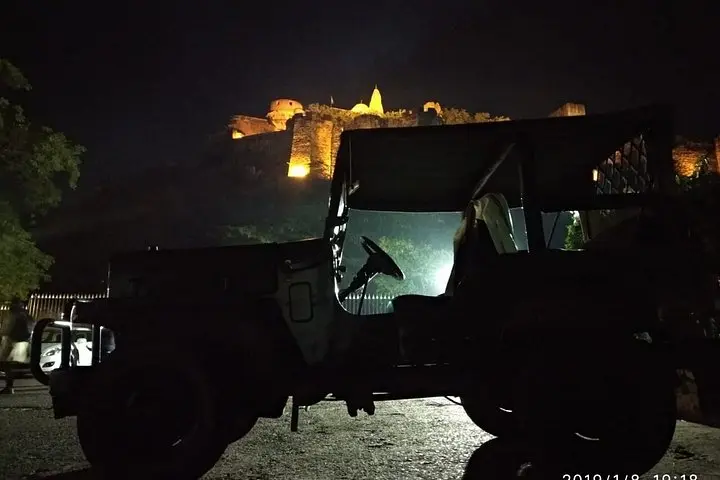
The jeep’s engine hums as the sun slopes low behind the Aravalli ridgeline, and warm light washes over the honey-colored stone of Amber Fort. In an open jeep you move through Jaipur’s evening: a brief stop for the sunset viewpoint, headlights cutting across narrow streets, and the city’s ornate facades sliding past as the guide outlines their stories.
The jeep’s engine hums as the sun slopes low behind the Aravalli ridgeline, and warm light washes over the honey-colored stone of Amber Fort. In an open jeep you move through Jaipur’s evening: a brief stop for the sunset viewpoint, headlights cutting across narrow streets, and the city’s ornate facades sliding past as the guide outlines their stories.
Jaipur was founded in 1727 by Maharaja Jai Singh II and its streets still reflect the Maharaja-era grid and Mughal-Rajput architecture. Amber Fort is a defensive palace of sandstone and marble; Hawa Mahal is a shallow, latticed face designed for royal women to watch street life; Jal Mahal floats in Man Sagar Lake when monsoon-fed water rises. Geologically, the Aravallis are one of the world’s oldest ranges, their worn hills framing the city and catching desert breezes that cool the evening.
Culturally, expect a blend of formal light-and-sound narration at Amber and informal interaction during a home-style dinner with a local family — a chance to taste Rajasthani dishes and ask about everyday life. Photographers will want the short Hawa Mahal and Jal Mahal stops for color and reflections.
Practical guidance: pickup time shifts with sunset, so confirm local timing. Wear closed shoes for short walks on uneven stone, bring a light layer for cooler nights, and carry water. The tour is short (3–4 hours) and suitable for most travelers, but those with limited mobility should check vehicle access and step heights. Keep camera batteries charged — Jaipur’s night light rewards patience and steady framing.