THE ADVENTURE COLLECTIVE® · Independent discovery and booking for outdoor travel

See Jaipur’s highlights in a single, well-paced day: Amber Fort’s hilltop drama, the honeycomb façade of Hawa Mahal, Jantar Mantar’s stone instruments, and City Palace interiors. This private tour bundles transport, an English-speaking guide, and key admissions into a practical sightseeing loop.
See Jaipur’s highlights in a single, well-paced day: Amber Fort’s hilltop drama, the honeycomb façade of Hawa Mahal, Jantar Mantar’s stone instruments, and City Palace interiors. This private tour bundles transport, an English-speaking guide, and key admissions into a practical sightseeing loop.
You step out of an air-conditioned minivan and the city hits you like warm sand and color—pink sandstone facades, a spice-scented breeze, and the Aravalli ridge rising like an old wall to the west. The day peels itself into a series of strong images: Amber Fort mirrored in Maotha Lake, the latticed face of Hawa Mahal watching market life, and the precise angles of Jantar Mantar sending shadows across stone instruments.
Verified experiences and guided adventures in the surrounding area.
Operated by India Magic Tours · Jaipur, Rajasthan
You step out of an air-conditioned minivan and the city hits you like warm sand and color—pink sandstone facades, a spice-scented breeze, and the Aravalli ridge rising like an old wall to the west. The day peels itself into a series of strong images: Amber Fort mirrored in Maotha Lake, the latticed face of Hawa Mahal watching market life, and the precise angles of Jantar Mantar sending shadows across stone instruments.
Jaipur was founded in 1727 by Maharaja Sawai Jai Singh II and planned on a grid—its streets still echo that rational geometry even as royal palaces and forts layer Mughal and Rajput craftsmanship on top. The Aravalli Range is among India’s oldest hills, and Nahargarh Fort perches on their ridge, offering a city-wide vantage that has watched Jaipur grow for three centuries.
Culturally the tour is a compact primer: palace courtyards, observatories, Indo-Saracenic museums and marketplaces where block-printed textiles and lacquer bangles claim space. Guides typically explain the astronomy of Jantar Mantar, the water engineering behind Jal Mahal, and the mirror-work that makes Sheesh Mahal glitter.
Practically, this is a full-day, private sightseeing loop best started early to avoid midday heat and crowds. Wear sturdy walking shoes for uneven fort steps, keep a refillable water bottle and sun protection, and expect multiple short walks and some stair-climbing. Pickup and drop-off in Jaipur are included, and the itinerary generally covers entrance to major sites. Bring a light layer for morning or winter chill and a respectful attitude at religious shrines.
The route is efficient: it gives first-time visitors a thorough, walkable introduction to Jaipur’s architecture, history and vistas—compact, sensory, and easy to navigate with a knowledgeable guide.
Most major admissions listed in the itinerary (Amber Fort, City Palace, Albert Hall Museum, Jantar Mantar, Nahargarh) are included; check booking details for any exclusions such as Jal Mahal viewpoints.
Yes—hotel, airport or train station pickup and drop-off within Jaipur are included as part of the private tour.
The tour runs about 7–8 hours (420–480 minutes) and is designed to fit multiple sites into one day with short on-site visits.
An English-speaking guide is provided; request other languages at booking and confirm availability in advance.
India Magic Tours operates guided outdoor trips and adventures with an emphasis on safety, stewardship, and memorable experiences.
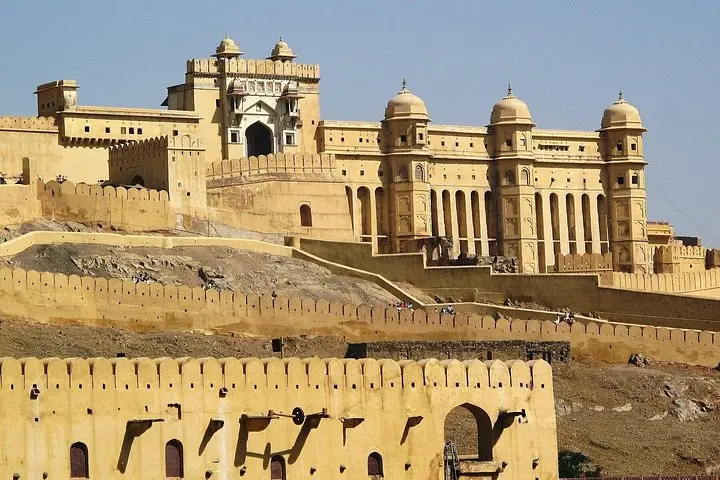
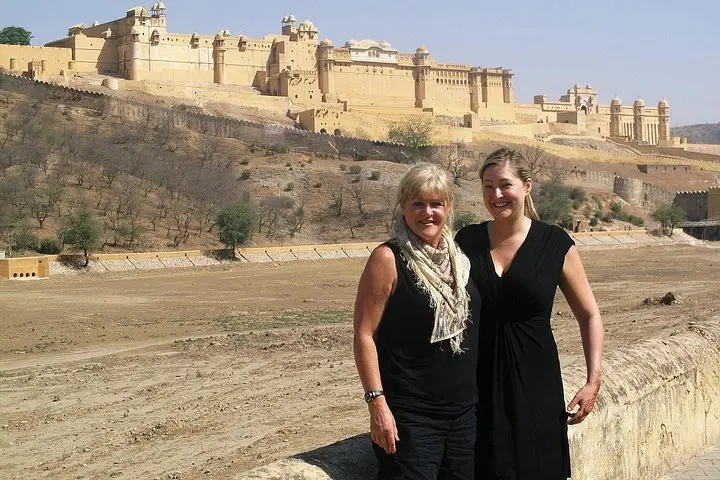
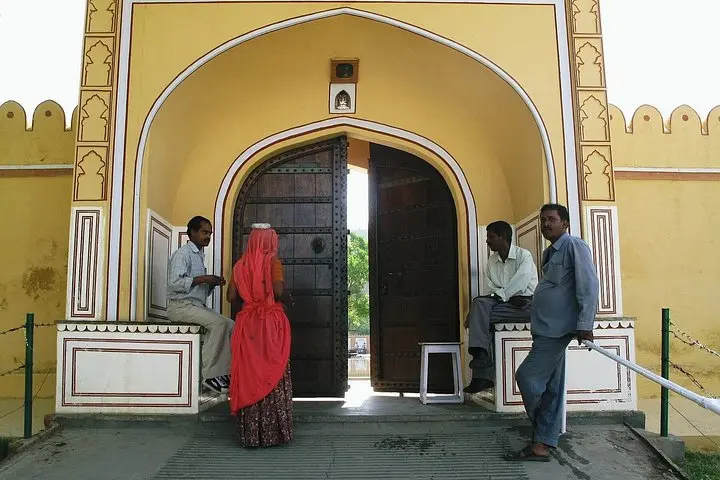
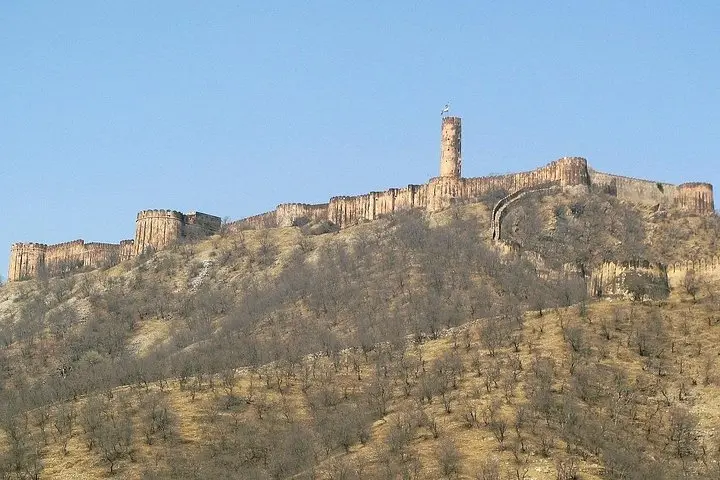
You step out of an air-conditioned minivan and the city hits you like warm sand and color—pink sandstone facades, a spice-scented breeze, and the Aravalli ridge rising like an old wall to the west. The day peels itself into a series of strong images: Amber Fort mirrored in Maotha Lake, the latticed face of Hawa Mahal watching market life, and the precise angles of Jantar Mantar sending shadows across stone instruments.
You step out of an air-conditioned minivan and the city hits you like warm sand and color—pink sandstone facades, a spice-scented breeze, and the Aravalli ridge rising like an old wall to the west. The day peels itself into a series of strong images: Amber Fort mirrored in Maotha Lake, the latticed face of Hawa Mahal watching market life, and the precise angles of Jantar Mantar sending shadows across stone instruments.
Jaipur was founded in 1727 by Maharaja Sawai Jai Singh II and planned on a grid—its streets still echo that rational geometry even as royal palaces and forts layer Mughal and Rajput craftsmanship on top. The Aravalli Range is among India’s oldest hills, and Nahargarh Fort perches on their ridge, offering a city-wide vantage that has watched Jaipur grow for three centuries.
Culturally the tour is a compact primer: palace courtyards, observatories, Indo-Saracenic museums and marketplaces where block-printed textiles and lacquer bangles claim space. Guides typically explain the astronomy of Jantar Mantar, the water engineering behind Jal Mahal, and the mirror-work that makes Sheesh Mahal glitter.
Practically, this is a full-day, private sightseeing loop best started early to avoid midday heat and crowds. Wear sturdy walking shoes for uneven fort steps, keep a refillable water bottle and sun protection, and expect multiple short walks and some stair-climbing. Pickup and drop-off in Jaipur are included, and the itinerary generally covers entrance to major sites. Bring a light layer for morning or winter chill and a respectful attitude at religious shrines.
The route is efficient: it gives first-time visitors a thorough, walkable introduction to Jaipur’s architecture, history and vistas—compact, sensory, and easy to navigate with a knowledgeable guide.