THE ADVENTURE COLLECTIVE® · Independent discovery and booking for outdoor travel

Ride camels across the Thar, visit abandoned Kuldhara and a desert lake, then camp beneath vast stars. This overnight safari pairs easy-paced travel with raw desert scenery and practical guidance for first-time riders.
Ride camels across the Thar, visit abandoned Kuldhara and a desert lake, then camp beneath vast stars. This overnight safari pairs easy-paced travel with raw desert scenery and practical guidance for first-time riders.
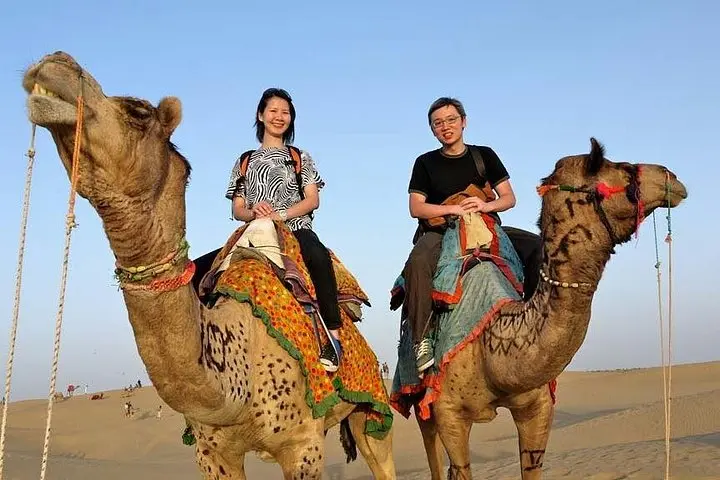
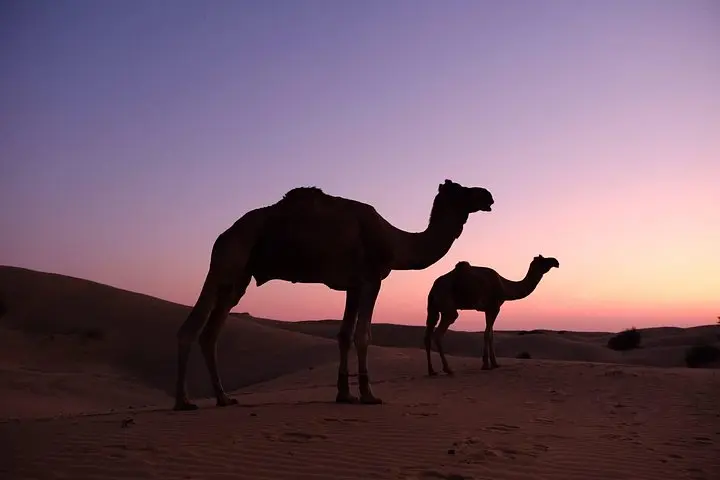
The sun drops like a coin behind wind-scoured dunes as you climb the leathery hump of a camel and push off across silence. Sand breathes around your feet; the animal's steady gait becomes the trip's metronome. This is the Thar Desert outside Jaisalmer — wide, dry, and stubbornly beautiful — and a two-day camel safari gives you its rhythms: sunset rides, a bonfire dinner, a star-sharp night, and a sunrise that erases the cold.
Verified experiences and guided adventures in the surrounding area.
Operated by wild desert and camel safari · Jaisalmer, Rajasthan
The sun drops like a coin behind wind-scoured dunes as you climb the leathery hump of a camel and push off across silence. Sand breathes around your feet; the animal's steady gait becomes the trip's metronome. This is the Thar Desert outside Jaisalmer — wide, dry, and stubbornly beautiful — and a two-day camel safari gives you its rhythms: sunset rides, a bonfire dinner, a star-sharp night, and a sunrise that erases the cold.
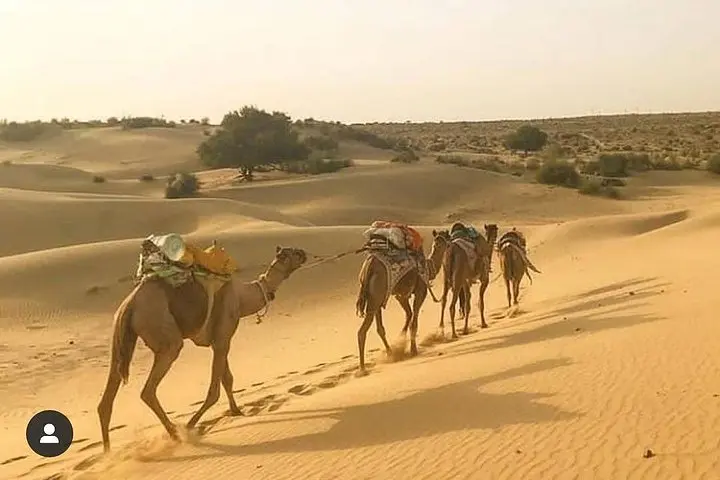
The route often passes small villages and ruins — Kuldhara, an abandoned Paliwal Brahmin settlement with a Victorian-era mystery, and Jiyai, a seasonal desert lake that creates brief coastal reflections in a land of sand. Geologically the Thar is recent alluvium and aeolian dunes; terrain is sandy ridges and compact interdunes with minimal elevation gain but lots of loose footing. Culturally, camel safaris trace traditional transport routes and offer a window into rustic Rajasthani life: village courtyards, chai, and simple vegetarian meals around the fire.
Practical guide: expect low technical difficulty but significant environmental stressors — heat by day, cold at night, dust, and long periods sitting. Rides are typically about 1–1.5 hours each direction; days include walking between camps and small village visits. Bring layered clothing for temperature swings, sun protection, at least 2–3 liters of water per person per day, and a small daypack for snacks and camera gear. Follow guides' instructions for mounting/dismounting, protect electronics from sand, and leave no trace — the dunes recover slowly.
This safari balances easy tempo with genuine adventure: slow travel on camelback, close encounters with desert life, and the simple reward of sleeping under an uncompromising sky.
Typical camel rides on this itinerary are about 1–1.5 hours each way for sunset and return, with walking and camp time in between.
Yes — vegetarian evening meals, morning breakfast, tea/snacks, and basic bedding (blankets, pillows) for the overnight camp are provided.
Children can usually participate but must sit on laps if infants; the tour is not recommended for people with serious spinal or heart conditions due to camel mounting and desert conditions.
October–March offers the most comfortable temperatures; summer months are very hot and can be uncomfortable during mid-day.
wild desert and camel safari operates guided outdoor trips and adventures with an emphasis on safety, stewardship, and memorable experiences.
The sun drops like a coin behind wind-scoured dunes as you climb the leathery hump of a camel and push off across silence. Sand breathes around your feet; the animal's steady gait becomes the trip's metronome. This is the Thar Desert outside Jaisalmer — wide, dry, and stubbornly beautiful — and a two-day camel safari gives you its rhythms: sunset rides, a bonfire dinner, a star-sharp night, and a sunrise that erases the cold.
The sun drops like a coin behind wind-scoured dunes as you climb the leathery hump of a camel and push off across silence. Sand breathes around your feet; the animal's steady gait becomes the trip's metronome. This is the Thar Desert outside Jaisalmer — wide, dry, and stubbornly beautiful — and a two-day camel safari gives you its rhythms: sunset rides, a bonfire dinner, a star-sharp night, and a sunrise that erases the cold.
The route often passes small villages and ruins — Kuldhara, an abandoned Paliwal Brahmin settlement with a Victorian-era mystery, and Jiyai, a seasonal desert lake that creates brief coastal reflections in a land of sand. Geologically the Thar is recent alluvium and aeolian dunes; terrain is sandy ridges and compact interdunes with minimal elevation gain but lots of loose footing. Culturally, camel safaris trace traditional transport routes and offer a window into rustic Rajasthani life: village courtyards, chai, and simple vegetarian meals around the fire.
Practical guide: expect low technical difficulty but significant environmental stressors — heat by day, cold at night, dust, and long periods sitting. Rides are typically about 1–1.5 hours each direction; days include walking between camps and small village visits. Bring layered clothing for temperature swings, sun protection, at least 2–3 liters of water per person per day, and a small daypack for snacks and camera gear. Follow guides' instructions for mounting/dismounting, protect electronics from sand, and leave no trace — the dunes recover slowly.
This safari balances easy tempo with genuine adventure: slow travel on camelback, close encounters with desert life, and the simple reward of sleeping under an uncompromising sky.