THE ADVENTURE COLLECTIVE® · Independent discovery and booking for outdoor travel

Spend a full day tracing Jaisalmer’s golden fort, carved havelis and Gadisar Lake before heading out to Sam for a 1–2 hour camel safari at sunset. This private tour combines city heritage with Thar Desert landscapes—ideal for travelers who want history and a classic desert ride in one day.
Spend a full day tracing Jaisalmer’s golden fort, carved havelis and Gadisar Lake before heading out to Sam for a 1–2 hour camel safari at sunset. This private tour combines city heritage with Thar Desert landscapes—ideal for travelers who want history and a classic desert ride in one day.
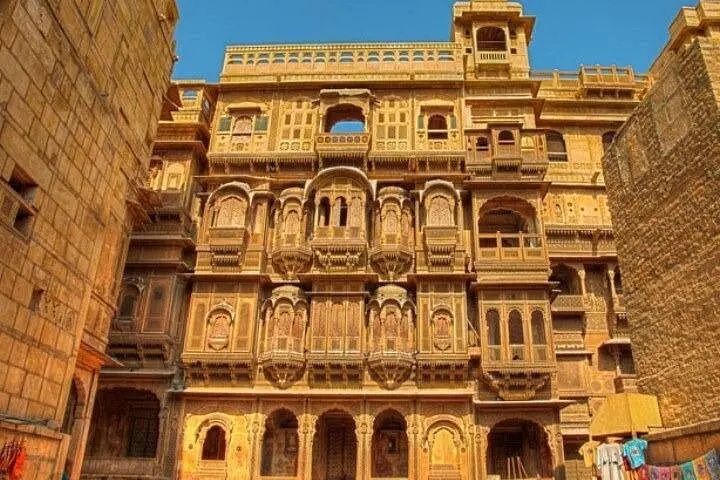
The day begins on stone streets warmed by morning sun, and the first view—Jaisalmer Fort—rises like a living wall of ochre sandstone. Walk through narrow alleys where carved balconies throw sharp shadows and the city’s history is audible in the murmur of shopkeepers and temple bells.
Verified experiences and guided adventures in the surrounding area.
Operated by Jodhpur Blue City Walk Experience · Jaisalmer, Rajasthan
The day begins on stone streets warmed by morning sun, and the first view—Jaisalmer Fort—rises like a living wall of ochre sandstone. Walk through narrow alleys where carved balconies throw sharp shadows and the city’s history is audible in the murmur of shopkeepers and temple bells.
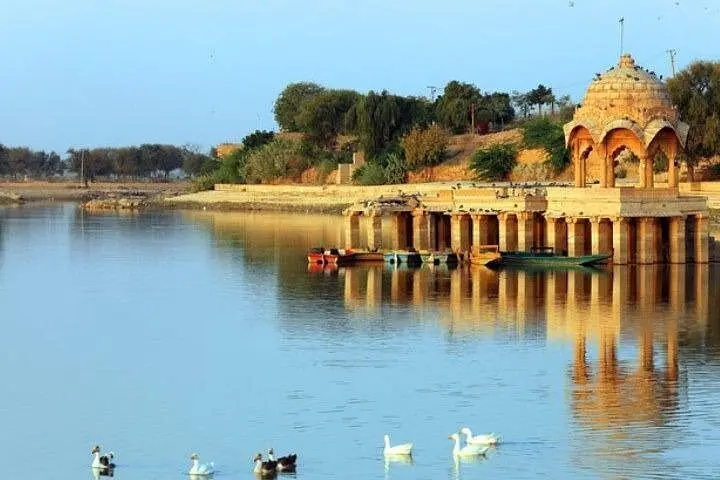
Jaisalmer developed on transcontinental trade routes; the Fort, built by Raja Jaisal in 1156 AD, is a stronghold of Rajasthani architecture with honey-colored stone that changes by hour. Geologically the Thar is young alluvial desert—sand blown into dunes, salt pans and intermittent lakes like Gadisar that once stored rainwater for the city. Local culture is visible in haveli carvings, traditional textiles and the camel handlers who still use age-old navigation skills across Sam’s shifting ridges.
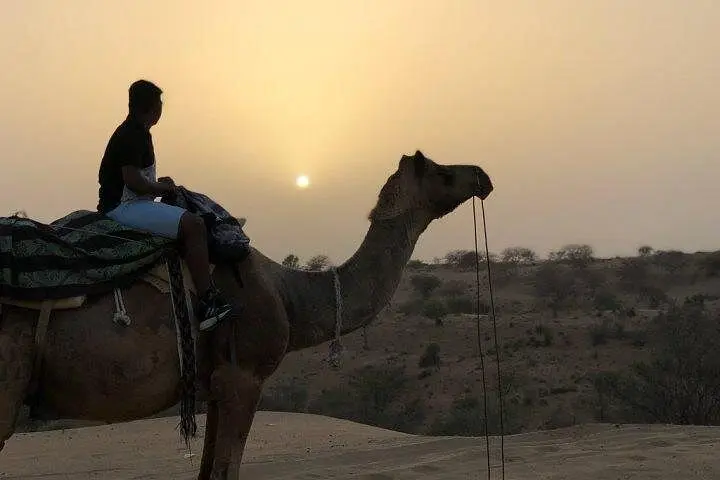
In the afternoon you’ll drive to Sam for a 1–2 hour camel safari. Camels, steady and deliberate, carry you across low dunes while the desert seems to push time itself into long, slow minutes leading to sunset.
Practical guidance: plan for seven to eight hours total including hotel pickup and return; bring at least 2 liters of water, sun protection and a sturdy low-ankle shoe for walking in town and on sand. Mornings are cooler and better for exploring the Fort; sunset in the dunes is the highlight and best photographed from slightly elevated dune crests. Respect local customs: modest dress in town, ask before photographing people, and minimize single-use plastics—the desert’s water and waste systems are fragile.
The typical camel safari included with this tour lasts about 1–2 hours, timed to reach a dune viewpoint for sunset.
Yes—this private tour is listed as suitable for all fitness levels; camel rides are steady but check mobility for mounting and dismounting.
The itinerary lists visits to attractions but does not include admission fees for most sites; confirm with the operator if fort or museum tickets are covered.
Wear modest, breathable clothing for town (shoulders covered) and layered clothes for the desert where temperatures swing; closed-toe shoes are recommended.
Jodhpur Blue City Walk Experience operates guided outdoor trips and adventures with an emphasis on safety, stewardship, and memorable experiences.

The day begins on stone streets warmed by morning sun, and the first view—Jaisalmer Fort—rises like a living wall of ochre sandstone. Walk through narrow alleys where carved balconies throw sharp shadows and the city’s history is audible in the murmur of shopkeepers and temple bells.
The day begins on stone streets warmed by morning sun, and the first view—Jaisalmer Fort—rises like a living wall of ochre sandstone. Walk through narrow alleys where carved balconies throw sharp shadows and the city’s history is audible in the murmur of shopkeepers and temple bells.
Jaisalmer developed on transcontinental trade routes; the Fort, built by Raja Jaisal in 1156 AD, is a stronghold of Rajasthani architecture with honey-colored stone that changes by hour. Geologically the Thar is young alluvial desert—sand blown into dunes, salt pans and intermittent lakes like Gadisar that once stored rainwater for the city. Local culture is visible in haveli carvings, traditional textiles and the camel handlers who still use age-old navigation skills across Sam’s shifting ridges.
In the afternoon you’ll drive to Sam for a 1–2 hour camel safari. Camels, steady and deliberate, carry you across low dunes while the desert seems to push time itself into long, slow minutes leading to sunset.
Practical guidance: plan for seven to eight hours total including hotel pickup and return; bring at least 2 liters of water, sun protection and a sturdy low-ankle shoe for walking in town and on sand. Mornings are cooler and better for exploring the Fort; sunset in the dunes is the highlight and best photographed from slightly elevated dune crests. Respect local customs: modest dress in town, ask before photographing people, and minimize single-use plastics—the desert’s water and waste systems are fragile.