THE ADVENTURE COLLECTIVE® · Independent discovery and booking for outdoor travel

A full-day private trek along Jaizkibel’s coastal ridges, from Hondarribia’s fishing port to sleepy San Juan. Expect windswept cliffs, sandstone coves, local bonito and an 7–9 hour hike with 800 m elevation.
A full-day private trek along Jaizkibel’s coastal ridges, from Hondarribia’s fishing port to sleepy San Juan. Expect windswept cliffs, sandstone coves, local bonito and an 7–9 hour hike with 800 m elevation.
You step off the van in Hondarribia and the sea hits first—spray, gull calls and the compact rows of fishermen's houses where waves still reach the quay on high tide. The trail immediately climbs, and the coastline opens: cliffs cut into sandstone, narrow coves, and a lighthouse built in 1881 keeping watch over the Bay of Biscay.
Verified experiences and guided adventures in the surrounding area.
Operated by Ikusnahi Tours · Hondarribia, Gipuzkoa
You step off the van in Hondarribia and the sea hits first—spray, gull calls and the compact rows of fishermen's houses where waves still reach the quay on high tide. The trail immediately climbs, and the coastline opens: cliffs cut into sandstone, narrow coves, and a lighthouse built in 1881 keeping watch over the Bay of Biscay.
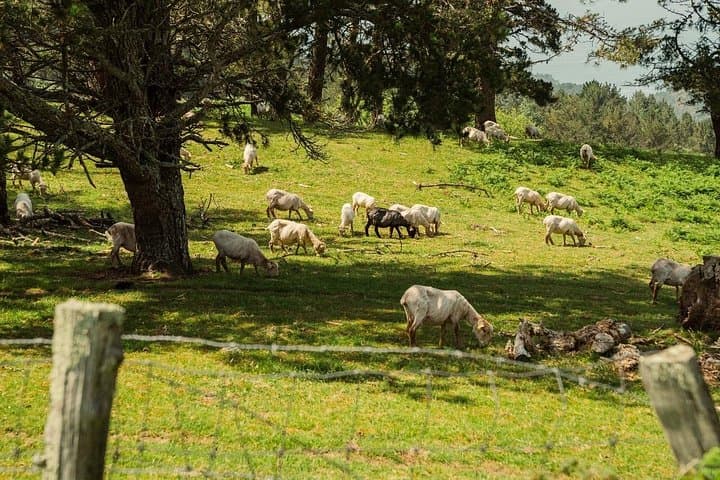
Walkers follow a route that echoes the coastal variant of the Camino de Santiago; pilgrims once threaded these promontories seeking landfall and shelter. Geology here is honest—layered sandstone and erosion-sculpted ledges that alternate with dense gorse and oak. The summit of Jaizkibel (about 457 m) is less a peak of drama than a vantage where wind and sea trade their stories and herds of horses move like slow punctuation across the slopes.
Culturally the day pairs coastal labour with kitchen craft: guides often include locally canned bonito and artisanal Basque cheese in a picnic that tastes of the ocean. Small fishing ports such as Hondarribia and the sleepy hamlet of San Juan still wear the marks of Basque seafaring and occasional pirate lore.
Practical guidance: expect 22 km and roughly 800 m of cumulative elevation over 7–9 hours on mixed singletrack, gravel and rocky shore paths. Wear grippy boots, bring 2–3 L water, a windproof layer and sun protection. Early starts reduce wind and clouds; the route is exposed in places—check weather and book a private guide or transfer if you prefer a door-to-door day. Stay on trails, respect pasture horses, and plan for a relaxed picnic with ocean views.
The route is rated medium/high with about 22 km and 800 m of ascent—challenging for casual walkers but manageable with steady fitness and breaks.
The tour is private with an experienced guide and driver included; guides handle navigation, local stories and logistics, which is useful on exposed coastal sections.
Sturdy hiking boots with good grip and ankle support are recommended due to uneven sandstone, gravel and some slippery rock near the shore.
Local specialties are provided, but private bookings typically accept dietary requests—confirm restrictions when booking so the guide can adapt the picnic.
Ikusnahi Tours operates guided outdoor trips and adventures with an emphasis on safety, stewardship, and memorable experiences.


You step off the van in Hondarribia and the sea hits first—spray, gull calls and the compact rows of fishermen's houses where waves still reach the quay on high tide. The trail immediately climbs, and the coastline opens: cliffs cut into sandstone, narrow coves, and a lighthouse built in 1881 keeping watch over the Bay of Biscay.
You step off the van in Hondarribia and the sea hits first—spray, gull calls and the compact rows of fishermen's houses where waves still reach the quay on high tide. The trail immediately climbs, and the coastline opens: cliffs cut into sandstone, narrow coves, and a lighthouse built in 1881 keeping watch over the Bay of Biscay.
Walkers follow a route that echoes the coastal variant of the Camino de Santiago; pilgrims once threaded these promontories seeking landfall and shelter. Geology here is honest—layered sandstone and erosion-sculpted ledges that alternate with dense gorse and oak. The summit of Jaizkibel (about 457 m) is less a peak of drama than a vantage where wind and sea trade their stories and herds of horses move like slow punctuation across the slopes.
Culturally the day pairs coastal labour with kitchen craft: guides often include locally canned bonito and artisanal Basque cheese in a picnic that tastes of the ocean. Small fishing ports such as Hondarribia and the sleepy hamlet of San Juan still wear the marks of Basque seafaring and occasional pirate lore.
Practical guidance: expect 22 km and roughly 800 m of cumulative elevation over 7–9 hours on mixed singletrack, gravel and rocky shore paths. Wear grippy boots, bring 2–3 L water, a windproof layer and sun protection. Early starts reduce wind and clouds; the route is exposed in places—check weather and book a private guide or transfer if you prefer a door-to-door day. Stay on trails, respect pasture horses, and plan for a relaxed picnic with ocean views.