THE ADVENTURE COLLECTIVE® · Independent discovery and booking for outdoor travel

Pack five hours and a good pair of shoes for a compact survey of Jakarta's history—from the gold-tipped National Monument to Old Batavia's colonial square and the wooden phinisi at Sunda Kelapa. This guided shared tour stitches architecture, religion and maritime life into one accessible half-day.
Pack five hours and a good pair of shoes for a compact survey of Jakarta's history—from the gold-tipped National Monument to Old Batavia's colonial square and the wooden phinisi at Sunda Kelapa. This guided shared tour stitches architecture, religion and maritime life into one accessible half-day.
You step out of the minivan and the city opens in stages: first the polished shaft of the National Monument, its gold flame glinting above the plaza, then the hush between cathedral and mosque as traffic murmurs beyond.
Verified experiences and guided adventures in the surrounding area.
Operated by TRIPEDIA · Jakarta, DKI Jakarta
You step out of the minivan and the city opens in stages: first the polished shaft of the National Monument, its gold flame glinting above the plaza, then the hush between cathedral and mosque as traffic murmurs beyond.
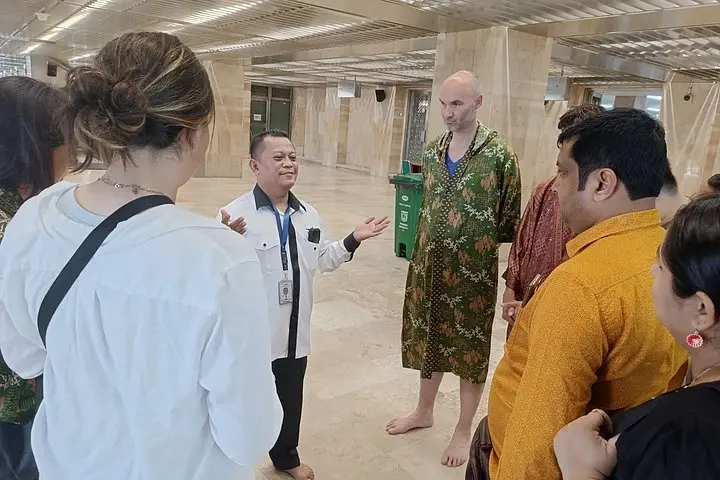
This half-day route threads Jakarta's decisive chapters—Dutch Batavia's warehouses and town square, the scale and modernist intent of Istiqlal Mosque, and the wooden phinisi at Sunda Kelapa that still bob against a littoral struggling with subsidence. Monas (the National Monument) houses a museum of independence and a panoramic lift to the observation deck; Kota Tua preserves 17th–19th century façades that recall the VOC trading era.
Culturally the tour is compact: you’ll see colonial architecture, Chinese-influenced shopfronts in Glodok (Chinatown), a live wayang (puppet) demo, and an active working harbor where traditional schooners are built and loaded. The route shows Jakarta’s layered identity—colonial past, post‑independence nationhood and persistent maritime commerce.
Practical edge: expect about 4–5 hours with short walks between sites and several stair/ramp sections at Monas and museums. Dress respectfully for religious sites (cover shoulders and knees; a scarf for women is handy). Carry water, a lightweight hat, and cash for small market purchases. Museums in the city are commonly closed on Mondays and access to Istiqlal is limited during Friday prayers; plan morning departures to avoid heat and crowds. This shared tour moves at a steady urban pace—good for curious travelers who want history, architecture and a quick harbor snapshot in a single, guided half‑day.
Yes—this tour includes entrance tickets to the sites listed in the itinerary, including Monas and the harbour visit.
Yes—both are part of the route, but tourist access can be restricted during Friday prayers at Istiqlal and some museums are closed on Mondays.
The operator lists the tour as wheelchair accessible, but expect uneven surfaces in Kota Tua and limited ramps at some historic buildings—check with the guide ahead of time for specific needs.
Shared tours typically provide hotel pickup within central Jakarta; pickup directly from the airport is better arranged as a private transfer rather than the shared half-day tour.
TRIPEDIA operates guided outdoor trips and adventures with an emphasis on safety, stewardship, and memorable experiences.

You step out of the minivan and the city opens in stages: first the polished shaft of the National Monument, its gold flame glinting above the plaza, then the hush between cathedral and mosque as traffic murmurs beyond.
You step out of the minivan and the city opens in stages: first the polished shaft of the National Monument, its gold flame glinting above the plaza, then the hush between cathedral and mosque as traffic murmurs beyond.
This half-day route threads Jakarta's decisive chapters—Dutch Batavia's warehouses and town square, the scale and modernist intent of Istiqlal Mosque, and the wooden phinisi at Sunda Kelapa that still bob against a littoral struggling with subsidence. Monas (the National Monument) houses a museum of independence and a panoramic lift to the observation deck; Kota Tua preserves 17th–19th century façades that recall the VOC trading era.
Culturally the tour is compact: you’ll see colonial architecture, Chinese-influenced shopfronts in Glodok (Chinatown), a live wayang (puppet) demo, and an active working harbor where traditional schooners are built and loaded. The route shows Jakarta’s layered identity—colonial past, post‑independence nationhood and persistent maritime commerce.
Practical edge: expect about 4–5 hours with short walks between sites and several stair/ramp sections at Monas and museums. Dress respectfully for religious sites (cover shoulders and knees; a scarf for women is handy). Carry water, a lightweight hat, and cash for small market purchases. Museums in the city are commonly closed on Mondays and access to Istiqlal is limited during Friday prayers; plan morning departures to avoid heat and crowds. This shared tour moves at a steady urban pace—good for curious travelers who want history, architecture and a quick harbor snapshot in a single, guided half‑day.