THE ADVENTURE COLLECTIVE® · Independent discovery and booking for outdoor travel

A brisk half‑day city tour that pairs the National Monument’s history and views with Jakarta’s religious landmarks and colonial Old Town. Ideal for travelers who want a compact primer on the capital’s past and present.
A brisk half‑day city tour that pairs the National Monument’s history and views with Jakarta’s religious landmarks and colonial Old Town. Ideal for travelers who want a compact primer on the capital’s past and present.
You step out into Merdeka Square and the city presses in from every side — office towers, colonial facades and a 132‑meter column capped in gilded flame that seems to watch Jakarta breathe. From the Monas observation deck the metropolis unfolds in blocks and canals; the air is hot, traffic hums, and a guide parses the layers of history that shaped the capital.
Verified experiences and guided adventures in the surrounding area.
Operated by TRIPEDIA · Jakarta, DKI Jakarta
You step out into Merdeka Square and the city presses in from every side — office towers, colonial facades and a 132‑meter column capped in gilded flame that seems to watch Jakarta breathe. From the Monas observation deck the metropolis unfolds in blocks and canals; the air is hot, traffic hums, and a guide parses the layers of history that shaped the capital.
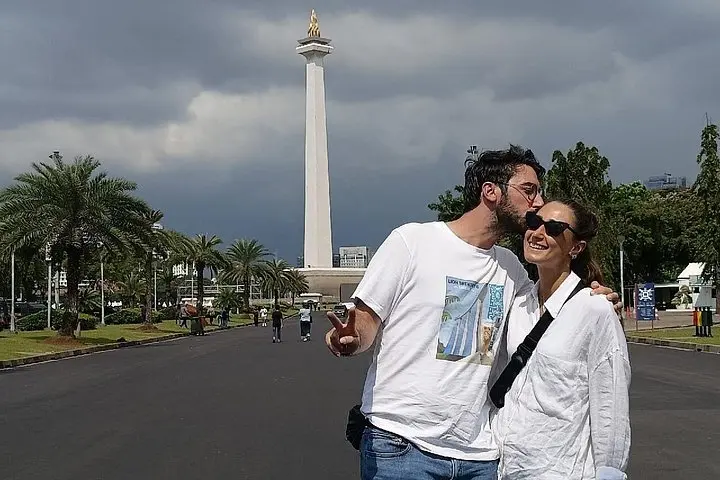
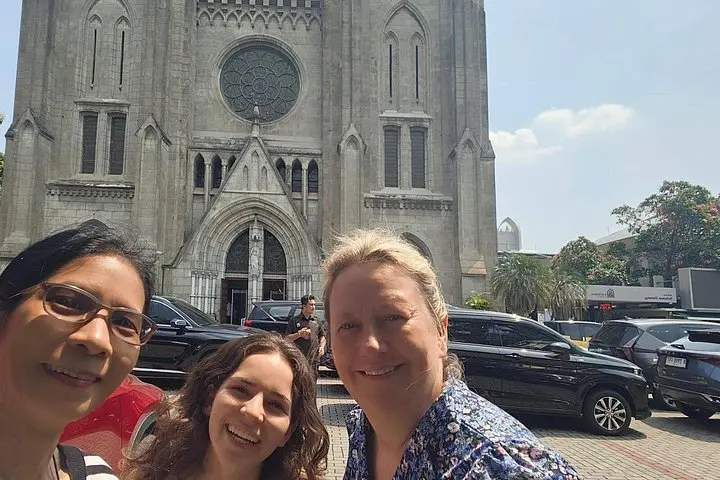
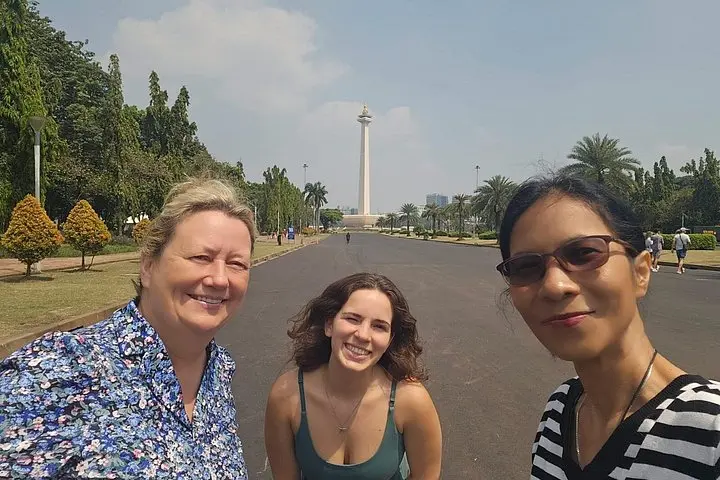
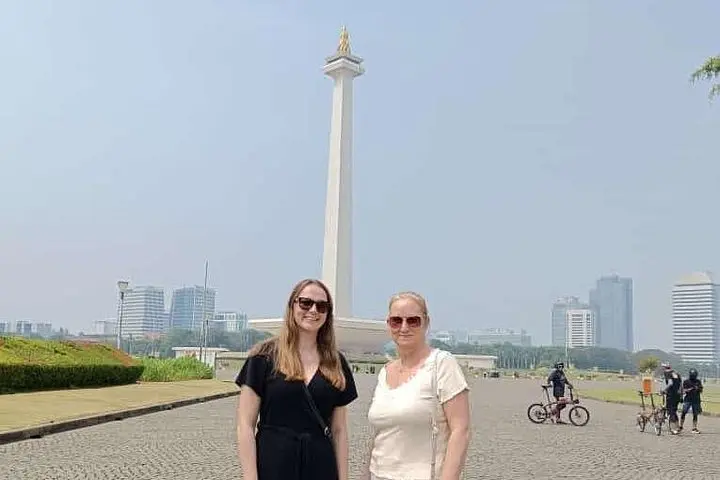
The National Monument (Monas) was raised after independence as a civic marker; its museum dioramas take visitors from prehistoric archipelago peoples through kingdoms, colonial rule and the modern republic. Across the street the 20th‑century Istiqlal Mosque and the neo‑Gothic Jakarta Cathedral sit opposite each other, a visible shorthand for the city’s pluralism. In Glodok (Chinatown) and Kota Tua (Old Town) Dutch canals and shophouses recall VOC commerce while a small puppet studio keeps wayang traditions alive.
Geology is quiet here — alluvial plains of the Java Sea shaped the harbor and canals — but human craftsmanship fills the gaps: carved doors, colonial stonework, and the carved puppets of Java’s storytelling tradition. Local insight: guides often point out surviving VOC markers and the old harbour’s phinisi boats still moored nearby.
Practically, this half‑day is urban walking punctuated by short visits and a lift to Monas’ top; expect 4–6 hours door‑to‑door. Dress modestly for the mosque, bring water and light rain protection in the wet season, and allow extra time for traffic when planning onward travel.
Yes—hotel pickup and drop-off within the Jakarta area are included for private bookings; shared groups have specific pickup conditions.
Admission to Monas, including the lift to the observation deck and the diorama museum, is included as stated in the tour inclusions.
Yes—non-Muslims may enter with provided modest clothing and must follow mosque etiquette such as removing shoes and being respectful during prayer times.
The operator lists wheelchair‑accessible transport and some sites as accessible, but stairs and cobbles in Kota Tua may limit full access; confirm specific needs at booking.
TRIPEDIA operates guided outdoor trips and adventures with an emphasis on safety, stewardship, and memorable experiences.
You step out into Merdeka Square and the city presses in from every side — office towers, colonial facades and a 132‑meter column capped in gilded flame that seems to watch Jakarta breathe. From the Monas observation deck the metropolis unfolds in blocks and canals; the air is hot, traffic hums, and a guide parses the layers of history that shaped the capital.
You step out into Merdeka Square and the city presses in from every side — office towers, colonial facades and a 132‑meter column capped in gilded flame that seems to watch Jakarta breathe. From the Monas observation deck the metropolis unfolds in blocks and canals; the air is hot, traffic hums, and a guide parses the layers of history that shaped the capital.
The National Monument (Monas) was raised after independence as a civic marker; its museum dioramas take visitors from prehistoric archipelago peoples through kingdoms, colonial rule and the modern republic. Across the street the 20th‑century Istiqlal Mosque and the neo‑Gothic Jakarta Cathedral sit opposite each other, a visible shorthand for the city’s pluralism. In Glodok (Chinatown) and Kota Tua (Old Town) Dutch canals and shophouses recall VOC commerce while a small puppet studio keeps wayang traditions alive.
Geology is quiet here — alluvial plains of the Java Sea shaped the harbor and canals — but human craftsmanship fills the gaps: carved doors, colonial stonework, and the carved puppets of Java’s storytelling tradition. Local insight: guides often point out surviving VOC markers and the old harbour’s phinisi boats still moored nearby.
Practically, this half‑day is urban walking punctuated by short visits and a lift to Monas’ top; expect 4–6 hours door‑to‑door. Dress modestly for the mosque, bring water and light rain protection in the wet season, and allow extra time for traffic when planning onward travel.