THE ADVENTURE COLLECTIVE® · Independent discovery and booking for outdoor travel

This six-hour guided foray into Jasper’s Maligne Valley pairs wildlife spotting and geology-rich commentary with a 2–3 km lakeshore hike at Maligne Lake. Expect dramatic cliffs, glacial-blue water, and practical tips from an expert guide.
This six-hour guided foray into Jasper’s Maligne Valley pairs wildlife spotting and geology-rich commentary with a 2–3 km lakeshore hike at Maligne Lake. Expect dramatic cliffs, glacial-blue water, and practical tips from an expert guide.
The minibus peels out of downtown Jasper as morning light angles off serrated peaks. Pine-scented air presses against the windows while the guide names the ridgelines—each pass and cirque a page in the Rockies’ long geological history. Traffic thins, the road narrows and the valley opens: Medicine Lake sits like a mirror interrupted by limestone cliffs, and farther on the glacial-blue of Maligne Lake appears, hemmed by peaks and a forest that seems to lean toward the water.
Verified experiences and guided adventures in the surrounding area.
Operated by Maligne Adventures · Jasper, Alberta
The minibus peels out of downtown Jasper as morning light angles off serrated peaks. Pine-scented air presses against the windows while the guide names the ridgelines—each pass and cirque a page in the Rockies’ long geological history. Traffic thins, the road narrows and the valley opens: Medicine Lake sits like a mirror interrupted by limestone cliffs, and farther on the glacial-blue of Maligne Lake appears, hemmed by peaks and a forest that seems to lean toward the water.
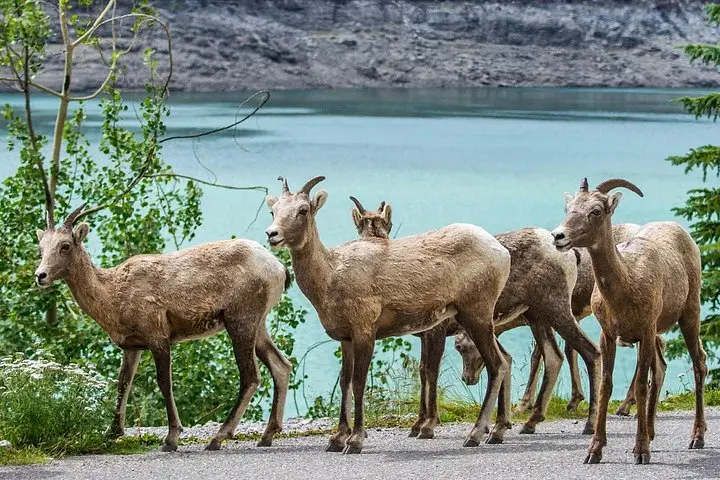
The day is structured like a natural history lecture with a soundtrack. Drivers and guides point out elk and bighorn sheep along the Maligne Valley road, explain how ancient glaciers carved that steep limestone and why Medicine Lake appears and disappears across seasons, and outline the cultural connections of the land to Indigenous peoples and early explorers. The tour’s lakeshore hike—roughly 2–3 km of well-worn trails—moves at a steady interpretive pace, alternating forest shade with broad viewpoints where the lake’s color can look unreal against the steep, glaciated ridges.
Geology here is visible at human scale: limestone cliffs, braided streams, and talus slopes show the long work of ice and meltwater. History is layered too—Indigenous routes, early fur-trader journals, and the arrival of park protection in the early 20th century all shaped how these routes are read today. Recent wildfire activity has altered some familiar viewpoints and closed parts of Maligne Canyon; guides use overlooks to explain the fire’s effects and recovery, giving a rare perspective on how mountain landscapes regenerate.
Practical matters are straightforward. The full outing runs about six hours, with travel in a 24-seat minibus and a guided 2–3 km lakeshore walk on mostly packed dirt and forest footing—expect light roots and occasional wet patches. Trails are modest in grade with minimal elevation change, but weather can shift rapidly: wind off the lake cuts through layers, and afternoon storms are common in summer. Bring a rain shell, warm midlayer, good walking shoes and a water bottle. Lunch is a short break at Maligne Lake; the Lakehouse Café can be busy in peak season, so packing your own sandwich is a smart move.
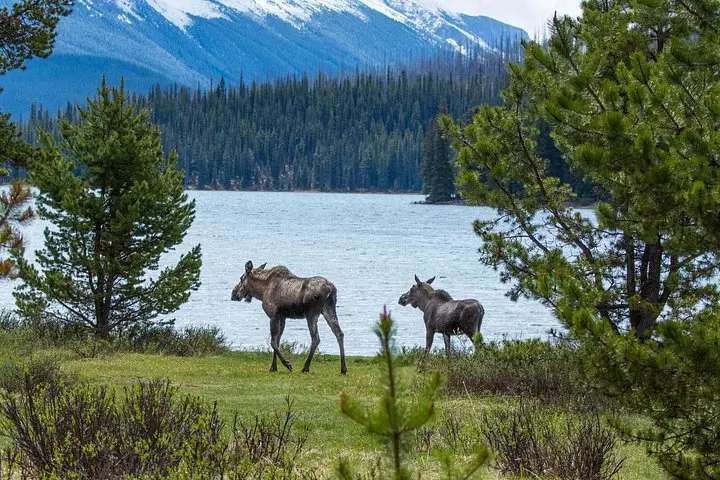
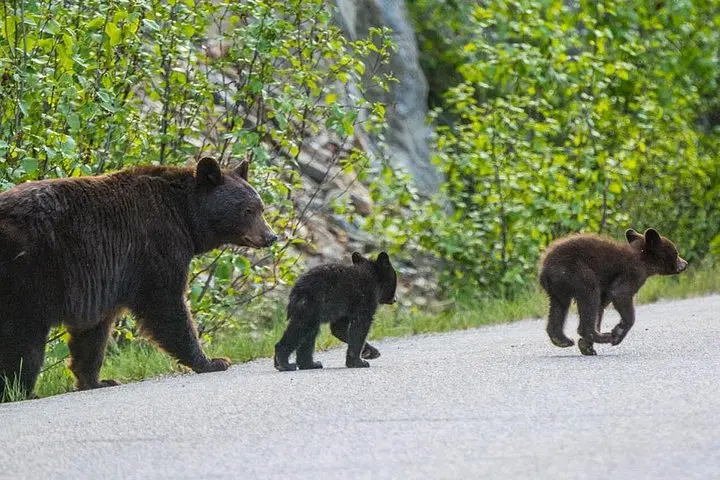
Wildlife sightings—moose, bears, wolves, elk—are possible but never guaranteed; the guide’s binoculars and timing improve your chances. Photography rewards careful timing: low sun and still water deliver the richest colors. The tour’s interpretive cadence keeps it accessible for families and experienced hikers alike, offering a compact, thoughtful way to understand this corner of Jasper National Park without committing to an all-day backcountry route.
The guided lakeshore hike is about 2–3 km round trip on mostly packed dirt with minimal elevation gain, taking roughly 45–90 minutes depending on stops.
No—sightings are common but not guaranteed; guides increase your chances by timing stops and using vantage points, but animals roam freely.
No—participants can purchase food at the Maligne Lakehouse Café (lines likely in peak season) or bring a packed lunch; the tour includes a short break for lunch.
Yes—this tour runs in most weather conditions. If conditions impact safety or access, operators will adjust the itinerary or cancel with a refund if necessary.
Access to Maligne Canyon has been affected by recent wildfire damage; if closed, guides stop at alternative overlooks and extend time at Medicine Lake and Maligne Lake.
Yes—complimentary pickup is available from selected Jasper accommodations; details and exact pickup times are confirmed after booking.
Maligne Adventures operates guided outdoor trips and adventures with an emphasis on safety, stewardship, and memorable experiences.
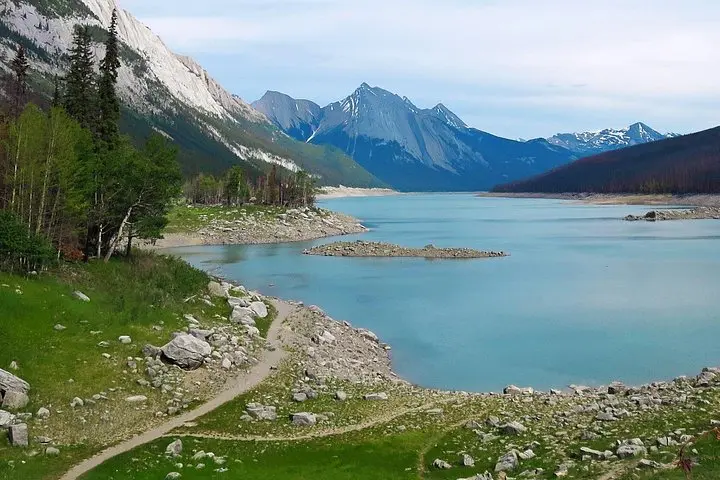
The minibus peels out of downtown Jasper as morning light angles off serrated peaks. Pine-scented air presses against the windows while the guide names the ridgelines—each pass and cirque a page in the Rockies’ long geological history. Traffic thins, the road narrows and the valley opens: Medicine Lake sits like a mirror interrupted by limestone cliffs, and farther on the glacial-blue of Maligne Lake appears, hemmed by peaks and a forest that seems to lean toward the water.
The minibus peels out of downtown Jasper as morning light angles off serrated peaks. Pine-scented air presses against the windows while the guide names the ridgelines—each pass and cirque a page in the Rockies’ long geological history. Traffic thins, the road narrows and the valley opens: Medicine Lake sits like a mirror interrupted by limestone cliffs, and farther on the glacial-blue of Maligne Lake appears, hemmed by peaks and a forest that seems to lean toward the water.
The day is structured like a natural history lecture with a soundtrack. Drivers and guides point out elk and bighorn sheep along the Maligne Valley road, explain how ancient glaciers carved that steep limestone and why Medicine Lake appears and disappears across seasons, and outline the cultural connections of the land to Indigenous peoples and early explorers. The tour’s lakeshore hike—roughly 2–3 km of well-worn trails—moves at a steady interpretive pace, alternating forest shade with broad viewpoints where the lake’s color can look unreal against the steep, glaciated ridges.
Geology here is visible at human scale: limestone cliffs, braided streams, and talus slopes show the long work of ice and meltwater. History is layered too—Indigenous routes, early fur-trader journals, and the arrival of park protection in the early 20th century all shaped how these routes are read today. Recent wildfire activity has altered some familiar viewpoints and closed parts of Maligne Canyon; guides use overlooks to explain the fire’s effects and recovery, giving a rare perspective on how mountain landscapes regenerate.
Practical matters are straightforward. The full outing runs about six hours, with travel in a 24-seat minibus and a guided 2–3 km lakeshore walk on mostly packed dirt and forest footing—expect light roots and occasional wet patches. Trails are modest in grade with minimal elevation change, but weather can shift rapidly: wind off the lake cuts through layers, and afternoon storms are common in summer. Bring a rain shell, warm midlayer, good walking shoes and a water bottle. Lunch is a short break at Maligne Lake; the Lakehouse Café can be busy in peak season, so packing your own sandwich is a smart move.
Wildlife sightings—moose, bears, wolves, elk—are possible but never guaranteed; the guide’s binoculars and timing improve your chances. Photography rewards careful timing: low sun and still water deliver the richest colors. The tour’s interpretive cadence keeps it accessible for families and experienced hikers alike, offering a compact, thoughtful way to understand this corner of Jasper National Park without committing to an all-day backcountry route.