THE ADVENTURE COLLECTIVE® · Independent discovery and booking for outdoor travel

Camp on Oman’s highest plateau and walk the Balcony Trail above Wadi Ghul. This two-day trip combines an overnight mountain camp with sweeping canyon views and time among centuries-old Al Hamra village ruins.
Camp on Oman’s highest plateau and walk the Balcony Trail above Wadi Ghul. This two-day trip combines an overnight mountain camp with sweeping canyon views and time among centuries-old Al Hamra village ruins.
You arrive as the road thins and the palms give way to stony wadis, the air already noticeably cooler than Muscat. By dusk the high plateau of Jebel Shams opens to a low, wind-shaped horizon; tents dot the rim, and the canyon below slides into shadow. The next morning the Balcony Walk lets you peer down into Wadi Ghul — Oman’s so-called ‘Grand Canyon’ — where layered rock and abandoned village ruins drop away in a semicircle.
Verified experiences and guided adventures in the surrounding area.
Operated by Golden Highlands · Al Hamra, Ad Dakhiliyah
You arrive as the road thins and the palms give way to stony wadis, the air already noticeably cooler than Muscat. By dusk the high plateau of Jebel Shams opens to a low, wind-shaped horizon; tents dot the rim, and the canyon below slides into shadow. The next morning the Balcony Walk lets you peer down into Wadi Ghul — Oman’s so-called ‘Grand Canyon’ — where layered rock and abandoned village ruins drop away in a semicircle.
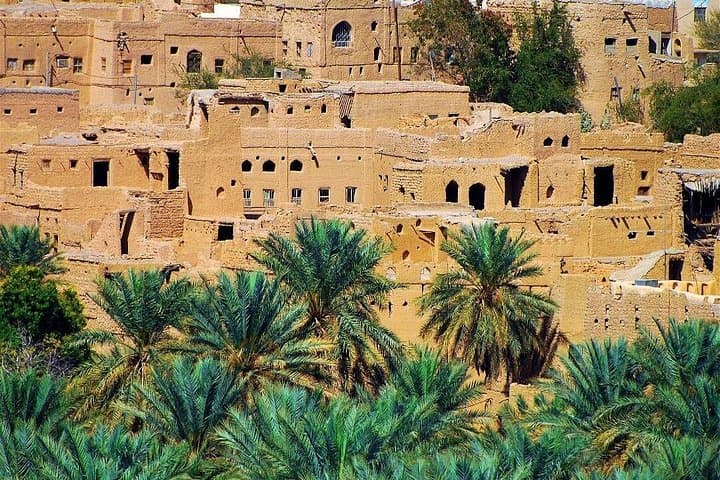
Geology here is blunt and readable: uplifted limestone and sandstone carved by flash floods and time, producing sheer cliffs and narrow terraces. Al Hamra Village offers a counterpoint of human history — mudbrick houses and pomegranate trees that trace four centuries of mountain life. Local culture is placid and practical; shepherding and terrace farming shaped settlement patterns and water-sharing traditions still visible in irrigation gullies.
Expect rocky trails, loose scree near the rim, and short steep gains on the Balcony Walk; total elevation tops out above 3,000 meters at the summit plateau. The tour runs over two days with one night in simple camping at altitude and meals provided.
Practical edge: acclimatize, bring layered insulation for cold nights, and carry at least 2–3 liters of water for daytime hiking. Footwear should be grippy for mixed rock and dirt; a headlamp and warm sleeping bag matter more here than style. Plan drives from Muscat of roughly 3–4 hours each way and schedule your visit outside summer’s extreme heat — spring and autumn deliver the most comfortable conditions.
The Balcony Walk includes uneven paths and short steep sections; it’s a moderate hike typically taking 2–3 hours round trip with some exposed viewpoints.
The tour provides overnight camping accommodation, but confirm whether sleeping bags and mats are included or if you should bring your own thermal sleep system.
Travel time is roughly 3–4 hours each way from Muscat depending on traffic and road conditions; the itinerary usually departs early to maximize daylight on the plateau.
Golden Highlands operates guided outdoor trips and adventures with an emphasis on safety, stewardship, and memorable experiences.
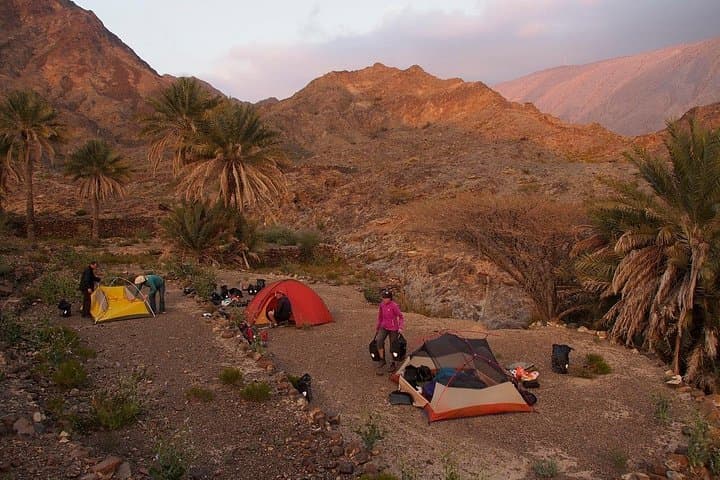
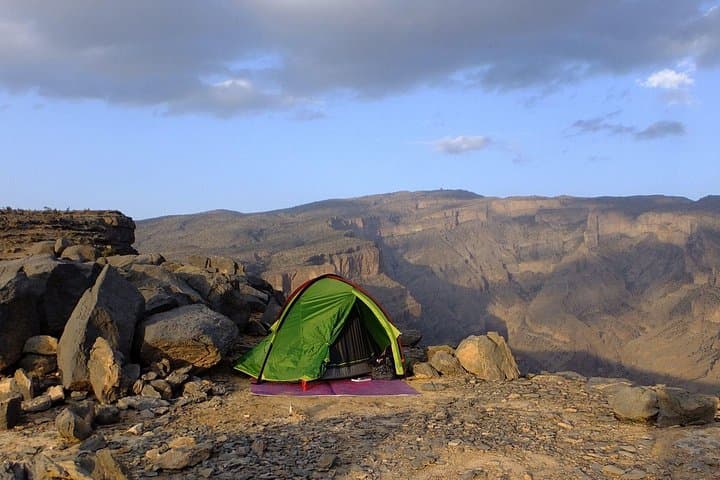
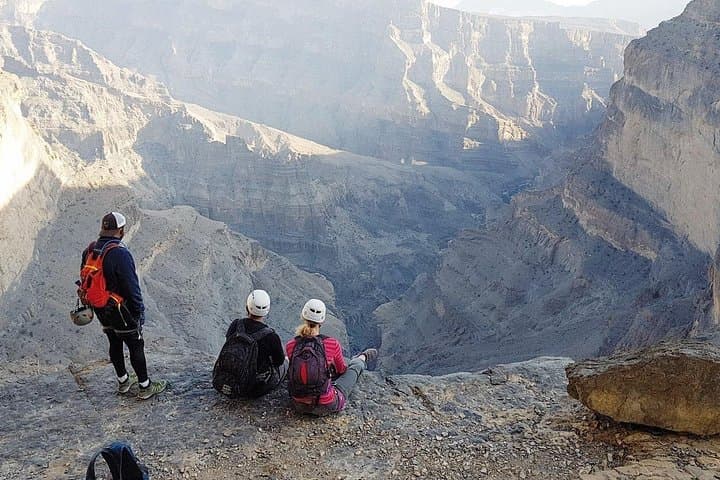
You arrive as the road thins and the palms give way to stony wadis, the air already noticeably cooler than Muscat. By dusk the high plateau of Jebel Shams opens to a low, wind-shaped horizon; tents dot the rim, and the canyon below slides into shadow. The next morning the Balcony Walk lets you peer down into Wadi Ghul — Oman’s so-called ‘Grand Canyon’ — where layered rock and abandoned village ruins drop away in a semicircle.
You arrive as the road thins and the palms give way to stony wadis, the air already noticeably cooler than Muscat. By dusk the high plateau of Jebel Shams opens to a low, wind-shaped horizon; tents dot the rim, and the canyon below slides into shadow. The next morning the Balcony Walk lets you peer down into Wadi Ghul — Oman’s so-called ‘Grand Canyon’ — where layered rock and abandoned village ruins drop away in a semicircle.
Geology here is blunt and readable: uplifted limestone and sandstone carved by flash floods and time, producing sheer cliffs and narrow terraces. Al Hamra Village offers a counterpoint of human history — mudbrick houses and pomegranate trees that trace four centuries of mountain life. Local culture is placid and practical; shepherding and terrace farming shaped settlement patterns and water-sharing traditions still visible in irrigation gullies.
Expect rocky trails, loose scree near the rim, and short steep gains on the Balcony Walk; total elevation tops out above 3,000 meters at the summit plateau. The tour runs over two days with one night in simple camping at altitude and meals provided.
Practical edge: acclimatize, bring layered insulation for cold nights, and carry at least 2–3 liters of water for daytime hiking. Footwear should be grippy for mixed rock and dirt; a headlamp and warm sleeping bag matter more here than style. Plan drives from Muscat of roughly 3–4 hours each way and schedule your visit outside summer’s extreme heat — spring and autumn deliver the most comfortable conditions.