THE ADVENTURE COLLECTIVE® · Independent discovery and booking for outdoor travel

Spend a night under desert stars on Jebel Shams, then hike the four‑hour Balcony (Donkey) Trek above Oman’s steep canyon. This guided overnight pairs sunrise ridge views with a choice of light hiking or a guided via ferrata section.
Spend a night under desert stars on Jebel Shams, then hike the four‑hour Balcony (Donkey) Trek above Oman’s steep canyon. This guided overnight pairs sunrise ridge views with a choice of light hiking or a guided via ferrata section.
At dawn the rim of Jebel Shams sharpens into a silhouette; a thin line of light pours over the canyon and the ridge seems to hold its breath. You arrive by road—part blacktop, part rocky track—set up a simple camp, then watch sunset spill slow and red across the cliffs. Night brings a cool desert hush and the occasional far-off call of a fox.
Verified experiences and guided adventures in the surrounding area.
Operated by WikiTours Adventures · Al Hamra, Ad Dakhiliyah
At dawn the rim of Jebel Shams sharpens into a silhouette; a thin line of light pours over the canyon and the ridge seems to hold its breath. You arrive by road—part blacktop, part rocky track—set up a simple camp, then watch sunset spill slow and red across the cliffs. Night brings a cool desert hush and the occasional far-off call of a fox.
Jebel Shams sits in the Al Hajar range, carved of uplifted limestone and ancient reef rock; the canyon known as Wadi Ghul exposes steep terraces and dark stratified walls. Human traces appear in abandoned adobe villages like San Bani Khamis and Birkat Al-Mouz, where stepped agriculture and falaj irrigation show a centuries-old mountain life. Local guides blend Bedouin stories with practical route-finding.
Day two begins with sunrise and a hot breakfast, then the Balcony (Donkey) Trek: a roughly four-hour, partly exposed trail on an old mule route that links deserted settlements. Hikers can opt for light scrambling or the via ferrata section led by guides. Expect rocky, uneven footing, narrow ledges, and sweeping views into Oman’s “Grand Canyon.”
Practical: arrive with sturdy boots, layered clothing for cold mornings and warm afternoons, and a headlamp for camp. Hydrate and carry at least 2–3 liters; the sun is strong and shade is scarce on the exposed sections. Guides provide tents, sleeping bags, meals and transportation from nearby towns. If you have a fear of exposure, request the gentler hike option. Book for spring or autumn for milder temperatures; summers are hot and winters bring very cold nights.
The main guided hike is about four hours with some narrow, uneven sections—moderate effort; guides can shorten the route for less fit participants.
Yes—tents and sleeping bags are provided, though you may bring your own for comfort.
Yes—via ferrata is offered as a guided option; guides supply harnesses and instruction but you should be comfortable with heights and basic climbing commands.
Spring and autumn offer the most comfortable temperatures; summer is very hot and winter nights are cold and occasionally frosty.
WikiTours Adventures operates guided outdoor trips and adventures with an emphasis on safety, stewardship, and memorable experiences.
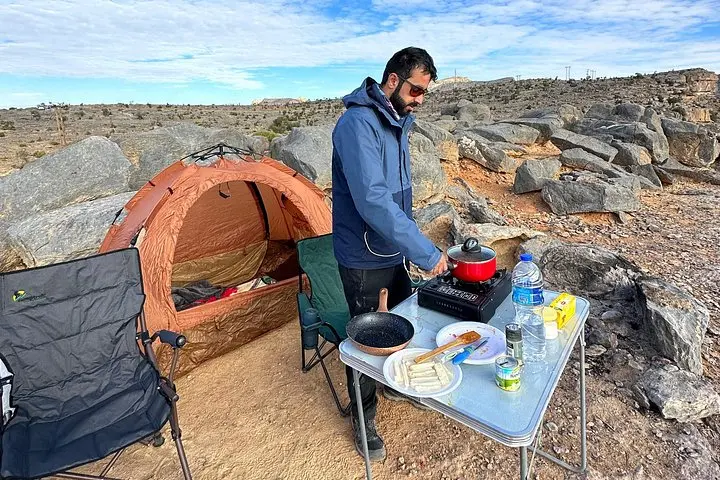
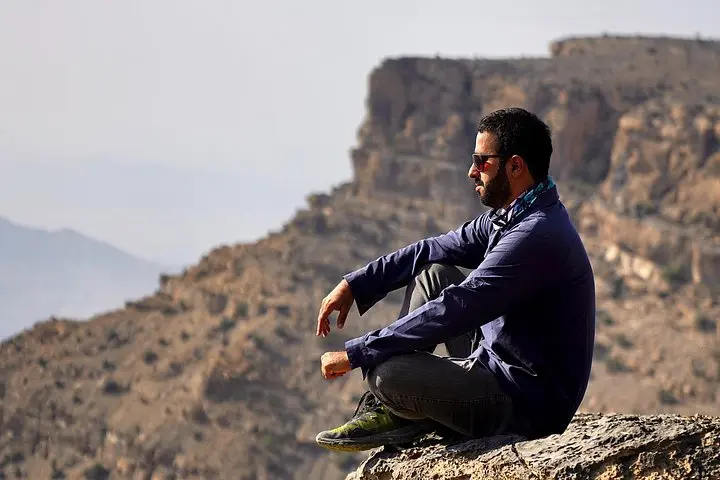
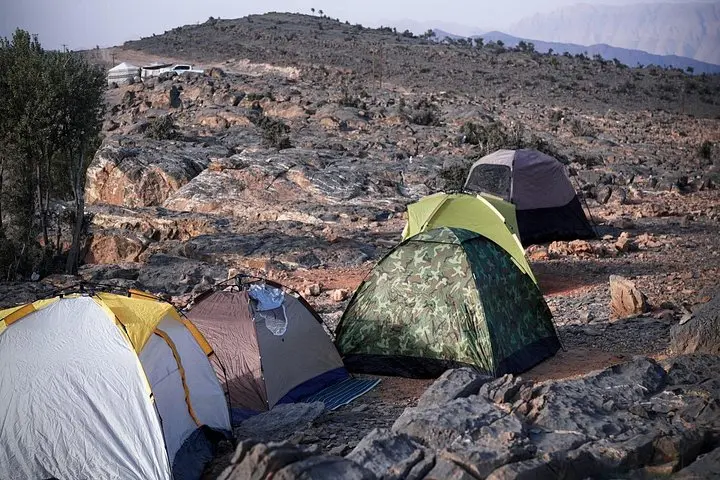
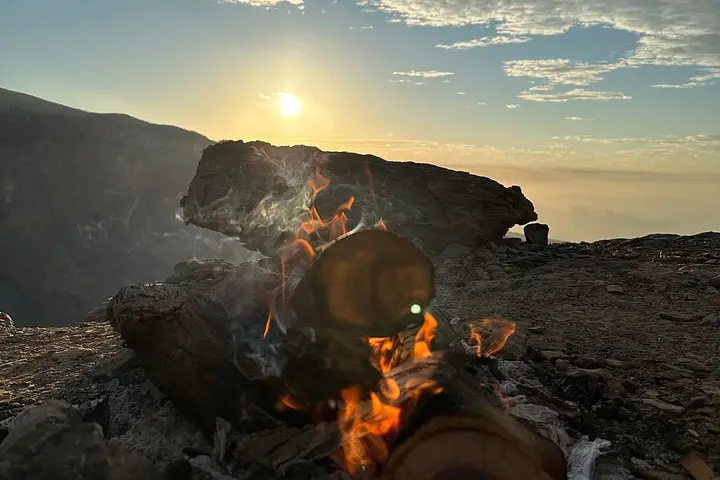
At dawn the rim of Jebel Shams sharpens into a silhouette; a thin line of light pours over the canyon and the ridge seems to hold its breath. You arrive by road—part blacktop, part rocky track—set up a simple camp, then watch sunset spill slow and red across the cliffs. Night brings a cool desert hush and the occasional far-off call of a fox.
At dawn the rim of Jebel Shams sharpens into a silhouette; a thin line of light pours over the canyon and the ridge seems to hold its breath. You arrive by road—part blacktop, part rocky track—set up a simple camp, then watch sunset spill slow and red across the cliffs. Night brings a cool desert hush and the occasional far-off call of a fox.
Jebel Shams sits in the Al Hajar range, carved of uplifted limestone and ancient reef rock; the canyon known as Wadi Ghul exposes steep terraces and dark stratified walls. Human traces appear in abandoned adobe villages like San Bani Khamis and Birkat Al-Mouz, where stepped agriculture and falaj irrigation show a centuries-old mountain life. Local guides blend Bedouin stories with practical route-finding.
Day two begins with sunrise and a hot breakfast, then the Balcony (Donkey) Trek: a roughly four-hour, partly exposed trail on an old mule route that links deserted settlements. Hikers can opt for light scrambling or the via ferrata section led by guides. Expect rocky, uneven footing, narrow ledges, and sweeping views into Oman’s “Grand Canyon.”
Practical: arrive with sturdy boots, layered clothing for cold mornings and warm afternoons, and a headlamp for camp. Hydrate and carry at least 2–3 liters; the sun is strong and shade is scarce on the exposed sections. Guides provide tents, sleeping bags, meals and transportation from nearby towns. If you have a fear of exposure, request the gentler hike option. Book for spring or autumn for milder temperatures; summers are hot and winters bring very cold nights.