THE ADVENTURE COLLECTIVE® · Independent discovery and booking for outdoor travel

A full-day excursion from Muscat into the Al Hajar Mountains, combining the narrow Balcony Walk along Jebel Shams’ rim with a visit to a secluded mountain lake. Expect rocky trails, dramatic canyon views, and local village ruins on a moderately strenuous day trip.
A full-day excursion from Muscat into the Al Hajar Mountains, combining the narrow Balcony Walk along Jebel Shams’ rim with a visit to a secluded mountain lake. Expect rocky trails, dramatic canyon views, and local village ruins on a moderately strenuous day trip.
The day begins before the road lightens: your vehicle climbs out of Muscat’s lowlands and into the ragged teeth of the Al Hajar range. Wind scrapes the windows; the canyon opens like a sudden theater — sheer walls, layered strata, and a narrow ledge where the Balcony Walk threads along the rim. You move slowly, feet finding gravel and packed dirt, the gorge below daring you to look down.
Verified experiences and guided adventures in the surrounding area.
Operated by WikiTours Adventures · Jebel Shams, Ad Dakhiliyah
The day begins before the road lightens: your vehicle climbs out of Muscat’s lowlands and into the ragged teeth of the Al Hajar range. Wind scrapes the windows; the canyon opens like a sudden theater — sheer walls, layered strata, and a narrow ledge where the Balcony Walk threads along the rim. You move slowly, feet finding gravel and packed dirt, the gorge below daring you to look down.
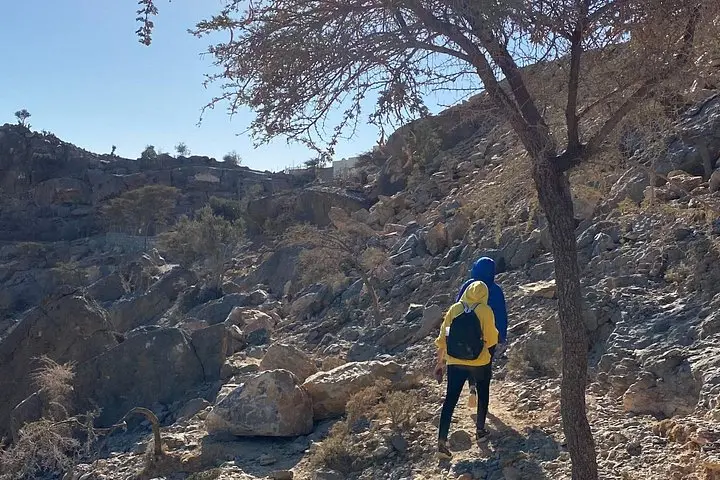
Geology here reads like a long ledger: uplifted limestone and dolomite carved over millions of years by water and tectonic stress to form Oman’s dramatic canyons. Human traces are younger but persistent — abandoned villages with mud-brick houses and terrace farming that speak to centuries of mountain adaptation. Local communities around Jebel Shams still keep traditions of date cultivation and goat herding; guides often point out old falaj irrigation channels that once tamed this arid landscape.
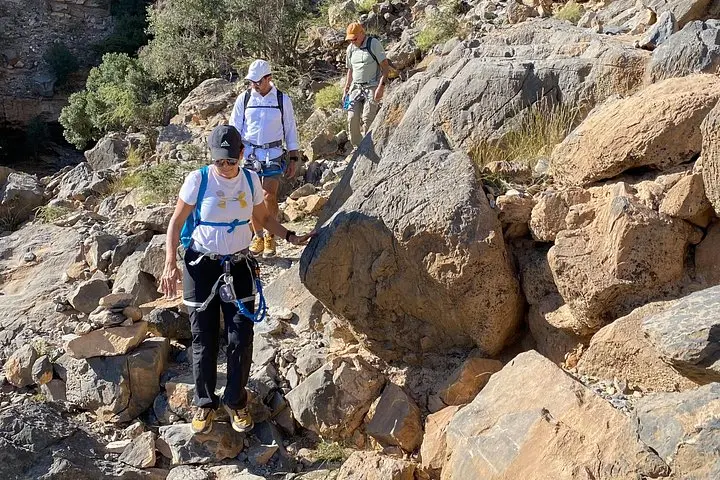
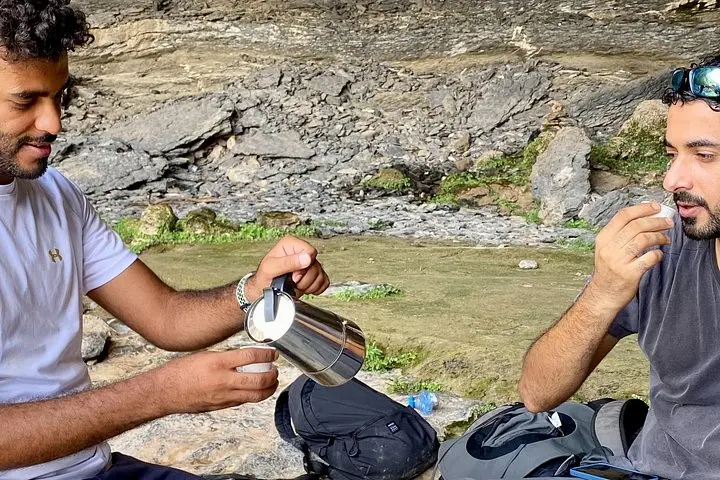
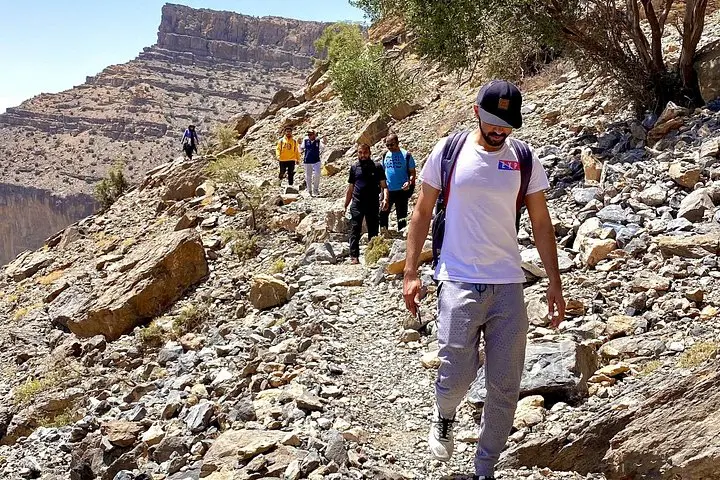
Expect 3–4 hours of walking on uneven, sometimes narrow trail, interspersed with vehicle transfers and a picnic lunch. The itinerary ends at a small, mineral-fed hidden lake tucked in a high basin — cool water that feels like a reward after desert heat. Guides provide context and safety; the route is exposed in places, so timing and footwear matter.
Practical notes: start early to avoid midday heat, carry 2–3 liters of water, wear sturdy shoes with good traction, and layer for temperature swings. Respect fragile soils and local sites — stick to the trail, pack out trash, and ask before photographing locals. This is a full-day, moderately strenuous mountain outing best for travelers with basic fitness and a steady step.
Yes — the tour includes pickup from designated Muscat hotels and meeting points; confirm exact pickup location when booking.
The walk is moderate — uneven trail and some exposed sections require sure footing; participants should be comfortable on rocky trails for several hours.
The small mineral lake is a scenic stop; swimming is situational and depends on local rules and safety — ask your guide before entering the water.
Lunch is included (rice and chicken); bring snacks and any special dietary items, and inform the operator of restrictions when booking.
WikiTours Adventures operates guided outdoor trips and adventures with an emphasis on safety, stewardship, and memorable experiences.
The day begins before the road lightens: your vehicle climbs out of Muscat’s lowlands and into the ragged teeth of the Al Hajar range. Wind scrapes the windows; the canyon opens like a sudden theater — sheer walls, layered strata, and a narrow ledge where the Balcony Walk threads along the rim. You move slowly, feet finding gravel and packed dirt, the gorge below daring you to look down.
The day begins before the road lightens: your vehicle climbs out of Muscat’s lowlands and into the ragged teeth of the Al Hajar range. Wind scrapes the windows; the canyon opens like a sudden theater — sheer walls, layered strata, and a narrow ledge where the Balcony Walk threads along the rim. You move slowly, feet finding gravel and packed dirt, the gorge below daring you to look down.
Geology here reads like a long ledger: uplifted limestone and dolomite carved over millions of years by water and tectonic stress to form Oman’s dramatic canyons. Human traces are younger but persistent — abandoned villages with mud-brick houses and terrace farming that speak to centuries of mountain adaptation. Local communities around Jebel Shams still keep traditions of date cultivation and goat herding; guides often point out old falaj irrigation channels that once tamed this arid landscape.
Expect 3–4 hours of walking on uneven, sometimes narrow trail, interspersed with vehicle transfers and a picnic lunch. The itinerary ends at a small, mineral-fed hidden lake tucked in a high basin — cool water that feels like a reward after desert heat. Guides provide context and safety; the route is exposed in places, so timing and footwear matter.
Practical notes: start early to avoid midday heat, carry 2–3 liters of water, wear sturdy shoes with good traction, and layer for temperature swings. Respect fragile soils and local sites — stick to the trail, pack out trash, and ask before photographing locals. This is a full-day, moderately strenuous mountain outing best for travelers with basic fitness and a steady step.