THE ADVENTURE COLLECTIVE® · Independent discovery and booking for outdoor travel

Drive into Arikok National Park to snorkel a sheltered Natural Pool, explore Indian cave art, and swim at Baby Beach. This half-day jeep tour mixes short walks, rugged off-road driving and calm snorkeling, ideal for travelers wanting a compact, active view of Aruba’s coastal geology and culture.
Drive into Arikok National Park to snorkel a sheltered Natural Pool, explore Indian cave art, and swim at Baby Beach. This half-day jeep tour mixes short walks, rugged off-road driving and calm snorkeling, ideal for travelers wanting a compact, active view of Aruba’s coastal geology and culture.
The jeep grinds over coral-carved ridges and the wind pushes at your hood as Aruba’s east coast opens into wild rock and blue beyond. In a single half-day you move from sun-baked coastal scrub into Arikok National Park’s volcanic outcrops, step into Indian cave art, slip into a protected tidal lagoon known locally as Conchi (the Natural Pool) and finish in the calm, shallow arc of Baby Beach.
Verified experiences and guided adventures in the surrounding area.
Operated by AGW TOURS ARUBA · San Nicolas, Aruba
The jeep grinds over coral-carved ridges and the wind pushes at your hood as Aruba’s east coast opens into wild rock and blue beyond. In a single half-day you move from sun-baked coastal scrub into Arikok National Park’s volcanic outcrops, step into Indian cave art, slip into a protected tidal lagoon known locally as Conchi (the Natural Pool) and finish in the calm, shallow arc of Baby Beach.
Geology here is blunt and honest: volcanic and limestone rock shaped by trade winds and Atlantic swell. Indigenous Arawak people once used inland springs; later, small-scale gold and aloe operations left scattered ruins. Local guides mix this history with practical navigation — telling where the island’s freshwater once pooled and how currents carve the coast.
Expect a bumpy, off-road ride of several kilometers across rocky, sandy tracks with short walks at stops (usually 100–500 m). Elevation changes are modest, typically under 100 m when clambering to viewpoints. Water activities include snorkeling in sheltered water; gear is often provided but a personal mask improves fit.
Plan for sun, spray and rough seats: bring reef-safe sunscreen, a secure camera and closed-toe shoes for walking on sharp rock. Timing matters — mid-morning to early afternoon gives calmer snorkeling and steadier light for photos. The tour balances easy swims with brief, adventurous hikes and plenty of open-air driving — a compact way to see Aruba’s raw coastline and coastal ecology in a single, active morning or afternoon.
Basic swimming ability is recommended for snorkeling stops; guides stay in shallow water at Baby Beach and Conchi is sheltered, but non-swimmers can often stay in waist-deep areas.
Yes for older children who can swim and tolerate bumpy rides; confirm age limits and child seat availability with the operator ahead of time.
Snorkeling equipment, bottled water, snacks and national park fees are typically included; check your booking confirmation for details.
Most operators offer hotel and port pickup and drop-off; you must provide arrival/disembarkation times at booking to arrange transfers.
AGW TOURS ARUBA operates guided outdoor trips and adventures with an emphasis on safety, stewardship, and memorable experiences.
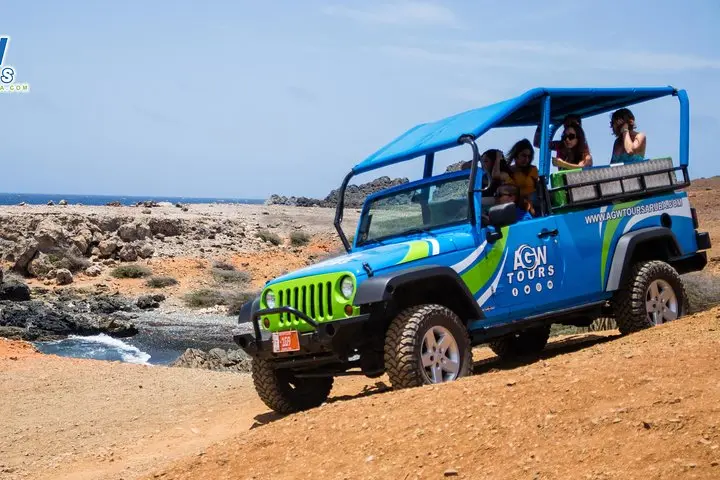
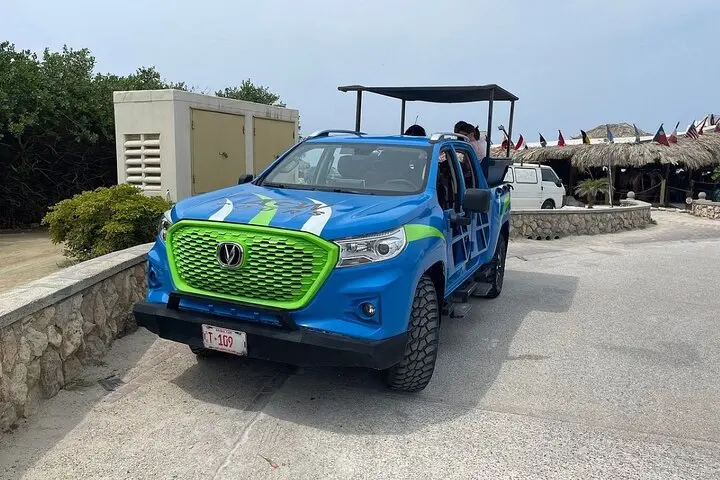
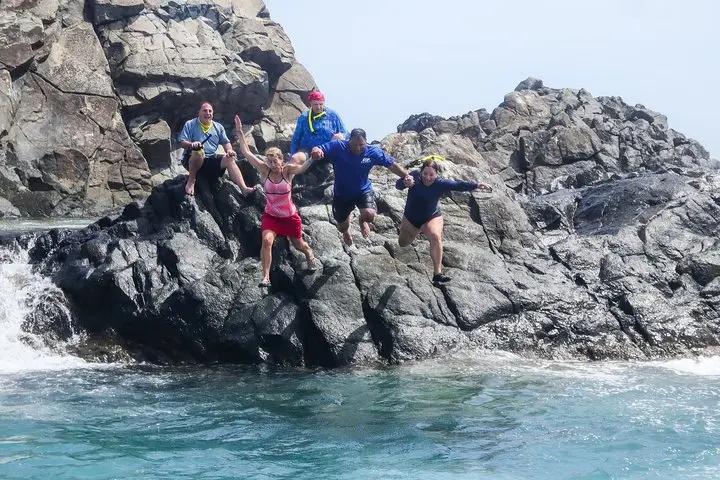
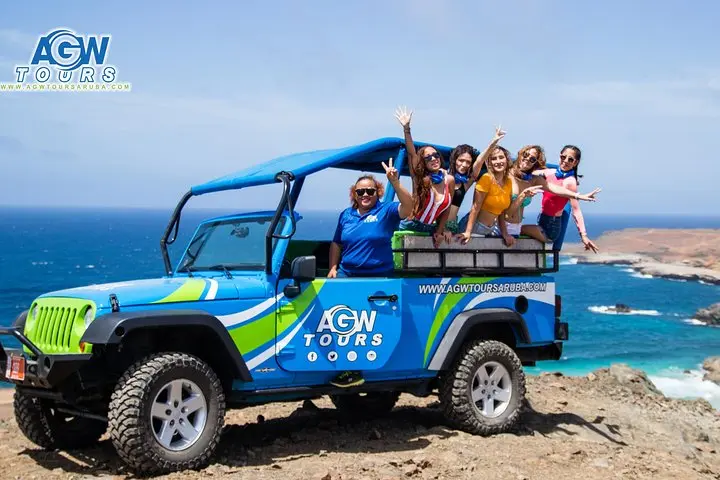
The jeep grinds over coral-carved ridges and the wind pushes at your hood as Aruba’s east coast opens into wild rock and blue beyond. In a single half-day you move from sun-baked coastal scrub into Arikok National Park’s volcanic outcrops, step into Indian cave art, slip into a protected tidal lagoon known locally as Conchi (the Natural Pool) and finish in the calm, shallow arc of Baby Beach.
The jeep grinds over coral-carved ridges and the wind pushes at your hood as Aruba’s east coast opens into wild rock and blue beyond. In a single half-day you move from sun-baked coastal scrub into Arikok National Park’s volcanic outcrops, step into Indian cave art, slip into a protected tidal lagoon known locally as Conchi (the Natural Pool) and finish in the calm, shallow arc of Baby Beach.
Geology here is blunt and honest: volcanic and limestone rock shaped by trade winds and Atlantic swell. Indigenous Arawak people once used inland springs; later, small-scale gold and aloe operations left scattered ruins. Local guides mix this history with practical navigation — telling where the island’s freshwater once pooled and how currents carve the coast.
Expect a bumpy, off-road ride of several kilometers across rocky, sandy tracks with short walks at stops (usually 100–500 m). Elevation changes are modest, typically under 100 m when clambering to viewpoints. Water activities include snorkeling in sheltered water; gear is often provided but a personal mask improves fit.
Plan for sun, spray and rough seats: bring reef-safe sunscreen, a secure camera and closed-toe shoes for walking on sharp rock. Timing matters — mid-morning to early afternoon gives calmer snorkeling and steadier light for photos. The tour balances easy swims with brief, adventurous hikes and plenty of open-air driving — a compact way to see Aruba’s raw coastline and coastal ecology in a single, active morning or afternoon.