THE ADVENTURE COLLECTIVE® · Independent discovery and booking for outdoor travel

Ride a jeep across Ria Formosa’s tidal edges to visit Santa Luzia, Torre de Aires, Fuseta and the working salt pans. This three-hour tour mixes coastal geology, fishing culture and a hands-on look at traditional salt and mud baths.
Ride a jeep across Ria Formosa’s tidal edges to visit Santa Luzia, Torre de Aires, Fuseta and the working salt pans. This three-hour tour mixes coastal geology, fishing culture and a hands-on look at traditional salt and mud baths.
A low, briny wind runs across the salinas as the jeep rolls off the asphalt and onto tracks that braid the edge of Ria Formosa. Salt pans catch the sun in sheets of white while tidal channels thread between barrier islands; gulls quarter the air and the occasional fishing boat returns with a day's haul. The ride moves through Santa Luzia’s compact streets where octopus is still dried and sold by hand, past Torre de Aires with its Roman-era stones, and into Fuseta, a village that still reads as a working fishing port.
Verified experiences and guided adventures in the surrounding area.
Operated by Maria's Tuk Tuk · Olhão, Algarve
A low, briny wind runs across the salinas as the jeep rolls off the asphalt and onto tracks that braid the edge of Ria Formosa. Salt pans catch the sun in sheets of white while tidal channels thread between barrier islands; gulls quarter the air and the occasional fishing boat returns with a day's haul. The ride moves through Santa Luzia’s compact streets where octopus is still dried and sold by hand, past Torre de Aires with its Roman-era stones, and into Fuseta, a village that still reads as a working fishing port.
Ria Formosa is a coastal lagoon system shaped by shifting sandbars and tides — an ecosystem that has supported salt producers and fishermen for centuries. Olhão’s market and its blocky, early-20th-century facades speak to a town built around fish and trade; the salinas outside town preserve the old methods of salt harvesting that once supplied the region’s “white gold.” Geologically, this is a living coastline: sand spits form and erode with storms, and the shallow pans concentrate sunlight and salt.
Practical guidance: the tour is about three hours and largely vehicle-based with short walks. Wear sun protection and bring water; closed-toe shoes help on salt crusts and muddy edges. Respect posted boundaries at the salt pans — they are both a working landscape and important bird habitat. Morning or late-afternoon departures offer cooler temperatures and better light for photography. The experience suits travelers seeking cultural context, easy outdoor access, and a tactile encounter with salt-making and coastal life.
The tour lasts about three hours and is vehicle-based with short, easy walks and stops at viewpoints and the salt pans.
Yes—infants must sit on an adult’s lap; activities are family-friendly but expect unpaved surfaces at some stops.
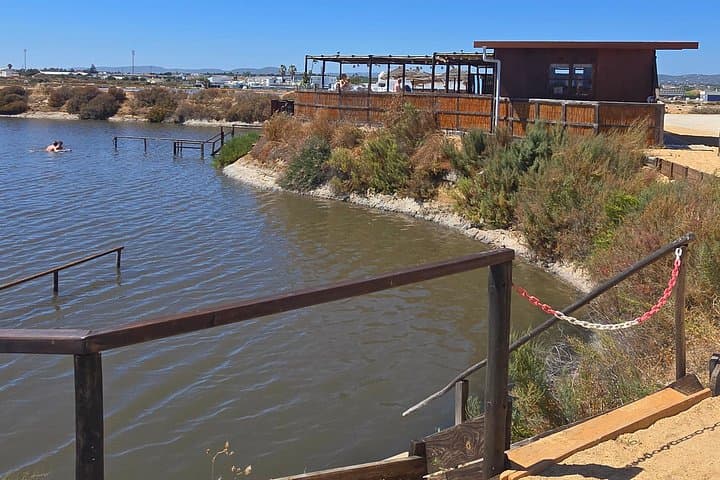
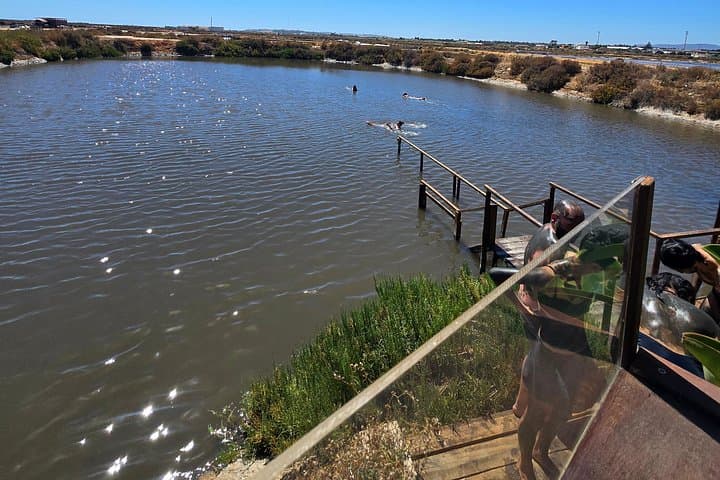
Yes—there is a visit to the salinas with a mud bath demonstration; follow guide instructions and hygiene rules for hands-on parts.
Service animals are permitted; check with the operator about non-service pets when booking.
Maria's Tuk Tuk operates guided outdoor trips and adventures with an emphasis on safety, stewardship, and memorable experiences.
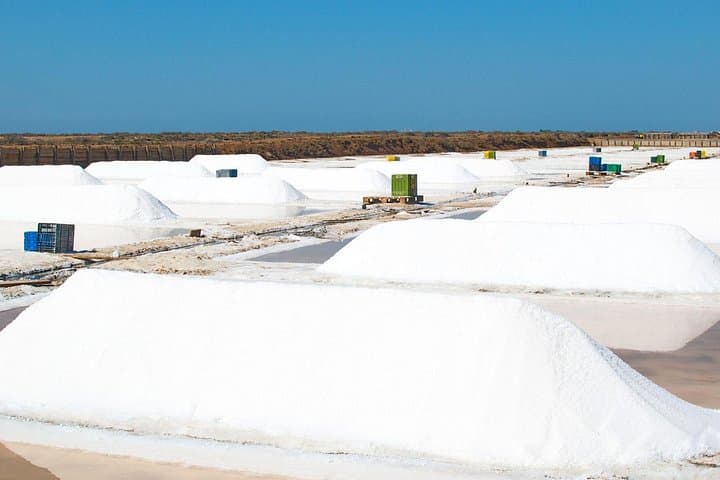
A low, briny wind runs across the salinas as the jeep rolls off the asphalt and onto tracks that braid the edge of Ria Formosa. Salt pans catch the sun in sheets of white while tidal channels thread between barrier islands; gulls quarter the air and the occasional fishing boat returns with a day's haul. The ride moves through Santa Luzia’s compact streets where octopus is still dried and sold by hand, past Torre de Aires with its Roman-era stones, and into Fuseta, a village that still reads as a working fishing port.
A low, briny wind runs across the salinas as the jeep rolls off the asphalt and onto tracks that braid the edge of Ria Formosa. Salt pans catch the sun in sheets of white while tidal channels thread between barrier islands; gulls quarter the air and the occasional fishing boat returns with a day's haul. The ride moves through Santa Luzia’s compact streets where octopus is still dried and sold by hand, past Torre de Aires with its Roman-era stones, and into Fuseta, a village that still reads as a working fishing port.
Ria Formosa is a coastal lagoon system shaped by shifting sandbars and tides — an ecosystem that has supported salt producers and fishermen for centuries. Olhão’s market and its blocky, early-20th-century facades speak to a town built around fish and trade; the salinas outside town preserve the old methods of salt harvesting that once supplied the region’s “white gold.” Geologically, this is a living coastline: sand spits form and erode with storms, and the shallow pans concentrate sunlight and salt.
Practical guidance: the tour is about three hours and largely vehicle-based with short walks. Wear sun protection and bring water; closed-toe shoes help on salt crusts and muddy edges. Respect posted boundaries at the salt pans — they are both a working landscape and important bird habitat. Morning or late-afternoon departures offer cooler temperatures and better light for photography. The experience suits travelers seeking cultural context, easy outdoor access, and a tactile encounter with salt-making and coastal life.