
Jeep Tour to Corcovado: Tijuca Rain Forest & Santa Teresa Half-Day
Drive from bohemian Santa Teresa into the humid slopes of Tijuca National Park, then climb to Corcovado’s summit to stand beneath Christ the Redeemer. This half-day Jeep tour mixes city character, Atlantic Forest, and sweeping viewpoints—ideal for travelers short on time but hungry for Rio’s big scenes.
An Adventure In Rio de Janeiro.
Drive from bohemian Santa Teresa into the humid slopes of Tijuca National Park, then climb to Corcovado’s summit to stand beneath Christ the Redeemer. This half-day Jeep tour mixes city character, Atlantic Forest, and sweeping viewpoints—ideal for travelers short on time but hungry for Rio’s big scenes.
Read the full experience
A gravel crunch signals the start: a Jeep threads from Rio’s busy avenues up toward shaded slopes where the city exhales into green. Santa Teresa’s cobblestone lanes open like an artist’s map—faded colonial facades, street art and small cafés—before the road dives into the broad, humid lungs of Tijuca National Park.
A gravel crunch signals the start: a Jeep threads from Rio’s busy avenues up toward shaded slopes where the city exhales into green. Santa Teresa’s cobblestone lanes open like an artist’s map—faded colonial facades, street art and small cafés—before the road dives into the broad, humid lungs of Tijuca National Park.
Tijuca is a manufactured forest with an old story: mid-19th-century reforestation to protect Rio’s water supply reshaped volcanic ridges into dense Atlantic Forest, now home to the Corcovado massif. The climb ends at Christ the Redeemer, the 38-meter Art Deco statue that has watched Rio since 1931; from its base the city unfurls—Guanabara Bay, Copacabana’s curve, Sugarloaf’s flank—each landmark a chapter in Rio’s layered geography and culture.
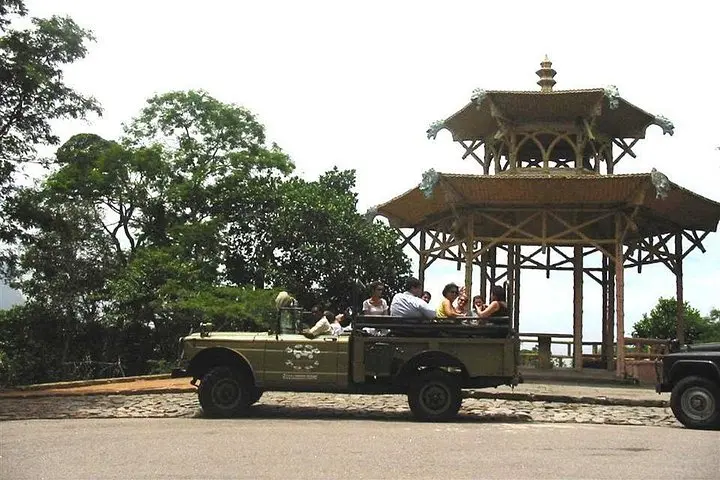
Along the way, the Dona Marta viewpoint and hidden trails offer different eyes on the same city; the forest will nudge you with sudden birdcalls and small monkeys that treat the canopy like a living corridor. Guides combine local history with practical routing, moving between neighborhoods and park roads in a vehicle built for the hill.
Expect modest walking: steps and paved viewpoints rather than long hikes. Bring sun protection, a refillable water bottle and light rain protection—tropical showers are common. Morning departures beat the crowds and the slant of light is best for photos. Respect signs, avoid feeding wildlife, and allow time at viewpoints to absorb the changes in scale between urban grid and rainforest ridge.
Frequently asked questions
Yes, the tour includes admission to Christ the Redeemer and the time allotted at the summit.
The tour involves short walks and steps at viewpoints; those with significant mobility limitations should check with the operator for accessibility options.
The itinerary typically allows about 45–60 minutes at Corcovado for photos and exploration.
Multilingual guides are provided; confirm your preferred language at booking if needed.
About This Experience
Tangol operates guided outdoor trips and adventures with an emphasis on safety, stewardship, and memorable experiences.
Adventure tips
Recommended gear
- Refillable water bottle: Keeps you hydrated through humid forest sections and viewpoints.
- Sun hat & sunscreen: Protects from strong equatorial sun on exposed viewpoints.
- Comfortable walking shoes: Closed-toe shoes handle cobblestones, steps and short trails.
- Packable rain jacket: Lightweight protection against sudden tropical showers.
Photos of the experience



Related adventures & guides
Read the full experience
A gravel crunch signals the start: a Jeep threads from Rio’s busy avenues up toward shaded slopes where the city exhales into green. Santa Teresa’s cobblestone lanes open like an artist’s map—faded colonial facades, street art and small cafés—before the road dives into the broad, humid lungs of Tijuca National Park.
A gravel crunch signals the start: a Jeep threads from Rio’s busy avenues up toward shaded slopes where the city exhales into green. Santa Teresa’s cobblestone lanes open like an artist’s map—faded colonial facades, street art and small cafés—before the road dives into the broad, humid lungs of Tijuca National Park.
Tijuca is a manufactured forest with an old story: mid-19th-century reforestation to protect Rio’s water supply reshaped volcanic ridges into dense Atlantic Forest, now home to the Corcovado massif. The climb ends at Christ the Redeemer, the 38-meter Art Deco statue that has watched Rio since 1931; from its base the city unfurls—Guanabara Bay, Copacabana’s curve, Sugarloaf’s flank—each landmark a chapter in Rio’s layered geography and culture.
Along the way, the Dona Marta viewpoint and hidden trails offer different eyes on the same city; the forest will nudge you with sudden birdcalls and small monkeys that treat the canopy like a living corridor. Guides combine local history with practical routing, moving between neighborhoods and park roads in a vehicle built for the hill.
Expect modest walking: steps and paved viewpoints rather than long hikes. Bring sun protection, a refillable water bottle and light rain protection—tropical showers are common. Morning departures beat the crowds and the slant of light is best for photos. Respect signs, avoid feeding wildlife, and allow time at viewpoints to absorb the changes in scale between urban grid and rainforest ridge.
Make a day of it nearby.
Verified experiences and guided adventures in the surrounding area.