THE ADVENTURE COLLECTIVE® · Independent discovery and booking for outdoor travel

Ride a restored military Jeep out of Ho Chi Minh City to the Cu Chi Tunnels for a compact, interpretive half-day that blends engineering history with hands-on displays. Expect shaded walks, narrow crawl spaces, and detailed explanations of Viet Cong tunnel techniques.
Ride a restored military Jeep out of Ho Chi Minh City to the Cu Chi Tunnels for a compact, interpretive half-day that blends engineering history with hands-on displays. Expect shaded walks, narrow crawl spaces, and detailed explanations of Viet Cong tunnel techniques.
The engine coughs to life and a restored US military Jeep rolls out of Ho Chi Minh City toward low, green hills. Roadside workshops, rice paddies and small village markets slide past; the city noise thins and the earth takes on a quieter, older voice. Arriving at the Cu Chi site, the trail narrows into shady rubber tree groves that hide a web of dugouts and narrow passages daring you to imagine life below ground.
Verified experiences and guided adventures in the surrounding area.
Operated by VJT Adventures · Cu Chi, Ho Chi Minh
The engine coughs to life and a restored US military Jeep rolls out of Ho Chi Minh City toward low, green hills. Roadside workshops, rice paddies and small village markets slide past; the city noise thins and the earth takes on a quieter, older voice. Arriving at the Cu Chi site, the trail narrows into shady rubber tree groves that hide a web of dugouts and narrow passages daring you to imagine life below ground.
Cu Chi is carved from late-Holocene alluvium and clay soils that were manipulated by the Viet Cong into defensive complexes during the Indochina and Vietnam wars. These tunnels are less a single corridor and more a layered network of living spaces, storerooms and fighting positions. Guides explain vernacular engineering—booby traps, camouflaged entrances and the way villagers adapted local materials—and the cultural context of peacetime memory maintained by surrounding communities.
On a half-day jeep tour visitors can expect short walks on compacted dirt, demonstrations at reconstructed sections, and hands-on opportunities to view trapdoors and widened crawl-spaces. The pace is brisk; the focus is on interpretation and site access rather than long hikes.
Practical guidance: wear closed-toe shoes with good traction, bring a light rain shell in the monsoon season, and carry water—the shaded trails can be humid. If you have limited mobility, ask about above-ground viewpoints and shorter stops. Photography is allowed in most areas but follow guide instructions—some exhibits are sensitive and preserved for historical reasons. The jeep transfer makes the trip efficient, turning a two-hour drive each way into a focused half-day immersion in Vietnam's recent past.
Expect about 1.5–2 hours each way by road depending on traffic; the jeep tour schedules a focused 2-hour visit on site.
Most tours include demonstration sections; visitors can choose shorter, widened passages or view reconstructions if crawling isn’t possible.
Yes—cold drinks such as water and soft drinks are listed as inclusions, but bringing your own bottle is recommended for comfort.
Infants must sit on laps; children can join but parents should note that some areas are narrow and exhibits may be unsettling for very young kids.
VJT Adventures operates guided outdoor trips and adventures with an emphasis on safety, stewardship, and memorable experiences.

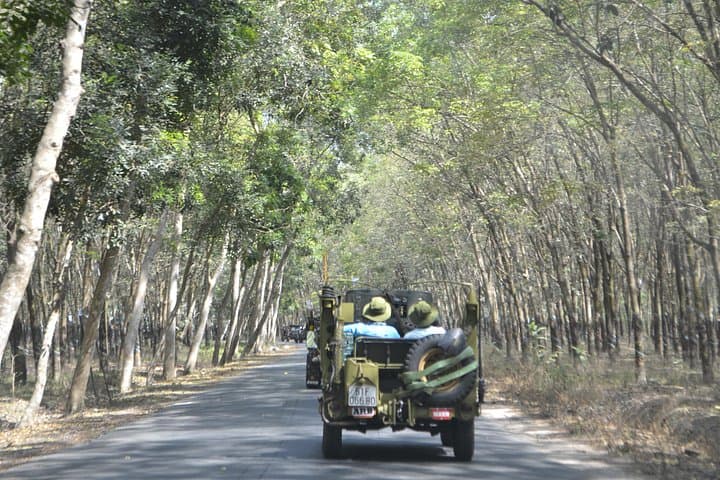
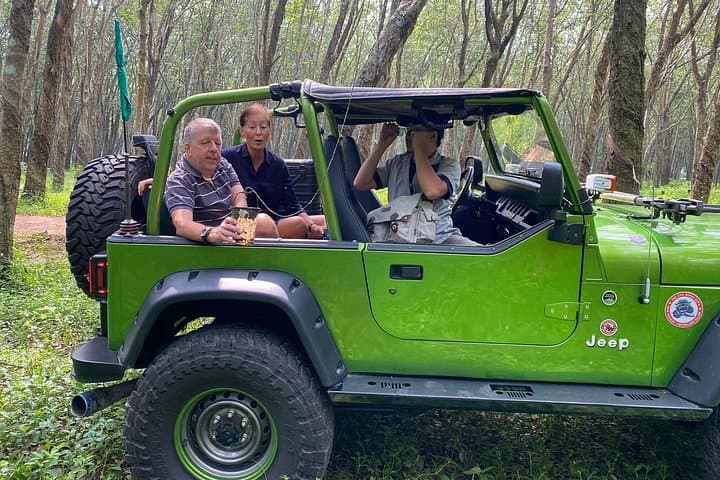

The engine coughs to life and a restored US military Jeep rolls out of Ho Chi Minh City toward low, green hills. Roadside workshops, rice paddies and small village markets slide past; the city noise thins and the earth takes on a quieter, older voice. Arriving at the Cu Chi site, the trail narrows into shady rubber tree groves that hide a web of dugouts and narrow passages daring you to imagine life below ground.
The engine coughs to life and a restored US military Jeep rolls out of Ho Chi Minh City toward low, green hills. Roadside workshops, rice paddies and small village markets slide past; the city noise thins and the earth takes on a quieter, older voice. Arriving at the Cu Chi site, the trail narrows into shady rubber tree groves that hide a web of dugouts and narrow passages daring you to imagine life below ground.
Cu Chi is carved from late-Holocene alluvium and clay soils that were manipulated by the Viet Cong into defensive complexes during the Indochina and Vietnam wars. These tunnels are less a single corridor and more a layered network of living spaces, storerooms and fighting positions. Guides explain vernacular engineering—booby traps, camouflaged entrances and the way villagers adapted local materials—and the cultural context of peacetime memory maintained by surrounding communities.
On a half-day jeep tour visitors can expect short walks on compacted dirt, demonstrations at reconstructed sections, and hands-on opportunities to view trapdoors and widened crawl-spaces. The pace is brisk; the focus is on interpretation and site access rather than long hikes.
Practical guidance: wear closed-toe shoes with good traction, bring a light rain shell in the monsoon season, and carry water—the shaded trails can be humid. If you have limited mobility, ask about above-ground viewpoints and shorter stops. Photography is allowed in most areas but follow guide instructions—some exhibits are sensitive and preserved for historical reasons. The jeep transfer makes the trip efficient, turning a two-hour drive each way into a focused half-day immersion in Vietnam's recent past.