THE ADVENTURE COLLECTIVE® · Independent discovery and booking for outdoor travel

A one-day private hike from Seongsam-jae up to Nogo-dan (1505m) with an option to continue the jagged Jiri-san ridge to Banya-bong (1732m), capped by visits to historic mountain temples and a meal of local mountain vegetables.
A one-day private hike from Seongsam-jae up to Nogo-dan (1505m) with an option to continue the jagged Jiri-san ridge to Banya-bong (1732m), capped by visits to historic mountain temples and a meal of local mountain vegetables.
You step out of the vehicle at Seongsam-jae, a 1,000m road pass where the morning wind presses the clouds against a jagged skyline. The path ahead threads through mixed pine and deciduous forest, then climbs in earnest — an hour of steady switchbacks delivers you to Nogo-dan at roughly 1,505m. From that perch the ridgeline stretches like a spine across Jiri-san, and if you keep going the knobby crest pushes you toward Banya-bong at about 1,732m, where the world opens into long, layered views of the national park.
Verified experiences and guided adventures in the surrounding area.
Operated by Roger Shepherd · Gurye, Jeollanam-do
You step out of the vehicle at Seongsam-jae, a 1,000m road pass where the morning wind presses the clouds against a jagged skyline. The path ahead threads through mixed pine and deciduous forest, then climbs in earnest — an hour of steady switchbacks delivers you to Nogo-dan at roughly 1,505m. From that perch the ridgeline stretches like a spine across Jiri-san, and if you keep going the knobby crest pushes you toward Banya-bong at about 1,732m, where the world opens into long, layered views of the national park.
Jiri-san is South Korea’s first and largest national park, its range carved by ancient tectonics and capped in granite and metamorphic outcrops. Buddhist temples such as Hwaeom-sa, Saseong-am and Cheoneun-sa mark human threads through the mountains — stone stairways and quiet courtyards that contrast with the exposed ridge. Locally, Gurye is known for mountain vegetable cuisine (sansai) served after a day on the trail.
Practically: expect ~500m of elevation gain from Seongsam-jae to Nogo-dan and another ~200–250m to Banya-bong if you continue. The route alternates packed dirt, rock steps and exposed ridge sections; trekking poles help on knobby ground. A private vehicle typically shuttles you to the pass (about 45 minutes from the valley), and the full loop with temple visits and a meal makes for an 8‑hour day. Carry layers, water, and respect temple etiquette — shoes, voice and timing matter. Weather changes fast above 1,000m; plan early starts and leave ample daylight for the return.
From Seongsam-jae it's about an hour of steady ascent with ~500m elevation gain; the trail is well defined but includes rocky steps—suitable for hikers with moderate fitness.
Yes, the tour includes private transportation; typical drive time from the valley to Seongsam-jae is around 45 minutes depending on your pickup point.
Yes, the itinerary commonly includes Hwaeom-sa, Saseong-am or Cheoneun-sa after the hike; be mindful of temple hours and dress/behavior guidelines.
Late spring to early fall offers stable conditions and greenery; autumn provides peak foliage but can be windy and cold at ridge tops.
Roger Shepherd operates guided outdoor trips and adventures with an emphasis on safety, stewardship, and memorable experiences.
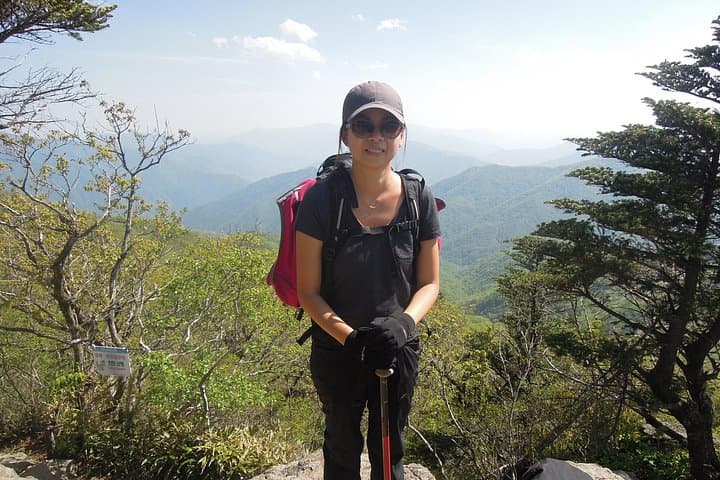
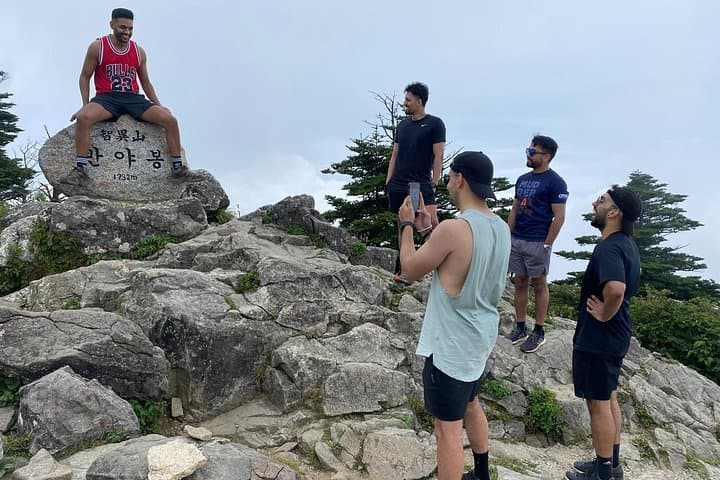
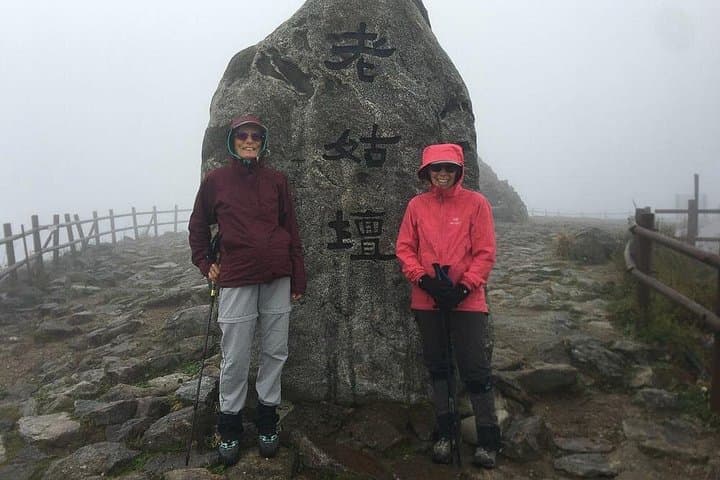
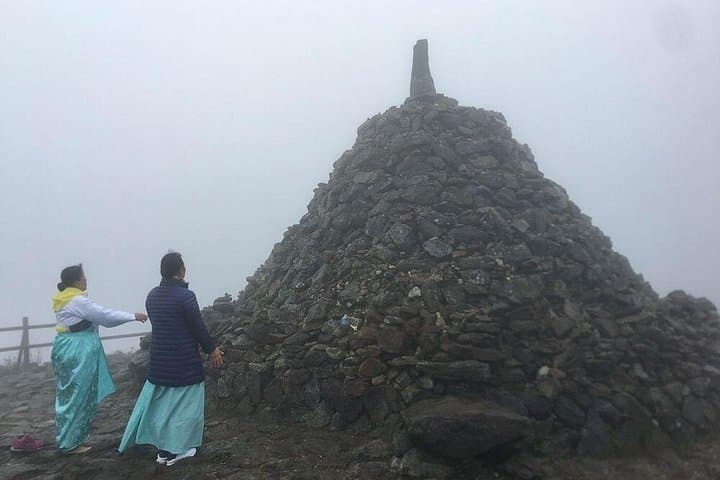
You step out of the vehicle at Seongsam-jae, a 1,000m road pass where the morning wind presses the clouds against a jagged skyline. The path ahead threads through mixed pine and deciduous forest, then climbs in earnest — an hour of steady switchbacks delivers you to Nogo-dan at roughly 1,505m. From that perch the ridgeline stretches like a spine across Jiri-san, and if you keep going the knobby crest pushes you toward Banya-bong at about 1,732m, where the world opens into long, layered views of the national park.
You step out of the vehicle at Seongsam-jae, a 1,000m road pass where the morning wind presses the clouds against a jagged skyline. The path ahead threads through mixed pine and deciduous forest, then climbs in earnest — an hour of steady switchbacks delivers you to Nogo-dan at roughly 1,505m. From that perch the ridgeline stretches like a spine across Jiri-san, and if you keep going the knobby crest pushes you toward Banya-bong at about 1,732m, where the world opens into long, layered views of the national park.
Jiri-san is South Korea’s first and largest national park, its range carved by ancient tectonics and capped in granite and metamorphic outcrops. Buddhist temples such as Hwaeom-sa, Saseong-am and Cheoneun-sa mark human threads through the mountains — stone stairways and quiet courtyards that contrast with the exposed ridge. Locally, Gurye is known for mountain vegetable cuisine (sansai) served after a day on the trail.
Practically: expect ~500m of elevation gain from Seongsam-jae to Nogo-dan and another ~200–250m to Banya-bong if you continue. The route alternates packed dirt, rock steps and exposed ridge sections; trekking poles help on knobby ground. A private vehicle typically shuttles you to the pass (about 45 minutes from the valley), and the full loop with temple visits and a meal makes for an 8‑hour day. Carry layers, water, and respect temple etiquette — shoes, voice and timing matter. Weather changes fast above 1,000m; plan early starts and leave ample daylight for the return.