THE ADVENTURE COLLECTIVE® · Independent discovery and booking for outdoor travel

Descend into Jiuxiang’s vast karst halls on a one‑day tour from Kunming. This guided visit includes entrance, cable car, and electric cart, delivering rare stromatolite and rimstone formations within China’s largest cave system.
Descend into Jiuxiang’s vast karst halls on a one‑day tour from Kunming. This guided visit includes entrance, cable car, and electric cart, delivering rare stromatolite and rimstone formations within China’s largest cave system.
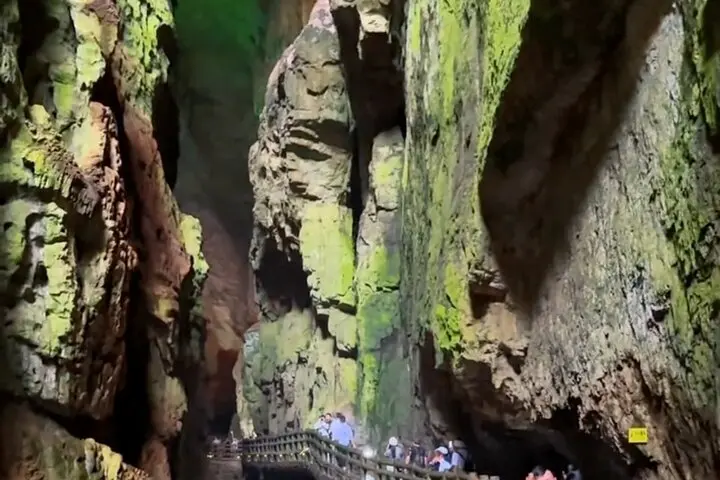
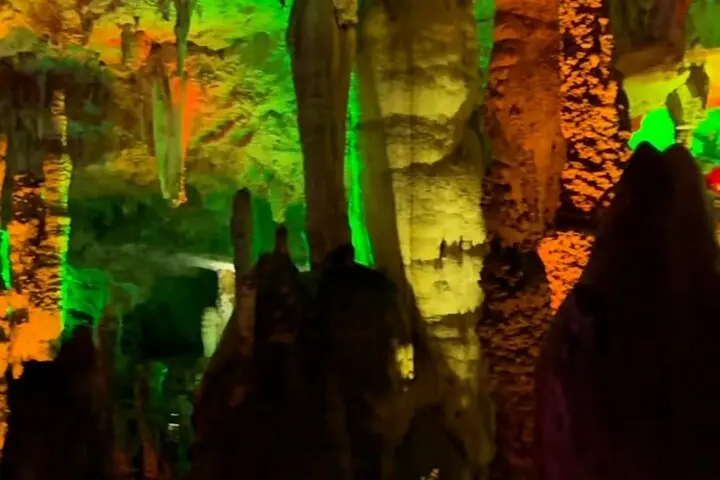
You step off the cable car into cool, dim air that smells faintly of stone and moss; water is already at work here, carving and polishing rooms the size of warehouses. Light from the walkways picks out curling helicites and columns that look arrested mid-motion. Overhead, stalactites drip at a steady, patient tempo — the cave keeps its own clock.
Verified experiences and guided adventures in the surrounding area.
Operated by 走啦旅游 · Jiuxiang, Yunnan
You step off the cable car into cool, dim air that smells faintly of stone and moss; water is already at work here, carving and polishing rooms the size of warehouses. Light from the walkways picks out curling helicites and columns that look arrested mid-motion. Overhead, stalactites drip at a steady, patient tempo — the cave keeps its own clock.
Jiuxiang formed during the Sinian Period roughly 600 million years ago and ranks among China’s largest karst systems. Scientists point to stromatolites and biogenic reef-like formations here as living pages of geological history; rimstone pools and fish‑back rocks offer textbook examples of karst processes. The site’s cable car and electric-cart network make the vast chambers accessible, while local village economies around Kunming have long connected to the cave as a natural landmark and tourist resource.
Practical guidance: the packaged day tour (about 10–11 hours round trip from Kunming) includes entrance, round‑trip cable car, and e‑cart. Inside, expect paved sections, steps, and some uneven ground; head clearance can be low in spots. Wear sturdy walking shoes with grip, a light jacket for constant cool temperatures, and bring a reusable water bottle (refill before entering). Cameras are allowed but avoid using flash close to delicate formations. The tour suits travelers with average mobility, but it’s not recommended for those with serious spinal, heart, or pregnancy concerns. Peak visitation is in summer; mornings are quieter. Respect marked paths and avoid touching mineral surfaces — oils from hands halt growth that took millennia. Jiuxiang offers a rare, tactile encounter with deep time: move through respectfully and you’ll see how water sculpts patience into art.
Yes — this tour includes entrance fees, electric cart transport within the site, and round‑trip cable car as stated.
Expect roughly 1.5–2 hours of walking on paved paths, steps, and occasional uneven ground within the cave system.
It’s family-friendly for children who can manage steps; however, it’s not recommended for travelers with serious spinal, cardiovascular conditions, or pregnancy.
Eating inside the cave is discouraged; flash can harm sensitive formations and is best avoided close to mineral surfaces.
走啦旅游 operates guided outdoor trips and adventures with an emphasis on safety, stewardship, and memorable experiences.
You step off the cable car into cool, dim air that smells faintly of stone and moss; water is already at work here, carving and polishing rooms the size of warehouses. Light from the walkways picks out curling helicites and columns that look arrested mid-motion. Overhead, stalactites drip at a steady, patient tempo — the cave keeps its own clock.
You step off the cable car into cool, dim air that smells faintly of stone and moss; water is already at work here, carving and polishing rooms the size of warehouses. Light from the walkways picks out curling helicites and columns that look arrested mid-motion. Overhead, stalactites drip at a steady, patient tempo — the cave keeps its own clock.
Jiuxiang formed during the Sinian Period roughly 600 million years ago and ranks among China’s largest karst systems. Scientists point to stromatolites and biogenic reef-like formations here as living pages of geological history; rimstone pools and fish‑back rocks offer textbook examples of karst processes. The site’s cable car and electric-cart network make the vast chambers accessible, while local village economies around Kunming have long connected to the cave as a natural landmark and tourist resource.
Practical guidance: the packaged day tour (about 10–11 hours round trip from Kunming) includes entrance, round‑trip cable car, and e‑cart. Inside, expect paved sections, steps, and some uneven ground; head clearance can be low in spots. Wear sturdy walking shoes with grip, a light jacket for constant cool temperatures, and bring a reusable water bottle (refill before entering). Cameras are allowed but avoid using flash close to delicate formations. The tour suits travelers with average mobility, but it’s not recommended for those with serious spinal, heart, or pregnancy concerns. Peak visitation is in summer; mornings are quieter. Respect marked paths and avoid touching mineral surfaces — oils from hands halt growth that took millennia. Jiuxiang offers a rare, tactile encounter with deep time: move through respectfully and you’ll see how water sculpts patience into art.