THE ADVENTURE COLLECTIVE® · Independent discovery and booking for outdoor travel

Drive from Höfn along Iceland’s raw southeast coast to the floating icebergs of Jökulsárlón, the glittering shards of Diamond Beach and into a seasonal blue ice cave in Vatnajökull National Park. Expect dramatic light, short glacier hikes, and expert-led cave access.
Drive from Höfn along Iceland’s raw southeast coast to the floating icebergs of Jökulsárlón, the glittering shards of Diamond Beach and into a seasonal blue ice cave in Vatnajökull National Park. Expect dramatic light, short glacier hikes, and expert-led cave access.
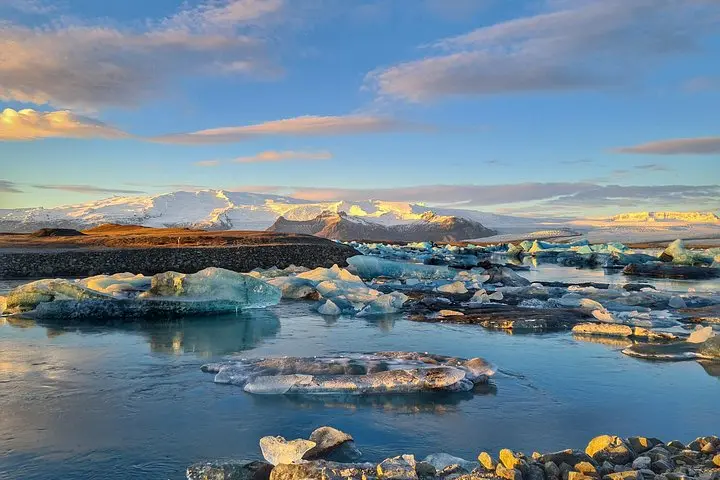
A pale morning light slides across the southeast coast of Iceland as the van peels away from Höfn Airport and the Atlantic shrinks behind you. The road climbs and dives along black beaches, skirting outwash plains where rivers born beneath Vatnajökull push sediment toward the sea. By the time the lagoon comes into view, the world has changed—bright blue and white bergs float like discarded sculptures in ink-dark water, their undersides carved into caves and hollows by melt and salt.
Verified experiences and guided adventures in the surrounding area.
Operated by Marina Travel · Höfn, Eastern Region
A pale morning light slides across the southeast coast of Iceland as the van peels away from Höfn Airport and the Atlantic shrinks behind you. The road climbs and dives along black beaches, skirting outwash plains where rivers born beneath Vatnajökull push sediment toward the sea. By the time the lagoon comes into view, the world has changed—bright blue and white bergs float like discarded sculptures in ink-dark water, their undersides carved into caves and hollows by melt and salt.
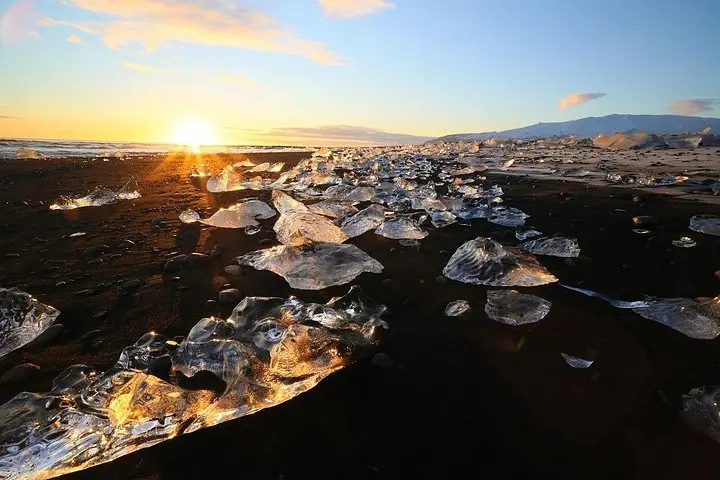
Jökulsárlón is fed by Breiðamerkurjökull, one of the tongues of Europe’s largest ice cap, Vatnajökull. The lagoon grew dramatically in the 20th century as the glacier retreated, and the shoreline still records that recent history in glacial moraines and a scatter of fossilized ice. Across the road, Diamond Beach throws those same ice fragments onto a field of black sand where waves bruise them into translucent gems; the contrast is immediate and oddly theatrical.
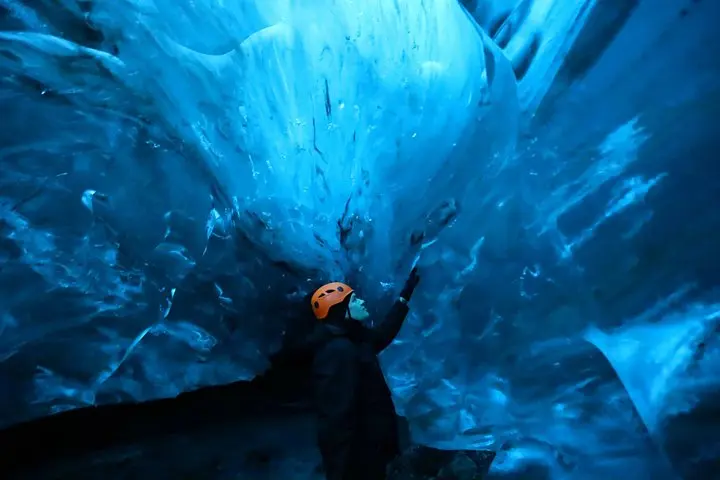
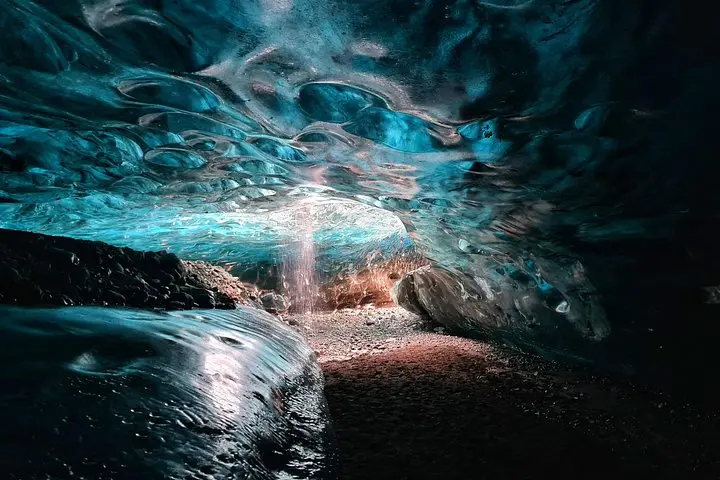
The blue ice caves you explore are ephemeral cathedrals formed where winter melt carves tunnels through dense glacier ice. Lighting and structure shift constantly, so no two visits are the same. Guides equip visitors with helmets and crampons and lead short, careful scrambles into the cave mouths where slick ice walls glow an impossible blue. Safety is non-negotiable here—conditions determine access, and tours can change with weather.
Culturally, this coastline has long been a working landscape. Fishing villages like Höfn grew from the fjord’s ability to shelter boats; today they sit alongside tourism and scientific research into glacial change. Driving the route gives a clear view of why Iceland’s glaciers are now central to conversations about climate and stewardship.
Practical details: the full-day itinerary runs roughly 11 hours from pickup at Höfn Airport and includes a super-jeep transfer, time at the lagoon and Diamond Beach, and guided glacier-hike/ice-cave access. Expect short hikes on uneven, icy ground and exposure to wind and spray; crampons and helmets are provided, but bring sturdy waterproof boots and layered clothing. Photographers will want to time their visit for low sun—early or late in the day softens shadows and brings out the color in the ice.
If you go, give yourself extra time between flights; weather can reroute schedules and the area’s light invites lingering. Keep to marked paths, follow your guide’s instructions, and pack water and snacks for the road. This is less a passive sightseeing stop and more a hands-on study in landscape change—beautiful, brittle, and elemental.
No — the tour begins and ends at Höfn Airport; flights are not included in the booking.
No — ice caves are seasonal and depend on weather and glacial conditions; your guide will confirm access the day of the tour.
Layered, waterproof clothing and sturdy hiking boots are recommended; helmets and crampons are provided by the operator.
The tour is generally not recommended for pregnant travelers and young children should be assessed case-by-case due to icy terrain and safety considerations.
The drive is roughly 1–1.5 hours each way depending on conditions and stops along the coast.
Tours may be canceled in bad weather for safety; the operator’s policy specifies cancellations for unsafe conditions.
Marina Travel operates guided outdoor trips and adventures with an emphasis on safety, stewardship, and memorable experiences.
A pale morning light slides across the southeast coast of Iceland as the van peels away from Höfn Airport and the Atlantic shrinks behind you. The road climbs and dives along black beaches, skirting outwash plains where rivers born beneath Vatnajökull push sediment toward the sea. By the time the lagoon comes into view, the world has changed—bright blue and white bergs float like discarded sculptures in ink-dark water, their undersides carved into caves and hollows by melt and salt.
A pale morning light slides across the southeast coast of Iceland as the van peels away from Höfn Airport and the Atlantic shrinks behind you. The road climbs and dives along black beaches, skirting outwash plains where rivers born beneath Vatnajökull push sediment toward the sea. By the time the lagoon comes into view, the world has changed—bright blue and white bergs float like discarded sculptures in ink-dark water, their undersides carved into caves and hollows by melt and salt.
Jökulsárlón is fed by Breiðamerkurjökull, one of the tongues of Europe’s largest ice cap, Vatnajökull. The lagoon grew dramatically in the 20th century as the glacier retreated, and the shoreline still records that recent history in glacial moraines and a scatter of fossilized ice. Across the road, Diamond Beach throws those same ice fragments onto a field of black sand where waves bruise them into translucent gems; the contrast is immediate and oddly theatrical.
The blue ice caves you explore are ephemeral cathedrals formed where winter melt carves tunnels through dense glacier ice. Lighting and structure shift constantly, so no two visits are the same. Guides equip visitors with helmets and crampons and lead short, careful scrambles into the cave mouths where slick ice walls glow an impossible blue. Safety is non-negotiable here—conditions determine access, and tours can change with weather.
Culturally, this coastline has long been a working landscape. Fishing villages like Höfn grew from the fjord’s ability to shelter boats; today they sit alongside tourism and scientific research into glacial change. Driving the route gives a clear view of why Iceland’s glaciers are now central to conversations about climate and stewardship.
Practical details: the full-day itinerary runs roughly 11 hours from pickup at Höfn Airport and includes a super-jeep transfer, time at the lagoon and Diamond Beach, and guided glacier-hike/ice-cave access. Expect short hikes on uneven, icy ground and exposure to wind and spray; crampons and helmets are provided, but bring sturdy waterproof boots and layered clothing. Photographers will want to time their visit for low sun—early or late in the day softens shadows and brings out the color in the ice.
If you go, give yourself extra time between flights; weather can reroute schedules and the area’s light invites lingering. Keep to marked paths, follow your guide’s instructions, and pack water and snacks for the road. This is less a passive sightseeing stop and more a hands-on study in landscape change—beautiful, brittle, and elemental.