THE ADVENTURE COLLECTIVE® · Independent discovery and booking for outdoor travel

Spend four days moving from Roman colonnades to Nabatean rock-cut temples, from Bedouin camps beneath starlit sandstone to floating in the Dead Sea. This private loop from Amman delivers Jordan’s cultural highlights with streamlined logistics and local insight.
Spend four days moving from Roman colonnades to Nabatean rock-cut temples, from Bedouin camps beneath starlit sandstone to floating in the Dead Sea. This private loop from Amman delivers Jordan’s cultural highlights with streamlined logistics and local insight.
The morning light in Amman is a clean, sharp thing — minarets cut into sky and traffic easing out as your driver navigates toward the Roman columns of Jerash. Over four days, this private loop stitches together Jordan’s anchors: the ruined colonnades of Jerash, the mosaic streets of Madaba, the Prophet’s outlook from Mount Nebo, the otherworldly gorges of Petra, the rust-colored sea of Wadi Rum, and finally the surreal buoyancy of the Dead Sea.
Verified experiences and guided adventures in the surrounding area.
Operated by Alamal Travel &Tourism · Amman, Amman
The morning light in Amman is a clean, sharp thing — minarets cut into sky and traffic easing out as your driver navigates toward the Roman columns of Jerash. Over four days, this private loop stitches together Jordan’s anchors: the ruined colonnades of Jerash, the mosaic streets of Madaba, the Prophet’s outlook from Mount Nebo, the otherworldly gorges of Petra, the rust-colored sea of Wadi Rum, and finally the surreal buoyancy of the Dead Sea.
Walk into Jerash and you feel the Roman city flex under your feet: cardo lanes, triumphal arches and a theater that once held thousands. The landscape shifts south toward Madaba and Mount Nebo, where Byzantine mosaics map a different storyline and the hilltop offers sweeping views toward the Jordan Valley. Dead Sea time is literal — you descend 400-plus meters below sea level to salt-coated shores where the water seems to squint you back to the surface.
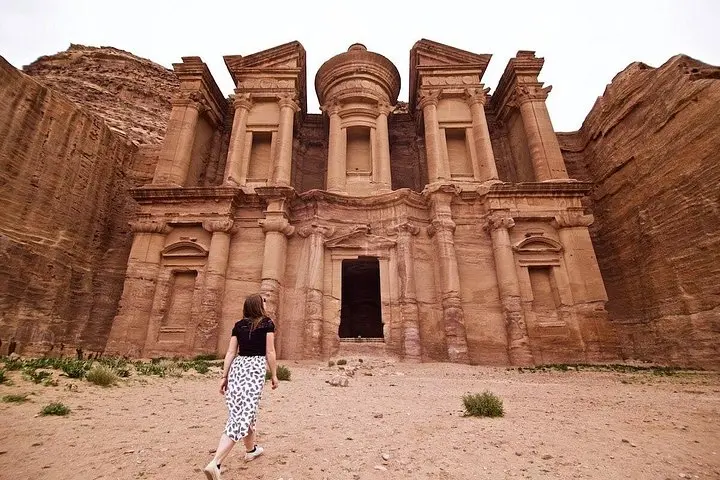
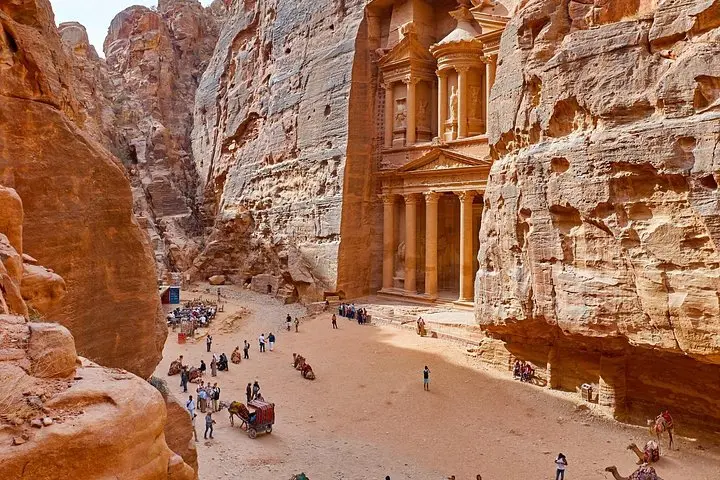
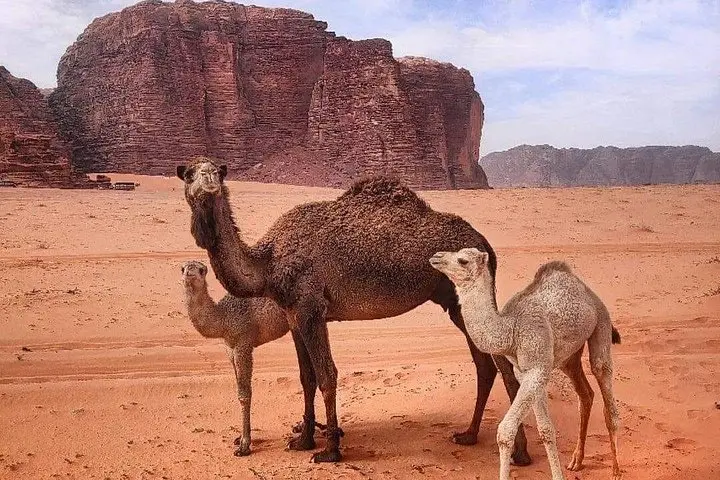
Petra is geological drama turned cultural archive. Carved into compacted sandstone that reads a dozen hues of pink, its façades are both Nabatean craftsmanship and wind-sculpted rock — the Siq funnels you, then opens on the Treasury, 45 meters tall and unforgivingly photogenic. Wadi Rum, by contrast, is emptiness with purpose: towering sandstone and granite outcrops shaped by millennia of sand and wind. A two-hour Bedouin jeep tour is the best way to sample its scale — you’ll clamber into vehicle beds, rumble across dunes, and watch color change with the sun.
Practical side: expect several long drives — Amman to Petra is roughly 230 km (about 3.5–4 hours), Petra to Wadi Rum around 100–120 km (~1.5–2 hours), and Wadi Rum to Aqaba about 60–75 km (~1–1.5 hours). Plan early starts in Petra to beat heat and crowds; the Siq and Treasury walk covers a few kilometers with stair sections and uneven rock underfoot. Bring layered clothing: desert nights can be cool even after hot days. Hydration is non-negotiable — carry at least 2–3 liters for Petra days and more for Wadi Rum jeep outings.
Logistics are simple but worth noting: this is a private tour with hotel pickup in Amman and options for accommodation tiers including a Dead Sea resort and deluxe Wadi Rum tent with private bathroom and AC. Entry tickets to sites like Petra and the Baptism site are optional add-ons; confirm which admissions you want included when booking. Footwear should be sturdy: closed-toe shoes with good grip for Petra’s carved steps and Wadi Rum’s rocky approaches.
In four days you’ll move between eras as smoothly as the landscape moves between sand and stone. Keep a small daypack, a sun hat, cash for local markets, and time to let the desert and the ruins insist you slow down.
Entry tickets are optional depending on the booking option — confirm at checkout whether site admissions are included or if you’ll pay locally.
Expect up to 3–4 hours on the longest transfer (Amman to Petra); other stretches like Petra to Wadi Rum are shorter (about 1.5–2 hours). The itinerary includes multiple full-day transfers.
Options include deluxe Bedouin tents with private bathrooms and AC if selected; more rustic options exist but this tour offers upgraded camp choices depending on your booking.
Yes — the itinerary includes time at the Dead Sea to float and relax; bring swimwear, a towel, waterproof footwear and avoid shaving before floating.
The tour is family-friendly; infant seats are available and the provider lists the tour as suitable for all fitness levels, but Petra’s stairs and long drives may be tiring for small children.
An English-speaking driver is included; specialized site guides (e.g., Petra) are sometimes recommended and may be arranged for an additional fee.
Alamal Travel &Tourism operates guided outdoor trips and adventures with an emphasis on safety, stewardship, and memorable experiences.
The morning light in Amman is a clean, sharp thing — minarets cut into sky and traffic easing out as your driver navigates toward the Roman columns of Jerash. Over four days, this private loop stitches together Jordan’s anchors: the ruined colonnades of Jerash, the mosaic streets of Madaba, the Prophet’s outlook from Mount Nebo, the otherworldly gorges of Petra, the rust-colored sea of Wadi Rum, and finally the surreal buoyancy of the Dead Sea.
The morning light in Amman is a clean, sharp thing — minarets cut into sky and traffic easing out as your driver navigates toward the Roman columns of Jerash. Over four days, this private loop stitches together Jordan’s anchors: the ruined colonnades of Jerash, the mosaic streets of Madaba, the Prophet’s outlook from Mount Nebo, the otherworldly gorges of Petra, the rust-colored sea of Wadi Rum, and finally the surreal buoyancy of the Dead Sea.
Walk into Jerash and you feel the Roman city flex under your feet: cardo lanes, triumphal arches and a theater that once held thousands. The landscape shifts south toward Madaba and Mount Nebo, where Byzantine mosaics map a different storyline and the hilltop offers sweeping views toward the Jordan Valley. Dead Sea time is literal — you descend 400-plus meters below sea level to salt-coated shores where the water seems to squint you back to the surface.
Petra is geological drama turned cultural archive. Carved into compacted sandstone that reads a dozen hues of pink, its façades are both Nabatean craftsmanship and wind-sculpted rock — the Siq funnels you, then opens on the Treasury, 45 meters tall and unforgivingly photogenic. Wadi Rum, by contrast, is emptiness with purpose: towering sandstone and granite outcrops shaped by millennia of sand and wind. A two-hour Bedouin jeep tour is the best way to sample its scale — you’ll clamber into vehicle beds, rumble across dunes, and watch color change with the sun.
Practical side: expect several long drives — Amman to Petra is roughly 230 km (about 3.5–4 hours), Petra to Wadi Rum around 100–120 km (~1.5–2 hours), and Wadi Rum to Aqaba about 60–75 km (~1–1.5 hours). Plan early starts in Petra to beat heat and crowds; the Siq and Treasury walk covers a few kilometers with stair sections and uneven rock underfoot. Bring layered clothing: desert nights can be cool even after hot days. Hydration is non-negotiable — carry at least 2–3 liters for Petra days and more for Wadi Rum jeep outings.
Logistics are simple but worth noting: this is a private tour with hotel pickup in Amman and options for accommodation tiers including a Dead Sea resort and deluxe Wadi Rum tent with private bathroom and AC. Entry tickets to sites like Petra and the Baptism site are optional add-ons; confirm which admissions you want included when booking. Footwear should be sturdy: closed-toe shoes with good grip for Petra’s carved steps and Wadi Rum’s rocky approaches.
In four days you’ll move between eras as smoothly as the landscape moves between sand and stone. Keep a small daypack, a sun hat, cash for local markets, and time to let the desert and the ruins insist you slow down.