THE ADVENTURE COLLECTIVE® · Independent discovery and booking for outdoor travel

A compact, private four‑day loop through Jordan’s highlights: explore Roman Jerash, float in the Dead Sea, walk Petra’s Siq to the Treasury, and ride a Bedouin jeep through Wadi Rum. Expect dramatic geology, intimate local encounters, and comfortable logistics tailored to your pace.
A compact, private four‑day loop through Jordan’s highlights: explore Roman Jerash, float in the Dead Sea, walk Petra’s Siq to the Treasury, and ride a Bedouin jeep through Wadi Rum. Expect dramatic geology, intimate local encounters, and comfortable logistics tailored to your pace.
You step off the plane and the air already feels different—dry, sun-warmed and full of the faint smell of thyme from roadside scrub. Your driver is waiting with a sign; the engine hums and the city slips behind you as the road unfurls north to Jerash. In the courtyards of this Greco‑Roman city, columns stand like weathered rowers frozen mid‑stroke, and the Oval Plaza opens under a sky that keeps its colors long after sunset.
Verified experiences and guided adventures in the surrounding area.
Operated by VIP Jordan Limo · Amman, Amman Governorate
You step off the plane and the air already feels different—dry, sun-warmed and full of the faint smell of thyme from roadside scrub. Your driver is waiting with a sign; the engine hums and the city slips behind you as the road unfurls north to Jerash. In the courtyards of this Greco‑Roman city, columns stand like weathered rowers frozen mid‑stroke, and the Oval Plaza opens under a sky that keeps its colors long after sunset.
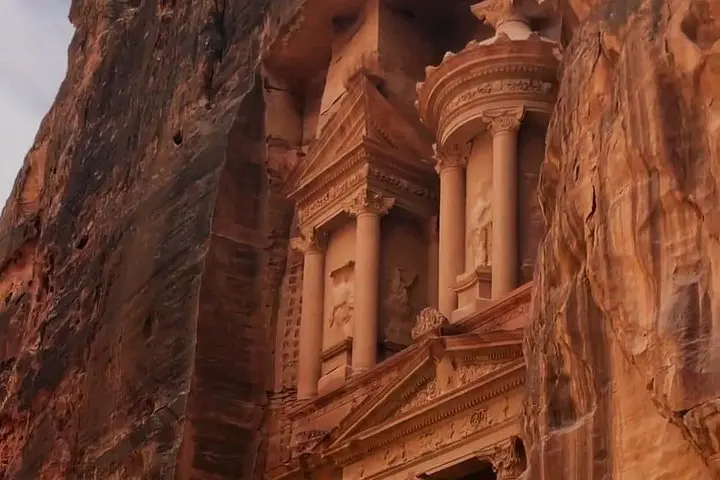
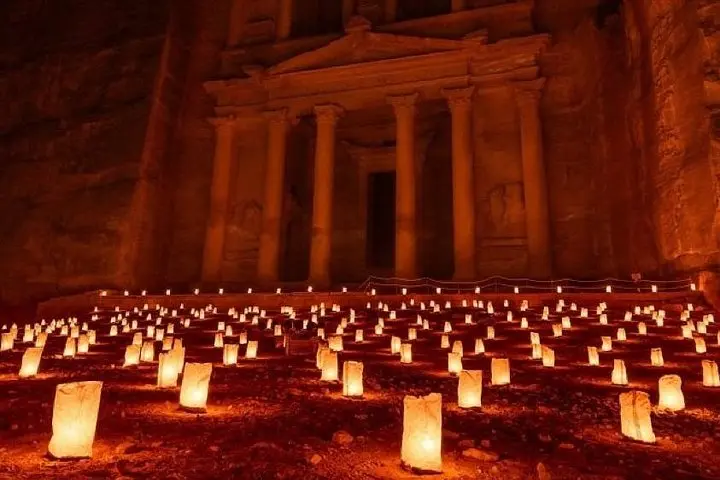
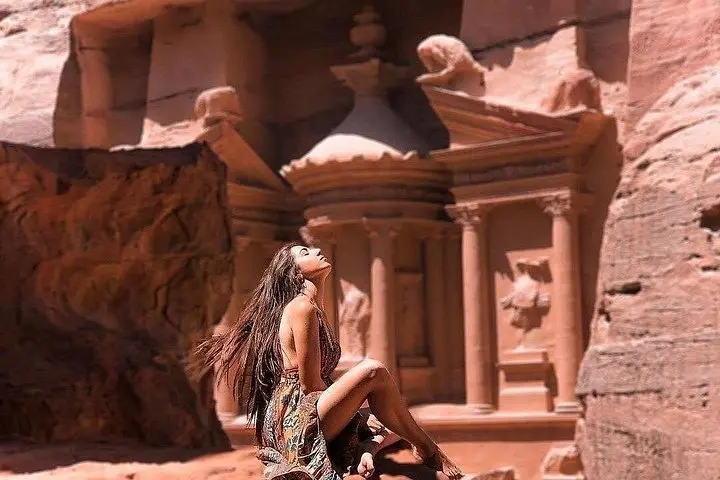
This private four‑day loop stitches together geological extremes and human histories: the limestone amphitheaters of Jerash, the hyper‑saline stillness of the Dead Sea (roughly 430 meters below sea level), the rose‑colored sandstone galleries of Petra carved at about 1,000 meters elevation, and Wadi Rum’s red granite and sandstone moonscape. Jerash’s colonnaded streets and theatres reveal Roman urban planning transplanted to the Levant; Petra holds Nabataean ingenuity—water channels and façades hewn directly into the canyon walls; Wadi Rum is the story of wind and time, where millennia of erosion have shaped natural bridges, cupolas, and vertical cliffs.
Bedouin hospitality threads the trip together: at Wadi Rum you’ll share tea around a low table and hear stories of tribal routes; at the Dead Sea, locals offer mud applications that have been part spa, part folklore for generations. Geology here acts like a live instructor—sedimentary layers at Petra read like pages, while Wadi Rum’s exfoliated cliffs whisper of tectonic uplift and relentless sand blast.
Practically, this is a comfortable but active itinerary. Expect three to five hours of driving on some days (Amman–Petra ≈ 3–4 hours, Petra–Wadi Rum ≈ 1.5 hours, Wadi Rum–Amman ≈ 4 hours). Walking surfaces vary: paved and uneven stone in Jerash, packed sand and stairs through the Siq at Petra, and soft dunes and rocky tracks in Wadi Rum. Bring sturdy closed shoes for Petra’s cobbles and a light daypack for water, sun protection, and camera gear.
Timing matters. Start Petra early to avoid midday heat and crowds; plan the Wadi Rum jeep safari toward late afternoon when the desert shifts color. Buy the Jordan Pass before you arrive—it covers most entry fees and streamlines checkpoints. If you’re sensitive to heat, travel shoulder seasons (spring and fall) for cooler days and clearer nights.
This private tour balances ease and authenticity: modern vehicles and hotel choices give comfort, while local guides and Bedouin hosts open doors to deeper context. For travelers who want Jordan’s big moments without the constraints of group logistics, this four‑day loop delivers geology, history, and desert silence in concentrated, travel‑friendly doses.
Yes—buy it before arrival; it includes most entry fees (including Petra) and can save time and money.
Yes—the private itinerary is adaptable; vehicles are comfortable and hotels accessible, but walking at sites may be moderate.
Accommodations typically include breakfast; other meals depend on your booking choice—confirm with the operator for full-board options.
Yes—those are optional extras usually available at additional cost, often booked in advance through your tour provider.
Local currency is the Jordanian dinar (JOD); tipping is customary for guides and drivers—small amounts for service and meals are appreciated.
Not mandatory but recommended—ensure it covers medical evacuation, trip cancellation, and activity-related incidents.
VIP Jordan Limo operates guided outdoor trips and adventures with an emphasis on safety, stewardship, and memorable experiences.

You step off the plane and the air already feels different—dry, sun-warmed and full of the faint smell of thyme from roadside scrub. Your driver is waiting with a sign; the engine hums and the city slips behind you as the road unfurls north to Jerash. In the courtyards of this Greco‑Roman city, columns stand like weathered rowers frozen mid‑stroke, and the Oval Plaza opens under a sky that keeps its colors long after sunset.
You step off the plane and the air already feels different—dry, sun-warmed and full of the faint smell of thyme from roadside scrub. Your driver is waiting with a sign; the engine hums and the city slips behind you as the road unfurls north to Jerash. In the courtyards of this Greco‑Roman city, columns stand like weathered rowers frozen mid‑stroke, and the Oval Plaza opens under a sky that keeps its colors long after sunset.
This private four‑day loop stitches together geological extremes and human histories: the limestone amphitheaters of Jerash, the hyper‑saline stillness of the Dead Sea (roughly 430 meters below sea level), the rose‑colored sandstone galleries of Petra carved at about 1,000 meters elevation, and Wadi Rum’s red granite and sandstone moonscape. Jerash’s colonnaded streets and theatres reveal Roman urban planning transplanted to the Levant; Petra holds Nabataean ingenuity—water channels and façades hewn directly into the canyon walls; Wadi Rum is the story of wind and time, where millennia of erosion have shaped natural bridges, cupolas, and vertical cliffs.
Bedouin hospitality threads the trip together: at Wadi Rum you’ll share tea around a low table and hear stories of tribal routes; at the Dead Sea, locals offer mud applications that have been part spa, part folklore for generations. Geology here acts like a live instructor—sedimentary layers at Petra read like pages, while Wadi Rum’s exfoliated cliffs whisper of tectonic uplift and relentless sand blast.
Practically, this is a comfortable but active itinerary. Expect three to five hours of driving on some days (Amman–Petra ≈ 3–4 hours, Petra–Wadi Rum ≈ 1.5 hours, Wadi Rum–Amman ≈ 4 hours). Walking surfaces vary: paved and uneven stone in Jerash, packed sand and stairs through the Siq at Petra, and soft dunes and rocky tracks in Wadi Rum. Bring sturdy closed shoes for Petra’s cobbles and a light daypack for water, sun protection, and camera gear.
Timing matters. Start Petra early to avoid midday heat and crowds; plan the Wadi Rum jeep safari toward late afternoon when the desert shifts color. Buy the Jordan Pass before you arrive—it covers most entry fees and streamlines checkpoints. If you’re sensitive to heat, travel shoulder seasons (spring and fall) for cooler days and clearer nights.
This private tour balances ease and authenticity: modern vehicles and hotel choices give comfort, while local guides and Bedouin hosts open doors to deeper context. For travelers who want Jordan’s big moments without the constraints of group logistics, this four‑day loop delivers geology, history, and desert silence in concentrated, travel‑friendly doses.