THE ADVENTURE COLLECTIVE® · Independent discovery and booking for outdoor travel

Leave city glare behind and let the Joshua Tree night sky take over. This guided tour pairs Gen‑3 night‑vision optics with storytelling and long‑exposure phone photography for an immersive, accessible stargazing experience.
Leave city glare behind and let the Joshua Tree night sky take over. This guided tour pairs Gen‑3 night‑vision optics with storytelling and long‑exposure phone photography for an immersive, accessible stargazing experience.
The desert exhales as the sun drops behind low granite spires — heat gives up its grip and the sky begins to sharpen. On a clear night near Joshua Tree, stars press forward like an audience, and the Milky Way lays a pale road across the vault. Guides set up chairs, calibrate Gen‑3 night‑vision binoculars, and invite you to look back in time: pinpricks of light bloom into dense constellations you didn’t know were missing.
Verified experiences and guided adventures in the surrounding area.
Operated by Addicted2Wonder Stargazing Joshua Tree · Joshua Tree, California
The desert exhales as the sun drops behind low granite spires — heat gives up its grip and the sky begins to sharpen. On a clear night near Joshua Tree, stars press forward like an audience, and the Milky Way lays a pale road across the vault. Guides set up chairs, calibrate Gen‑3 night‑vision binoculars, and invite you to look back in time: pinpricks of light bloom into dense constellations you didn’t know were missing.
This experience joins modern optics with traditional sky-knowledge. Local Indigenous groups — Cahuilla, Serrano and Chemehuevi — read seasons and travel by the same sky that now hosts astronomers and storytellers. Geologically, you’re on the edge of the Mojave, where eroded monzogranite knobs and broad alluvial fans create large, dark viewing basins that reduce horizon glow.
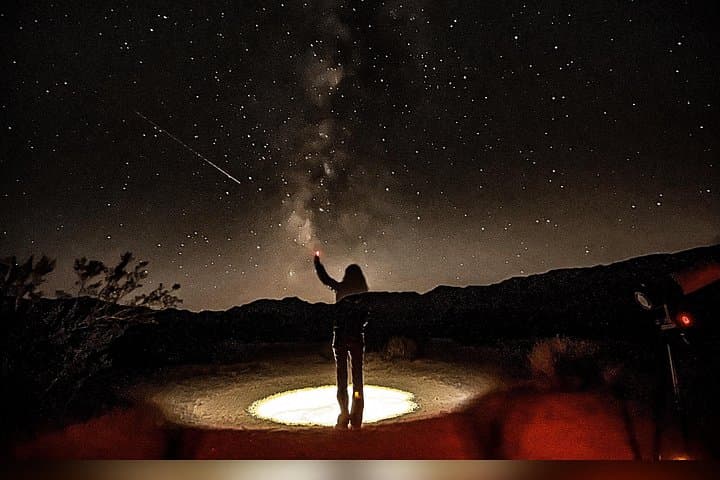
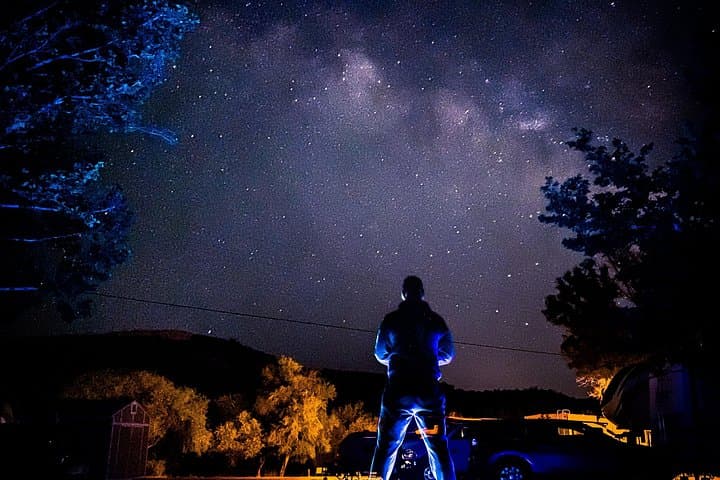
Expect an interactive program: guided constellation walks, mythic narratives, and hands‑on time with night‑vision and laser pointers. Light painting and long‑exposure smartphone photography are part of the show, so photographers can capture the Milky Way without heavy camera rigs.
Plan practically: viewing sites are remote (roughly a 60–90 minute drive from Palm Springs depending on the night), so allow extra time for directions sent the day before. Bring warm layers, plenty of water, a red flashlight, and a tripod or phone mount for long exposures. The tour is wheelchair accessible and physically easy, but nights get cold and wind can gust suddenly — dress in layers and protect electronics from sand.
If you want to step out of city light and meet the sky on its own terms, this mix of tech, storytelling and desert silence delivers — memorable, grounded, and surprisingly intimate.
The tour runs about 90 minutes; exact meeting and viewing locations are confirmed 24 hours before departure based on sky conditions and are typically within an hour or more of Palm Springs.
Yes — the tour notes that infants can ride in strollers and that the activity is wheelchair accessible, but expect some walking on uneven ground at the viewing site.
Gen‑3 optics amplify ambient light to reveal stars hidden by light pollution; they’re safe to use and provided by the operator, but avoid pointing at aircraft or using white lights during the session.
Tours are canceled for poor viewing conditions (clouds, high winds) with refunds available if canceled at least 24 hours before the scheduled time per the operator's policy.
Addicted2Wonder Stargazing Joshua Tree operates guided outdoor trips and adventures with an emphasis on safety, stewardship, and memorable experiences.


The desert exhales as the sun drops behind low granite spires — heat gives up its grip and the sky begins to sharpen. On a clear night near Joshua Tree, stars press forward like an audience, and the Milky Way lays a pale road across the vault. Guides set up chairs, calibrate Gen‑3 night‑vision binoculars, and invite you to look back in time: pinpricks of light bloom into dense constellations you didn’t know were missing.
The desert exhales as the sun drops behind low granite spires — heat gives up its grip and the sky begins to sharpen. On a clear night near Joshua Tree, stars press forward like an audience, and the Milky Way lays a pale road across the vault. Guides set up chairs, calibrate Gen‑3 night‑vision binoculars, and invite you to look back in time: pinpricks of light bloom into dense constellations you didn’t know were missing.
This experience joins modern optics with traditional sky-knowledge. Local Indigenous groups — Cahuilla, Serrano and Chemehuevi — read seasons and travel by the same sky that now hosts astronomers and storytellers. Geologically, you’re on the edge of the Mojave, where eroded monzogranite knobs and broad alluvial fans create large, dark viewing basins that reduce horizon glow.
Expect an interactive program: guided constellation walks, mythic narratives, and hands‑on time with night‑vision and laser pointers. Light painting and long‑exposure smartphone photography are part of the show, so photographers can capture the Milky Way without heavy camera rigs.
Plan practically: viewing sites are remote (roughly a 60–90 minute drive from Palm Springs depending on the night), so allow extra time for directions sent the day before. Bring warm layers, plenty of water, a red flashlight, and a tripod or phone mount for long exposures. The tour is wheelchair accessible and physically easy, but nights get cold and wind can gust suddenly — dress in layers and protect electronics from sand.
If you want to step out of city light and meet the sky on its own terms, this mix of tech, storytelling and desert silence delivers — memorable, grounded, and surprisingly intimate.