THE ADVENTURE COLLECTIVE® · Independent discovery and booking for outdoor travel

Explore Derry’s decisive locations on a private 105-minute walking tour, from Free Derry Corner and the Bloody Sunday Monument to the Bogside Artists’ murals and the 17th-century city walls. This intimate, interpretive walk combines public art, local history, and panoramic views.
Explore Derry’s decisive locations on a private 105-minute walking tour, from Free Derry Corner and the Bloody Sunday Monument to the Bogside Artists’ murals and the 17th-century city walls. This intimate, interpretive walk combines public art, local history, and panoramic views.
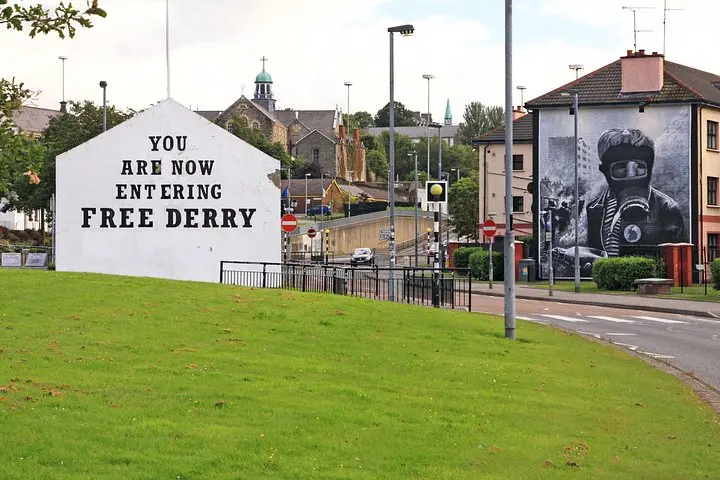
You step from a rain-bright street into the Bogside and the city seems to speak—brick and mural, memory and argument. The Free Derry Corner’s white wall confronts you first: simple paint, heavy meaning. Walks here are conversations with place; the River Foyle skirts the city like a patient courier, currents nudging the quay beneath the Derry Walls.
Verified experiences and guided adventures in the surrounding area.
Operated by Opatrip.com Ireland · Derry (Londonderry), County Londonderry
You step from a rain-bright street into the Bogside and the city seems to speak—brick and mural, memory and argument. The Free Derry Corner’s white wall confronts you first: simple paint, heavy meaning. Walks here are conversations with place; the River Foyle skirts the city like a patient courier, currents nudging the quay beneath the Derry Walls.
This private 105-minute tour threads four core stops: Free Derry Corner, the Bloody Sunday Monument, the Bogside Artists’ murals, and the 17th-century Derry Walls. The walls themselves, raised between 1613 and 1619, are among Europe’s most complete city ramparts and give a tactical vantage on urban geology—glacial-era stones and reclaimed riverbank visible in the embankments below.
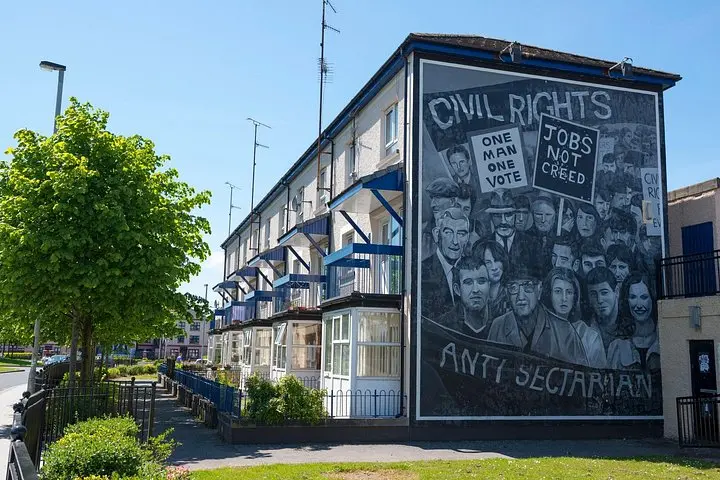
Culture and memory are central: the murals recount decades of civil-rights struggle and community resilience, while the Bloody Sunday site is a place for quiet attention rather than spectacle. Local guides typically place events in social context—how industrial shifts, sectarian politics, and cross-border ties shaped everyday life here.
Practical edge: expect roughly 2–3 kilometers of walking over cobbles and paved streets, with short stair sections on the walls. Wear grippy shoes and layer for rapidly shifting weather; rain is frequent year-round.
A private format means questions are welcome—bring curiosity and respect. Photography is common, but treat memorial sites with restraint. This tour pairs urban history, public art, and easy walking to give a concentrated, humane look at Derry’s past and present.
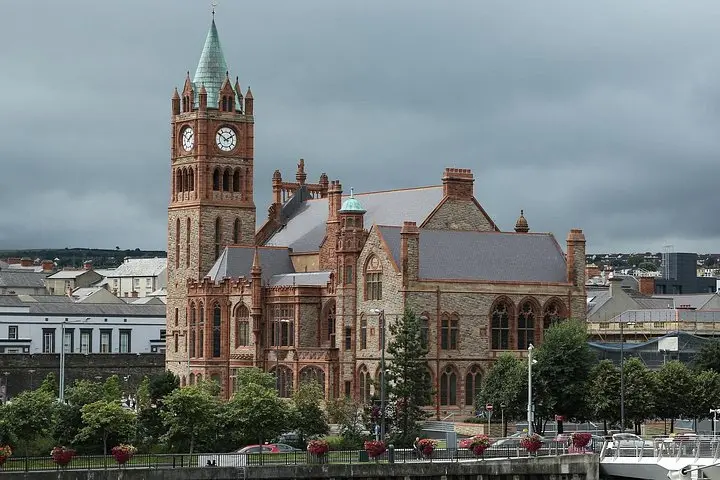
Start and finish locations are confirmed at booking—most guides meet in the city center near Guildhall or a mutually agreed public spot.
All highlights are public sites and outdoor viewpoints; there are no admission fees included for this tour.
The tour is rated easy but includes cobbles and short stairs on the walls; contact the operator in advance to discuss route adjustments for mobility needs.
This listing is a private tour; capacity depends on operator policy—confirm maximum group size when booking (ticketing notes one per booking).
Opatrip.com Ireland operates guided outdoor trips and adventures with an emphasis on safety, stewardship, and memorable experiences.
You step from a rain-bright street into the Bogside and the city seems to speak—brick and mural, memory and argument. The Free Derry Corner’s white wall confronts you first: simple paint, heavy meaning. Walks here are conversations with place; the River Foyle skirts the city like a patient courier, currents nudging the quay beneath the Derry Walls.
You step from a rain-bright street into the Bogside and the city seems to speak—brick and mural, memory and argument. The Free Derry Corner’s white wall confronts you first: simple paint, heavy meaning. Walks here are conversations with place; the River Foyle skirts the city like a patient courier, currents nudging the quay beneath the Derry Walls.
This private 105-minute tour threads four core stops: Free Derry Corner, the Bloody Sunday Monument, the Bogside Artists’ murals, and the 17th-century Derry Walls. The walls themselves, raised between 1613 and 1619, are among Europe’s most complete city ramparts and give a tactical vantage on urban geology—glacial-era stones and reclaimed riverbank visible in the embankments below.
Culture and memory are central: the murals recount decades of civil-rights struggle and community resilience, while the Bloody Sunday site is a place for quiet attention rather than spectacle. Local guides typically place events in social context—how industrial shifts, sectarian politics, and cross-border ties shaped everyday life here.
Practical edge: expect roughly 2–3 kilometers of walking over cobbles and paved streets, with short stair sections on the walls. Wear grippy shoes and layer for rapidly shifting weather; rain is frequent year-round.
A private format means questions are welcome—bring curiosity and respect. Photography is common, but treat memorial sites with restraint. This tour pairs urban history, public art, and easy walking to give a concentrated, humane look at Derry’s past and present.