THE ADVENTURE COLLECTIVE® · Independent discovery and booking for outdoor travel

Follow Madagascar’s National Road 7 from Antananarivo to Ifaty over 13 days of forests, sandstone massifs and coastal baobabs. This private tour blends guided park walks, cultural workshops and lodge stays with time for wildlife viewing and local encounters.
Follow Madagascar’s National Road 7 from Antananarivo to Ifaty over 13 days of forests, sandstone massifs and coastal baobabs. This private tour blends guided park walks, cultural workshops and lodge stays with time for wildlife viewing and local encounters.
You arrive in Antananarivo to the hum of market life and a driver who will become your guide for the next two weeks. From the capital the road unspools south — rice terraces give way to highland towns, then to sandstone canyons and finally the spiny dry forests by the sea. The Mythique Nationale 7 is less a single highway than a spine of landscapes and communities that define Madagascar.
Verified experiences and guided adventures in the surrounding area.
Operated by Passionnément Madagascar · Antananarivo, Analamanga
You arrive in Antananarivo to the hum of market life and a driver who will become your guide for the next two weeks. From the capital the road unspools south — rice terraces give way to highland towns, then to sandstone canyons and finally the spiny dry forests by the sea. The Mythique Nationale 7 is less a single highway than a spine of landscapes and communities that define Madagascar.
The route threads colonial-era towns, Betsileo and Bara cultural areas, and microhabitats shaped by ancient geology: Jurassic sandstones in Isalo eroded into mesas and natural pools, volcanic highlands around Antsirabe, and coastal reef systems near Ifaty. Cultural stops — craft workshops in Ambositra, Antemoro paper makers in Ambalavao — reveal crafts tied to local identity. Wildlife punctuates the itinerary: Analamazaotra’s Indri calls at dawn, Anja’s ring-tailed clans bask on granite outcrops, and Antsokay’s arboretum showcases drought-adapted flora.
Practically, expect daily drives interspersed with 1–4 hour walks in national parks, short boat or canoe rides on the southwest coast, and a mix of lodge-level accommodations. Guides handle park permits and most logistics, but bring cash for small purchases, tip porters and guides, and allow flexibility for road conditions during the rainy season. Footwear with grip, a lightweight rain layer, and a sense of pacing will turn long travel days into a sequence of memorable treks, village visits and wildlife encounters along one of Madagascar’s most evocative routes.
Most travelers obtain a tourist visa on arrival in Antananarivo; check current entry requirements for your nationality before travel.
Walks are generally 1–4 hours with uneven terrain—reasonable mobility and good footwear are sufficient for most travelers.
This tour states that local guide and park fees are included for many stops, but carry cash for incidental fees and tips.
No—use bottled or filtered water for drinking and brush with bottled water to avoid stomach issues.
Passionnément Madagascar operates guided outdoor trips and adventures with an emphasis on safety, stewardship, and memorable experiences.
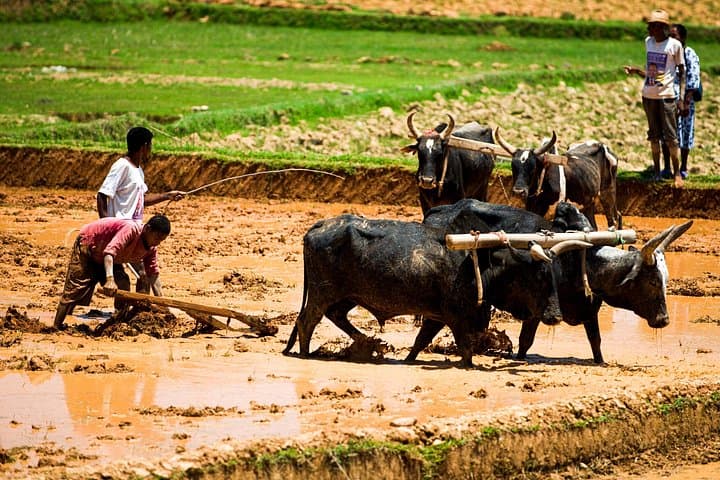


You arrive in Antananarivo to the hum of market life and a driver who will become your guide for the next two weeks. From the capital the road unspools south — rice terraces give way to highland towns, then to sandstone canyons and finally the spiny dry forests by the sea. The Mythique Nationale 7 is less a single highway than a spine of landscapes and communities that define Madagascar.
You arrive in Antananarivo to the hum of market life and a driver who will become your guide for the next two weeks. From the capital the road unspools south — rice terraces give way to highland towns, then to sandstone canyons and finally the spiny dry forests by the sea. The Mythique Nationale 7 is less a single highway than a spine of landscapes and communities that define Madagascar.
The route threads colonial-era towns, Betsileo and Bara cultural areas, and microhabitats shaped by ancient geology: Jurassic sandstones in Isalo eroded into mesas and natural pools, volcanic highlands around Antsirabe, and coastal reef systems near Ifaty. Cultural stops — craft workshops in Ambositra, Antemoro paper makers in Ambalavao — reveal crafts tied to local identity. Wildlife punctuates the itinerary: Analamazaotra’s Indri calls at dawn, Anja’s ring-tailed clans bask on granite outcrops, and Antsokay’s arboretum showcases drought-adapted flora.
Practically, expect daily drives interspersed with 1–4 hour walks in national parks, short boat or canoe rides on the southwest coast, and a mix of lodge-level accommodations. Guides handle park permits and most logistics, but bring cash for small purchases, tip porters and guides, and allow flexibility for road conditions during the rainy season. Footwear with grip, a lightweight rain layer, and a sense of pacing will turn long travel days into a sequence of memorable treks, village visits and wildlife encounters along one of Madagascar’s most evocative routes.