THE ADVENTURE COLLECTIVE® · Independent discovery and booking for outdoor travel

Walk among forests where about 6,000 Zanzibar red colobus monkeys move overhead, then cross a raised boardwalk through coral thicket and mangrove creek. This accessible 2–3 hour guided loop combines wildlife viewing with a close-up lesson in coastal forest ecology.
Walk among forests where about 6,000 Zanzibar red colobus monkeys move overhead, then cross a raised boardwalk through coral thicket and mangrove creek. This accessible 2–3 hour guided loop combines wildlife viewing with a close-up lesson in coastal forest ecology.
You step from the shaded lane into a dark, humid understory and the forest answers with quick calls and the rustle of leaves. Red colobus monkeys move like flickering punctuation above you—curious, fast, and deeply at home—while a guide points out the quieter sykes monkeys and the low, braided streams that feed the mangrove creeks.
Verified experiences and guided adventures in the surrounding area.
Operated by Pazuri Zanzibar · Chwaka, Zanzibar
You step from the shaded lane into a dark, humid understory and the forest answers with quick calls and the rustle of leaves. Red colobus monkeys move like flickering punctuation above you—curious, fast, and deeply at home—while a guide points out the quieter sykes monkeys and the low, braided streams that feed the mangrove creeks.
Jozani-Chwaka Bay National Park protects one of Zanzibar’s last significant tracts of native forest and mangrove. Geologically this corner of Unguja rests on coral-derived soils; where solid limestone gives way to peat and alluvium, swamp forest and mangrove take over, hosting plants and birds adapted to salt-sweet margins. The Pete-Jozani boardwalk threads across those transitions, running through coral thicket vegetation and over a tidal creek so the mangroves seem to reach for passing boats.
Locally, the forest is part of community livelihoods—harvests, forestry research and conservation fees that support local guides. Expect a guided loop of roughly 2–3 hours: easy walking, some soft ground, and a short raised boardwalk. Practicalities matter—go early to avoid heat and high tides, bring insect repellent and water, and wear closed shoes for muddy sections. Follow the guide, don’t feed wildlife, and keep cameras ready at chest level—monkeys can be bold and quick.
This is a low-effort, high-reward nature walk: accessible for most fitness levels, rich in birdlife, and an excellent primer on coastal East African forest and mangrove ecology.
Guided visits are typically 2–3 hours, covering the red colobus viewing areas and the Pete-Jozani Mangrove Boardwalk.
Red colobus are common in Jozani and sightings are likely, but wildlife can be unpredictable—early visits increase chances.
Yes; the route is generally easy with short boardwalks and flat trails, but bring water and avoid midday heat.
This specific tour includes private transportation and bottled water; check the booking details for admission or community fees.
Pazuri Zanzibar operates guided outdoor trips and adventures with an emphasis on safety, stewardship, and memorable experiences.
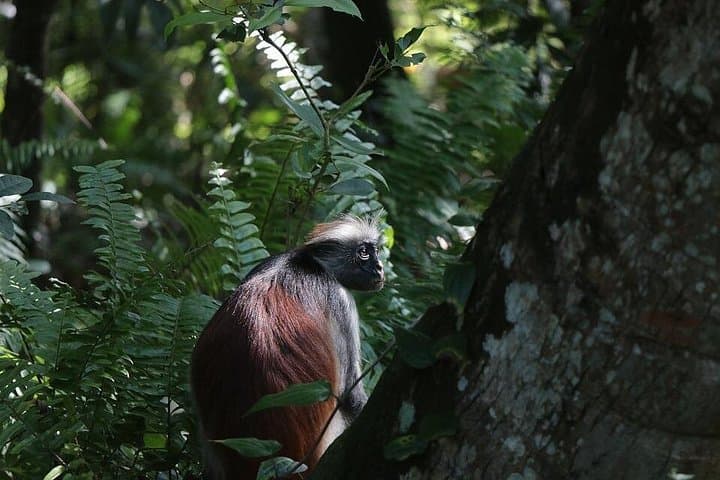

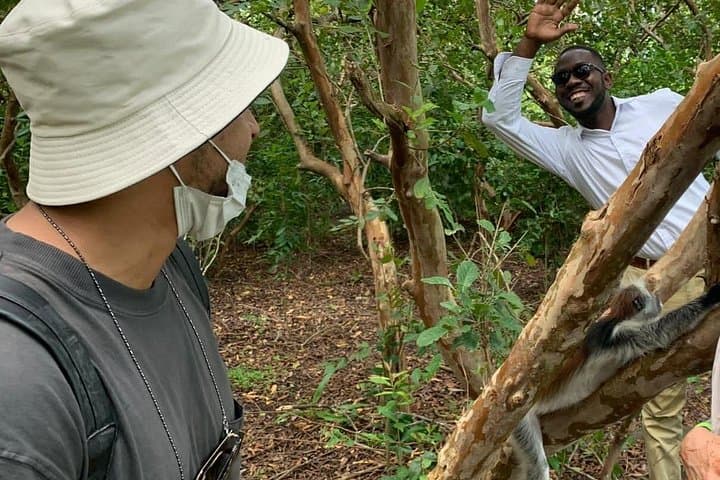
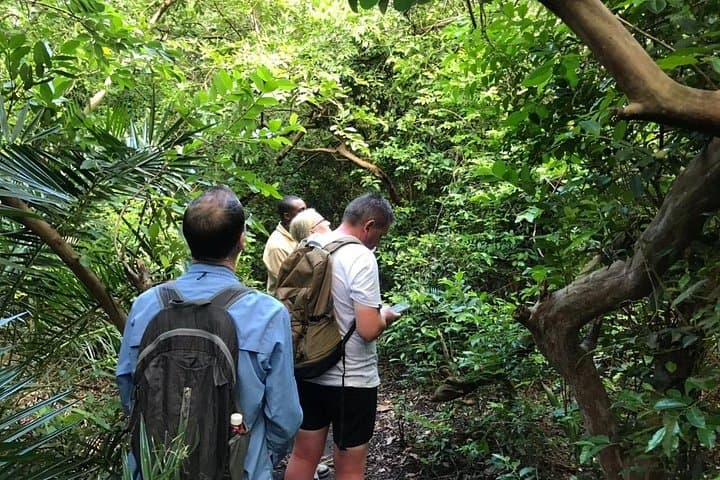
You step from the shaded lane into a dark, humid understory and the forest answers with quick calls and the rustle of leaves. Red colobus monkeys move like flickering punctuation above you—curious, fast, and deeply at home—while a guide points out the quieter sykes monkeys and the low, braided streams that feed the mangrove creeks.
You step from the shaded lane into a dark, humid understory and the forest answers with quick calls and the rustle of leaves. Red colobus monkeys move like flickering punctuation above you—curious, fast, and deeply at home—while a guide points out the quieter sykes monkeys and the low, braided streams that feed the mangrove creeks.
Jozani-Chwaka Bay National Park protects one of Zanzibar’s last significant tracts of native forest and mangrove. Geologically this corner of Unguja rests on coral-derived soils; where solid limestone gives way to peat and alluvium, swamp forest and mangrove take over, hosting plants and birds adapted to salt-sweet margins. The Pete-Jozani boardwalk threads across those transitions, running through coral thicket vegetation and over a tidal creek so the mangroves seem to reach for passing boats.
Locally, the forest is part of community livelihoods—harvests, forestry research and conservation fees that support local guides. Expect a guided loop of roughly 2–3 hours: easy walking, some soft ground, and a short raised boardwalk. Practicalities matter—go early to avoid heat and high tides, bring insect repellent and water, and wear closed shoes for muddy sections. Follow the guide, don’t feed wildlife, and keep cameras ready at chest level—monkeys can be bold and quick.
This is a low-effort, high-reward nature walk: accessible for most fitness levels, rich in birdlife, and an excellent primer on coastal East African forest and mangrove ecology.