THE ADVENTURE COLLECTIVE® · Independent discovery and booking for outdoor travel

Walk under a low canopy to meet Zanzibar’s endemic red colobus on a concise, guided tour through Jozani Forest Park. This short excursion pairs easy forest trails with mangrove views and local conservation insights.
Walk under a low canopy to meet Zanzibar’s endemic red colobus on a concise, guided tour through Jozani Forest Park. This short excursion pairs easy forest trails with mangrove views and local conservation insights.
A low canopy filters the equatorial sun as you step through the gate of Jozani Forest Park — humidity settles on your skin and the branches trade calls. The forest feels alive: leaves whisper, insects click, and somewhere ahead a troop of red colobus monkeys announces itself with chattering, restless energy that dares you to move closer without disturbing them.
Verified experiences and guided adventures in the surrounding area.
Operated by Nouman Tour Guide · Jozani, Zanzibar
A low canopy filters the equatorial sun as you step through the gate of Jozani Forest Park — humidity settles on your skin and the branches trade calls. The forest feels alive: leaves whisper, insects click, and somewhere ahead a troop of red colobus monkeys announces itself with chattering, restless energy that dares you to move closer without disturbing them.
Geology and biology here reflect Zanzibar’s coastal origins. The forest sits on coral-derived soils and grades into mangrove fringes that hold Chwaka Bay. The red colobus, a species unique to Zanzibar, rebounded in recent decades after focused conservation efforts; roughly 6,000 now inhabit the park, alongside Sykes’ monkeys and a patchwork of endemic trees.
Local culture is close at hand — small villages and spice farms ring the reserve, and guides are often community members who read the forest like a map. The tour is short but concentrated: expect 1–2 hours of walking on uneven forest paths and a raised mangrove walkway, punctuated by wildlife viewing and interpretive stops.
Practical guidance: go early when animals are most active and mosquitos are fewer; wear sturdy, closed shoes for muddy sections; bring insect repellent, a light rain layer in the wet seasons, and water (bottled water is usually provided). Follow your guide’s instructions: do not feed or touch wildlife, stay on trails, and carry local cash for small purchases or tips. The experience pairs accessible wildlife viewing with straightforward logistics — ideal for travelers based in Stone Town wanting a short, wildlife-focused excursion off the coast.
Most tours run about 1–2 hours of guided walking inside the park; door-to-door transfers can add time depending on your accommodation.
Sightings are common but not guaranteed; guides know habitual troop locations and timing improves odds—mornings are best.
Yes for many visitors, but the paths are uneven; those with limited mobility or serious spinal/heart issues should check with the operator first.
This tour typically includes entrance fees, a guide, bottled water, and transport from pickup points as listed in the booking details.
Nouman Tour Guide operates guided outdoor trips and adventures with an emphasis on safety, stewardship, and memorable experiences.
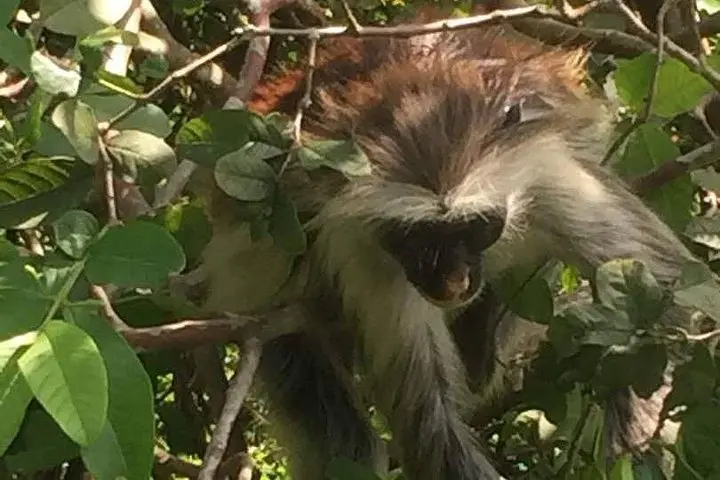
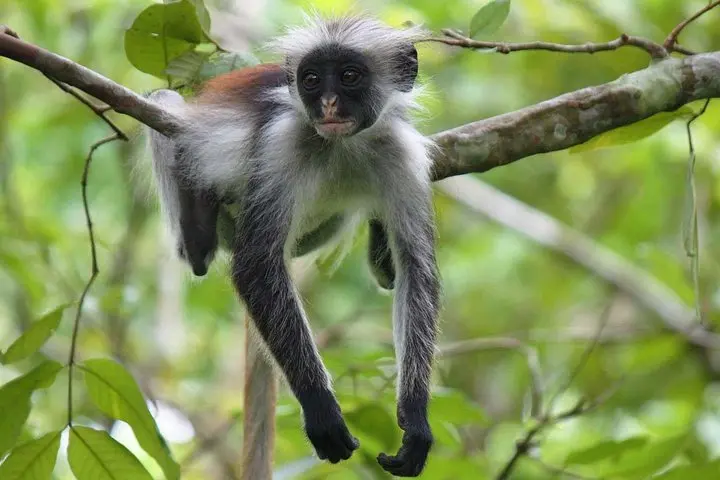
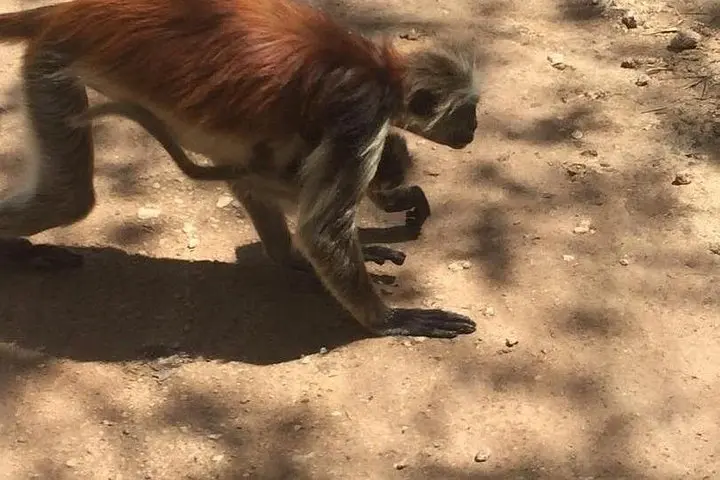
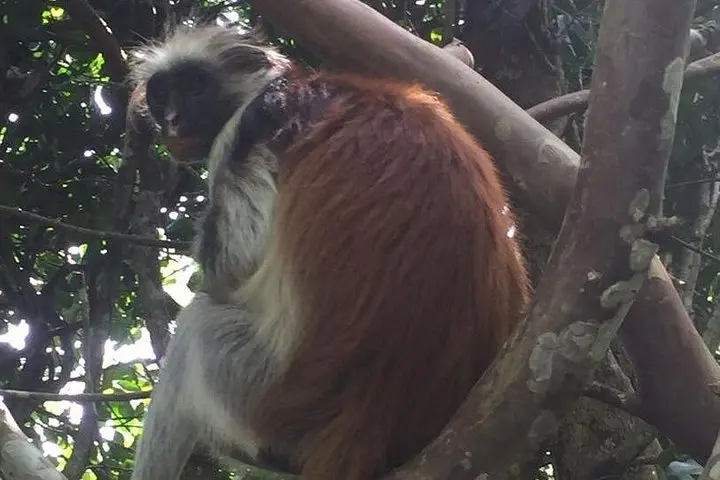
A low canopy filters the equatorial sun as you step through the gate of Jozani Forest Park — humidity settles on your skin and the branches trade calls. The forest feels alive: leaves whisper, insects click, and somewhere ahead a troop of red colobus monkeys announces itself with chattering, restless energy that dares you to move closer without disturbing them.
A low canopy filters the equatorial sun as you step through the gate of Jozani Forest Park — humidity settles on your skin and the branches trade calls. The forest feels alive: leaves whisper, insects click, and somewhere ahead a troop of red colobus monkeys announces itself with chattering, restless energy that dares you to move closer without disturbing them.
Geology and biology here reflect Zanzibar’s coastal origins. The forest sits on coral-derived soils and grades into mangrove fringes that hold Chwaka Bay. The red colobus, a species unique to Zanzibar, rebounded in recent decades after focused conservation efforts; roughly 6,000 now inhabit the park, alongside Sykes’ monkeys and a patchwork of endemic trees.
Local culture is close at hand — small villages and spice farms ring the reserve, and guides are often community members who read the forest like a map. The tour is short but concentrated: expect 1–2 hours of walking on uneven forest paths and a raised mangrove walkway, punctuated by wildlife viewing and interpretive stops.
Practical guidance: go early when animals are most active and mosquitos are fewer; wear sturdy, closed shoes for muddy sections; bring insect repellent, a light rain layer in the wet seasons, and water (bottled water is usually provided). Follow your guide’s instructions: do not feed or touch wildlife, stay on trails, and carry local cash for small purchases or tips. The experience pairs accessible wildlife viewing with straightforward logistics — ideal for travelers based in Stone Town wanting a short, wildlife-focused excursion off the coast.