THE ADVENTURE COLLECTIVE® · Independent discovery and booking for outdoor travel

Explore Jozani Chwaka Bay National Park on a guided three-hour walk that highlights the endemic Zanzibar red colobus and a lively butterfly sanctuary. This private tour pairs mangrove boardwalks with hands-on conservation insights and hotel transfers for an approachable nature experience.
Explore Jozani Chwaka Bay National Park on a guided three-hour walk that highlights the endemic Zanzibar red colobus and a lively butterfly sanctuary. This private tour pairs mangrove boardwalks with hands-on conservation insights and hotel transfers for an approachable nature experience.
You step off the shaded boardwalk and into a green hush: air warm, heavy with salt from nearby Chwaka Bay, leaves brushing like hands as the trail curves away from the road. Sunlight skitters through broad-leaved trees and a distant chittering announces the Zanzibar red colobus — curious, deliberate, and unlike any monkey you’ve seen.
Verified experiences and guided adventures in the surrounding area.
Operated by COASTLINE TOURS AND TRAVEL · Jozani, Zanzibar
You step off the shaded boardwalk and into a green hush: air warm, heavy with salt from nearby Chwaka Bay, leaves brushing like hands as the trail curves away from the road. Sunlight skitters through broad-leaved trees and a distant chittering announces the Zanzibar red colobus — curious, deliberate, and unlike any monkey you’ve seen.
Jozani Chwaka Bay National Park protects one of Zanzibar’s last tracts of native forest and coastal mangroves. Geologically, the island is a coral-reef remnant sitting on ancient calcium carbonate deposits; soils are shallow and biodiversity concentrates where freshwater meets the sea. Culturally, the nearby villages maintain small-scale fishing and clove farming traditions, and local guides often weave oral histories into the walk.
The tour pairs a low-impact forest walk with the Zanzibar Butterfly Centre: a sheltered garden where native butterflies complete their life cycles amid larval beds and nectar shrubs. Mangrove boardwalks give close-up views of pneumatophores and crabs that keep the shoreline moving.
Practical guidance: the route is generally flat with packed soil paths and short raised boardwalks — no scrambling. Expect mosquitoes in humid hours, bring water and sun protection, and schedule visits outside the afternoon heat for better wildlife activity. Photography works well with a mid-range zoom; keep distance from monkeys and avoid feeding wildlife. The three-hour private tour usually includes entry fees and hotel transfer, making it accessible for families and first-time wildlife observers who want a compact, educational window into Zanzibar’s natural side.
The private tour lasts about three hours and typically includes entry to Jozani Forest and the Zanzibar Butterfly Centre, a professional guide, and hotel pickup/drop-off.
Morning or late afternoon are cooler and more active times for wildlife viewing; midday can be quieter and hotter.
Yes—paths are flat and the tour is rated easy; guides can adjust pace for families and guests with limited mobility.
No—feeding or touching wildlife is discouraged to protect animal health and avoid aggressive behavior; observe from a respectful distance.
COASTLINE TOURS AND TRAVEL operates guided outdoor trips and adventures with an emphasis on safety, stewardship, and memorable experiences.
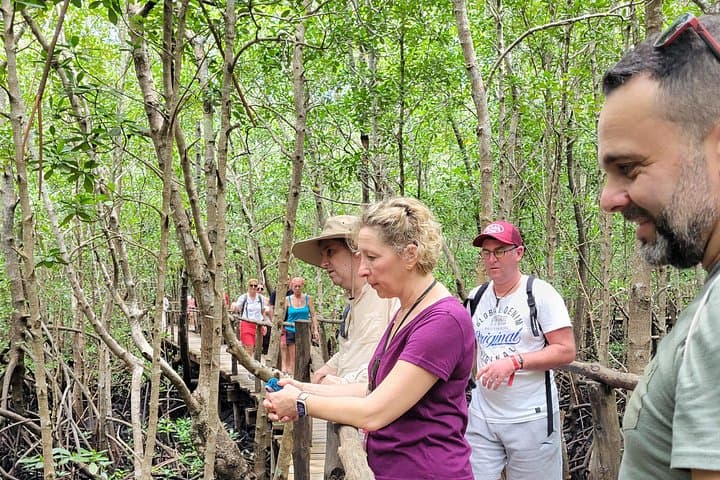
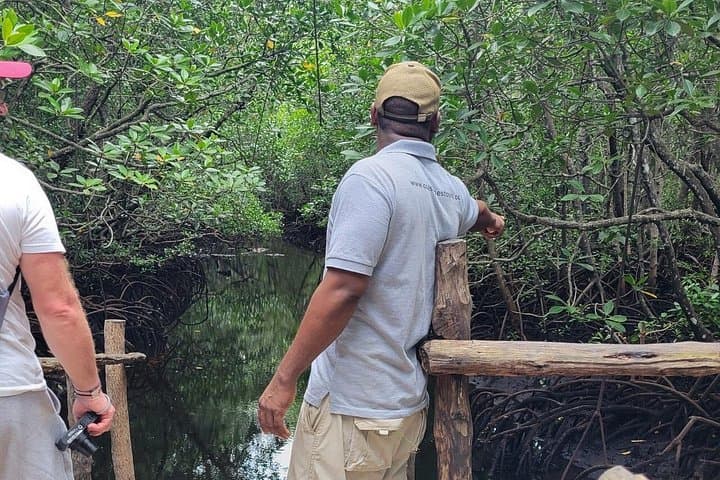
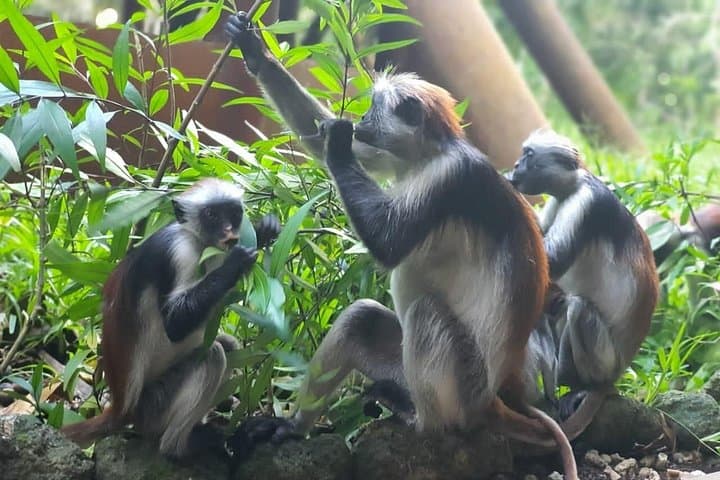
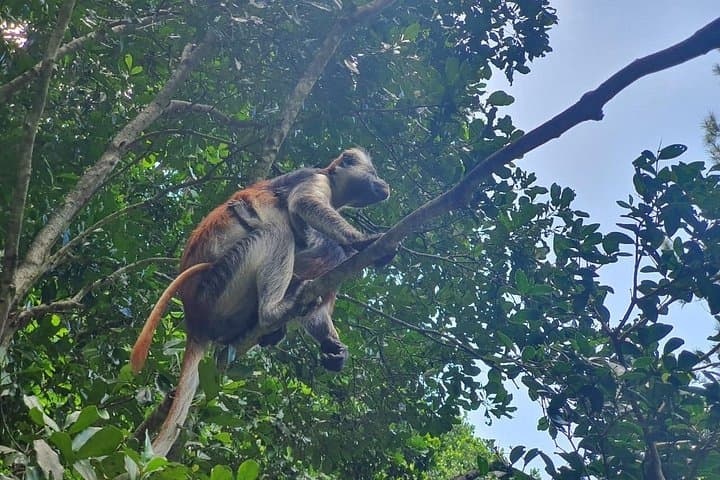
You step off the shaded boardwalk and into a green hush: air warm, heavy with salt from nearby Chwaka Bay, leaves brushing like hands as the trail curves away from the road. Sunlight skitters through broad-leaved trees and a distant chittering announces the Zanzibar red colobus — curious, deliberate, and unlike any monkey you’ve seen.
You step off the shaded boardwalk and into a green hush: air warm, heavy with salt from nearby Chwaka Bay, leaves brushing like hands as the trail curves away from the road. Sunlight skitters through broad-leaved trees and a distant chittering announces the Zanzibar red colobus — curious, deliberate, and unlike any monkey you’ve seen.
Jozani Chwaka Bay National Park protects one of Zanzibar’s last tracts of native forest and coastal mangroves. Geologically, the island is a coral-reef remnant sitting on ancient calcium carbonate deposits; soils are shallow and biodiversity concentrates where freshwater meets the sea. Culturally, the nearby villages maintain small-scale fishing and clove farming traditions, and local guides often weave oral histories into the walk.
The tour pairs a low-impact forest walk with the Zanzibar Butterfly Centre: a sheltered garden where native butterflies complete their life cycles amid larval beds and nectar shrubs. Mangrove boardwalks give close-up views of pneumatophores and crabs that keep the shoreline moving.
Practical guidance: the route is generally flat with packed soil paths and short raised boardwalks — no scrambling. Expect mosquitoes in humid hours, bring water and sun protection, and schedule visits outside the afternoon heat for better wildlife activity. Photography works well with a mid-range zoom; keep distance from monkeys and avoid feeding wildlife. The three-hour private tour usually includes entry fees and hotel transfer, making it accessible for families and first-time wildlife observers who want a compact, educational window into Zanzibar’s natural side.