THE ADVENTURE COLLECTIVE® · Independent discovery and booking for outdoor travel

A full-day small-group excursion from Geneva to Jungfraujoch and Interlaken, featuring Europe’s highest railway station, the Sphinx Observatory and an Ice Palace carved in glacier ice. Expect long travel time, dramatic elevation gain and variable alpine weather.
A full-day small-group excursion from Geneva to Jungfraujoch and Interlaken, featuring Europe’s highest railway station, the Sphinx Observatory and an Ice Palace carved in glacier ice. Expect long travel time, dramatic elevation gain and variable alpine weather.
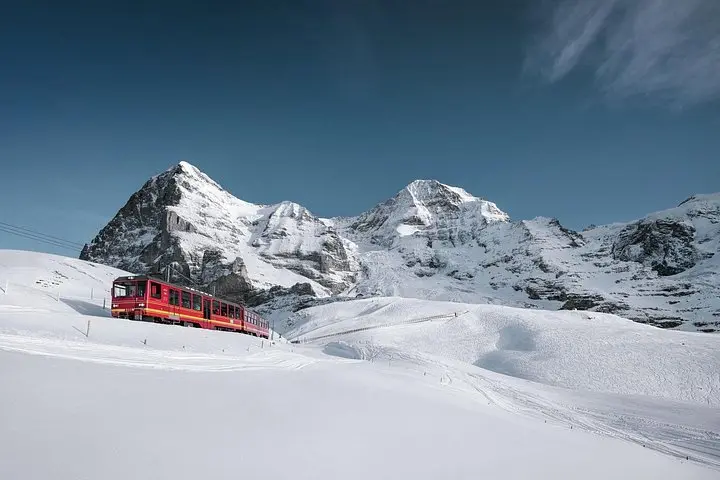
You step off the coach in Lauterbrunnen with alpine air already pushing at your lungs—sharp, cold, and insistently clean. The valley walls rise like folded pages; the rack railway gurgles and then begins its steady climb. By the time the train slips into the high ice, the world has compressed into clear, searching vistas: the Aletsch Glacier, the teeth of the Eiger and Mönch, and the thin ribbon of the glacier underfoot.
Verified experiences and guided adventures in the surrounding area.
Operated by Keytours (Switzerland) · Interlaken, Bern
You step off the coach in Lauterbrunnen with alpine air already pushing at your lungs—sharp, cold, and insistently clean. The valley walls rise like folded pages; the rack railway gurgles and then begins its steady climb. By the time the train slips into the high ice, the world has compressed into clear, searching vistas: the Aletsch Glacier, the teeth of the Eiger and Mönch, and the thin ribbon of the glacier underfoot.
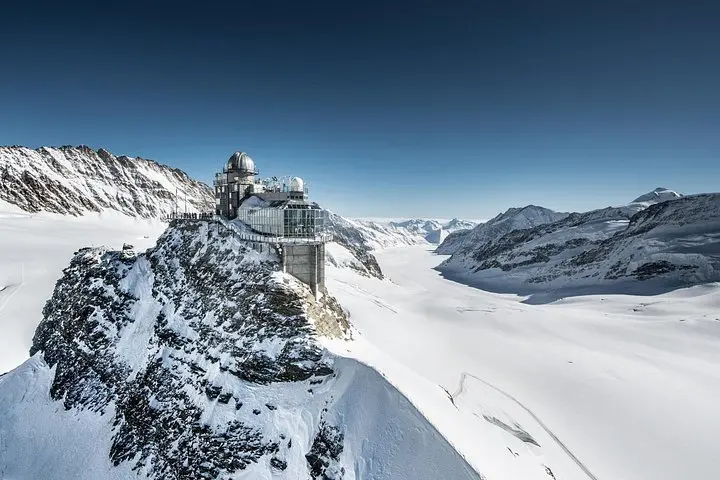
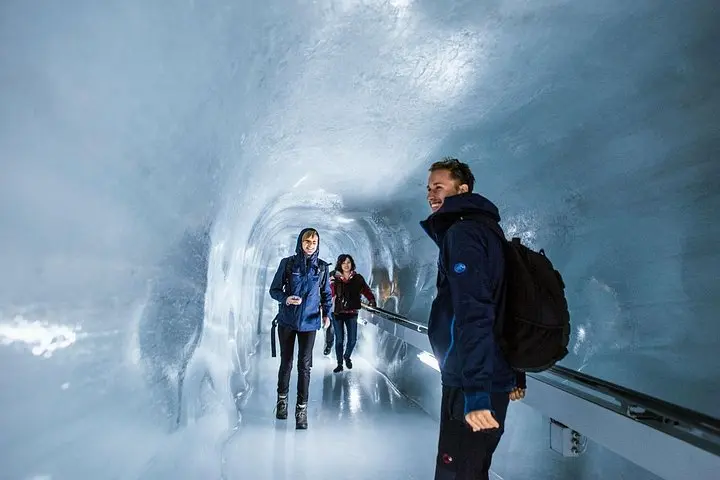
Jungfraujoch sits at 3,454 m, the highest railway station in Europe. The Sphinx Observatory peers over the rim and delivers panoramic frames usually reserved for postcards. The Ice Palace cuts into the glacier; an ice tunnel leads you into cold blue light and sculpted corridors. Interlaken, lower in the valley, has long been the crossroads for alpinism and summer tourism, its lakes and mountain access shaped by centuries of trade and early mountaineering expeditions.
Geology here is active reading: uplifted granite, glacial polish, and moraines that mark advancing ice. Culturally you'll notice Swiss precision—punctual trains, clear signage—and a hospitality economy tuned to day-trippers and climbers alike. Weather rules the day: storms can close the cog railway and alter plans.
Practical guidance: expect a long day (approximately 13 hours door-to-door from Geneva), dress in layers for large temperature swings, and plan for altitude effects—shortness of breath, sun intensity, and rapid weather change. Bring sunglasses, sunscreen, water, and shoes with good grip for icy platforms. Allow free time in Interlaken to stretch legs and enjoy lakeside views before the return drive.
Expect about 12–14 hours round-trip including transfers, free time in Interlaken, and the ascent to Jungfraujoch—the operator lists a fixed duration of 780 minutes (13 hours).
Yes—operations depend on weather; the mountain train can be canceled and the activity-only portion is refunded if the ascent is closed.
Infants and small children can travel, but the tour is not recommended for people with poor cardiovascular health due to rapid altitude gain. Check with your doctor if uncertain.
On this tour the driver-guide remains with the coach; passengers take the cog railway and have independent time at the summit and in Interlaken.
Keytours (Switzerland) operates guided outdoor trips and adventures with an emphasis on safety, stewardship, and memorable experiences.
You step off the coach in Lauterbrunnen with alpine air already pushing at your lungs—sharp, cold, and insistently clean. The valley walls rise like folded pages; the rack railway gurgles and then begins its steady climb. By the time the train slips into the high ice, the world has compressed into clear, searching vistas: the Aletsch Glacier, the teeth of the Eiger and Mönch, and the thin ribbon of the glacier underfoot.
You step off the coach in Lauterbrunnen with alpine air already pushing at your lungs—sharp, cold, and insistently clean. The valley walls rise like folded pages; the rack railway gurgles and then begins its steady climb. By the time the train slips into the high ice, the world has compressed into clear, searching vistas: the Aletsch Glacier, the teeth of the Eiger and Mönch, and the thin ribbon of the glacier underfoot.
Jungfraujoch sits at 3,454 m, the highest railway station in Europe. The Sphinx Observatory peers over the rim and delivers panoramic frames usually reserved for postcards. The Ice Palace cuts into the glacier; an ice tunnel leads you into cold blue light and sculpted corridors. Interlaken, lower in the valley, has long been the crossroads for alpinism and summer tourism, its lakes and mountain access shaped by centuries of trade and early mountaineering expeditions.
Geology here is active reading: uplifted granite, glacial polish, and moraines that mark advancing ice. Culturally you'll notice Swiss precision—punctual trains, clear signage—and a hospitality economy tuned to day-trippers and climbers alike. Weather rules the day: storms can close the cog railway and alter plans.
Practical guidance: expect a long day (approximately 13 hours door-to-door from Geneva), dress in layers for large temperature swings, and plan for altitude effects—shortness of breath, sun intensity, and rapid weather change. Bring sunglasses, sunscreen, water, and shoes with good grip for icy platforms. Allow free time in Interlaken to stretch legs and enjoy lakeside views before the return drive.