THE ADVENTURE COLLECTIVE® · Independent discovery and booking for outdoor travel

Board a coach in Zurich and ride through the Bernese Oberland before ascending by cogwheel train to Jungfraujoch, Europe’s highest railway station. Expect panoramic glacier views, the Sphinx Observatory, an Ice Palace, and a rigorous high-altitude experience.
Board a coach in Zurich and ride through the Bernese Oberland before ascending by cogwheel train to Jungfraujoch, Europe’s highest railway station. Expect panoramic glacier views, the Sphinx Observatory, an Ice Palace, and a rigorous high-altitude experience.
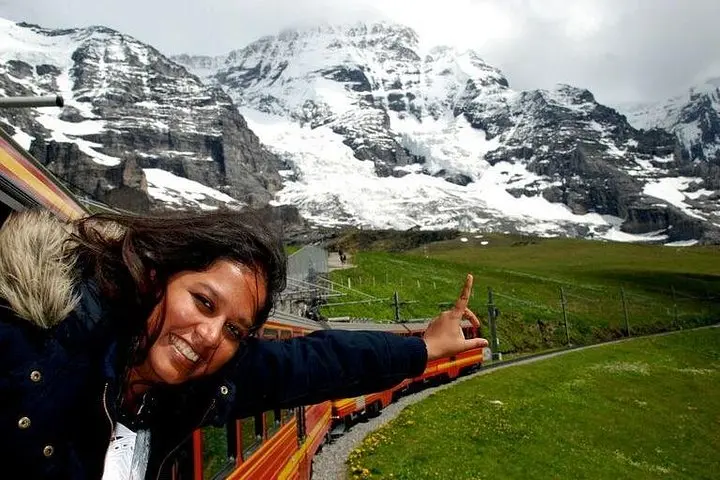
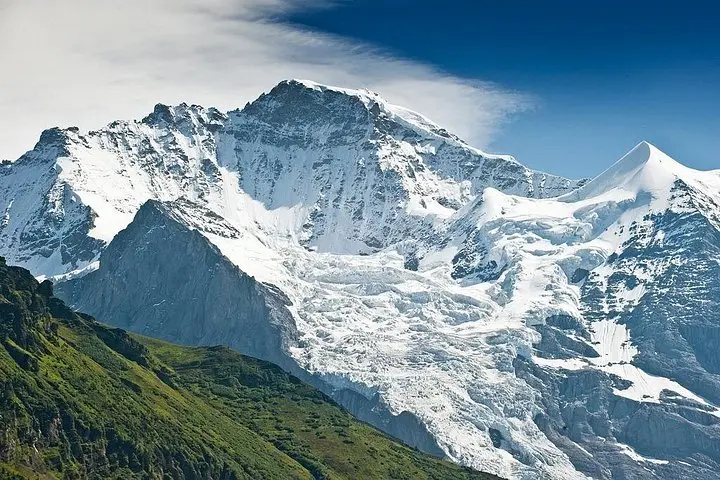
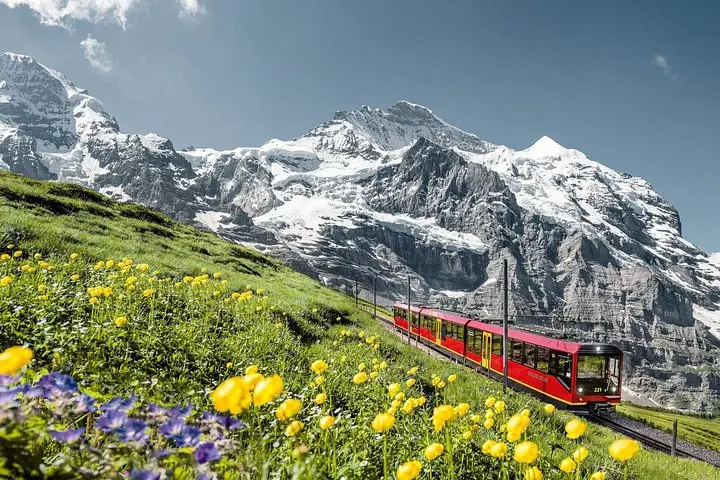
You step off the cogwheel train into thin, crisp air and the Alps suddenly push forward around you—raw, bright, indifferent. Snowfields spread like white plains, the Sphinx Observatory perches like a polished eye, and the Aletsch Glacier unspools toward the horizon, daring you to trace its ancient flow.
Verified experiences and guided adventures in the surrounding area.
Operated by Hans Meier Tourist AG - Gray Line Zurich · Grindelwald, Bern
You step off the cogwheel train into thin, crisp air and the Alps suddenly push forward around you—raw, bright, indifferent. Snowfields spread like white plains, the Sphinx Observatory perches like a polished eye, and the Aletsch Glacier unspools toward the horizon, daring you to trace its ancient flow.
The rail link to Jungfraujoch was a bold early-20th-century engineering project, completed in 1912, that tunnels through the Eiger and Mönch. Geologically, the ridge is shaped by repeated glaciation; the Aletsch is Europe’s longest glacier and a visible record of climate shifts. Culturally, the Jungfrau region has long been a magnet for alpine science, tourism, and Swiss rail–building pride—small mountain towns like Grindelwald and Lauterbrunnen developed as service hubs for visitors and mountaineers.
On a guided day trip from Zurich you’ll pass Interlaken’s lakes and the vertical cliffs of Lauterbrunnen, change from cogwheel train to the Eiger Express cableway, and spend roughly three hours at Jungfraujoch to visit the Ice Palace, Sphinx panorama platform, and glacier viewpoints.
Practical guidance: dress in layers and expect rapid weather swings; even summer days can be windy and near freezing at 3,454 m. Allow time for altitude adjustment—move slowly, hydrate, and avoid heavy exertion immediately after arrival. Facilities include a panoramic restaurant, restrooms, and indoor viewing areas, but services are limited compared with lowland towns. On clear days the vistas reach into France and Italy; on cloudy days the site still offers stark glacial landscapes and the carved corridors of the Ice Palace. For most visitors, this is an accessible high-alpine encounter—impressive, exposed, and fundamentally Swiss in its blend of precision transport and mountain spectacle.
Mild altitude effects (headache, breathlessness) are possible; move slowly, hydrate, avoid alcohol, and consult your doctor if you have cardiovascular concerns.
Typical itineraries allow about three hours at Jungfraujoch to visit the Sphinx, Ice Palace, and viewpoints before returning to the valley.
Yes—there is a panoramic restaurant and café with snacks and hot meals, but options are more limited and pricier than valley towns.
Infants and small children can join; strollers are workable in many areas but some sections have stairs—plan to carry children if needed.
Hans Meier Tourist AG - Gray Line Zurich operates guided outdoor trips and adventures with an emphasis on safety, stewardship, and memorable experiences.

You step off the cogwheel train into thin, crisp air and the Alps suddenly push forward around you—raw, bright, indifferent. Snowfields spread like white plains, the Sphinx Observatory perches like a polished eye, and the Aletsch Glacier unspools toward the horizon, daring you to trace its ancient flow.
You step off the cogwheel train into thin, crisp air and the Alps suddenly push forward around you—raw, bright, indifferent. Snowfields spread like white plains, the Sphinx Observatory perches like a polished eye, and the Aletsch Glacier unspools toward the horizon, daring you to trace its ancient flow.
The rail link to Jungfraujoch was a bold early-20th-century engineering project, completed in 1912, that tunnels through the Eiger and Mönch. Geologically, the ridge is shaped by repeated glaciation; the Aletsch is Europe’s longest glacier and a visible record of climate shifts. Culturally, the Jungfrau region has long been a magnet for alpine science, tourism, and Swiss rail–building pride—small mountain towns like Grindelwald and Lauterbrunnen developed as service hubs for visitors and mountaineers.
On a guided day trip from Zurich you’ll pass Interlaken’s lakes and the vertical cliffs of Lauterbrunnen, change from cogwheel train to the Eiger Express cableway, and spend roughly three hours at Jungfraujoch to visit the Ice Palace, Sphinx panorama platform, and glacier viewpoints.
Practical guidance: dress in layers and expect rapid weather swings; even summer days can be windy and near freezing at 3,454 m. Allow time for altitude adjustment—move slowly, hydrate, and avoid heavy exertion immediately after arrival. Facilities include a panoramic restaurant, restrooms, and indoor viewing areas, but services are limited compared with lowland towns. On clear days the vistas reach into France and Italy; on cloudy days the site still offers stark glacial landscapes and the carved corridors of the Ice Palace. For most visitors, this is an accessible high-alpine encounter—impressive, exposed, and fundamentally Swiss in its blend of precision transport and mountain spectacle.